ChatGPT SEO tools compared
If you want the cheapest first look at ChatGPT SEO tools, start with Otterly.AI, whose Lite plan costs $29 a month for 15 prompts. If you already pay for Semrush or Ahrefs, try their AI add-ons before buying anything else. Profound is for data teams that want deep ChatGPT analytics, and Peec AI is for mid-market marketers. Snoika, which we built, is for companies that want the tracking and the content fixes handled by one team, at a weekly price.
 Artem LozinskyOperations and product, Snoika · 10 min read

























ChatGPT SEO checkers compared
Six ChatGPT SEO checkers make most 2026 shortlists. They differ most in how many prompts your money buys and whether anyone fixes what the tracking finds. Five of them are monitoring tools. You get a dashboard, and your team does the work. The table puts them side by side on the same attributes. The prices are entry tiers as published or reported in 2026, with sources linked in the verdicts below.
| Tool | Entry price (2026) | Prompts at entry | ChatGPT coverage at entry | Best for |
|---|---|---|---|---|
| Snoika | Plans on the pricing page | 10 weekly (trial), 100 weekly () | 1 platform on trial, 3 on | Tracking plus content and publishing |
| Otterly.AI | $29/month | 15 | Included with 3 other engines | Low-cost monitoring |
| Peec AI | €89/month | 50 | You choose 3 engines | Mid-market teams |
| Profound | $99/month | 50 | ChatGPT only | Analytics depth |
| Semrush AI Visibility Toolkit | $99/month per domain | 25 | Included | Existing Semrush users |
| Ahrefs Brand Radar | Custom prompts in paid plans from $129/month | Varies by plan | Index costs $199/month per platform | Competitor research at scale |
Snoika
- Entry price (2026)
- Plans on the pricing page
- Prompts at entry
- 10 weekly (trial), 100 weekly ()
- ChatGPT coverage at entry
- 1 platform on trial, 3 on
- Best for
- Tracking plus content and publishing
Otterly.AI
- Entry price (2026)
- $29/month
- Prompts at entry
- 15
- ChatGPT coverage at entry
- Included with 3 other engines
- Best for
- Low-cost monitoring
Peec AI
- Entry price (2026)
- €89/month
- Prompts at entry
- 50
- ChatGPT coverage at entry
- You choose 3 engines
- Best for
- Mid-market teams
Profound
- Entry price (2026)
- $99/month
- Prompts at entry
- 50
- ChatGPT coverage at entry
- ChatGPT only
- Best for
- Analytics depth
Semrush AI Visibility Toolkit
- Entry price (2026)
- $99/month per domain
- Prompts at entry
- 25
- ChatGPT coverage at entry
- Included
- Best for
- Existing Semrush users
Ahrefs Brand Radar
- Entry price (2026)
- Custom prompts in paid plans from $129/month
- Prompts at entry
- Varies by plan
- ChatGPT coverage at entry
- Index costs $199/month per platform
- Best for
- Competitor research at scale
Snoika: tracking plus content execution
Snoika is an all-in-one SEO platform that also covers GEO (generative engine optimization) and AEO (answer engine optimization). It audits sites and tracks visibility in Google and AI assistants. It also builds content maps for the content it writes and publishes. It can build AI-ready websites from scratch. The same team runs the platform and the services, and people review what the automated workflows produce. Snoika suits teams that want someone to do the work. If you only want a dashboard, it costs more than you need.
Otterly.AI: the cheapest way to start
Otterly.AI covers four engines on every plan, ChatGPT and Google AI Overviews among them. Standard costs $189 for 100 prompts and Premium costs $489 for 400. Adding Claude or Gemini costs extra on every tier. The jump from 15 to 100 prompts is steep, so Lite works best as a trial run for a single brand.
Peec AI: mid-market tracking with unlimited seats
Peec AI's Starter plan costs €89 for 50 prompts a month, and every paid tier includes unlimited seats. Each self-serve plan lets you pick 3 of the 7 supported engines, so more prompts don't buy you wider coverage. It fits marketing teams that share one dashboard across several people.
Profound: deep ChatGPT analytics
Profound's Starter plan tracks ChatGPT only, with 50 prompts for $99 a month. Growth costs $399 and covers three engines with 100 prompts. Profound is built for analysts who want answer-level data and are ready to pay for it. A team that needs coverage of several engines will land on Growth or Enterprise quickly.
Semrush AI Visibility Toolkit: for existing Semrush users
Semrush prices its toolkit at $99 a month per domain, and Semrush One, which bundles SEO and AI tracking, starts at $199. The toolkit's base allowance is only 25 custom prompts. It makes sense when your keyword data already lives in Semrush and you want AI data next to it.
Ahrefs Brand Radar: market-wide AI research
Ahrefs includes custom prompt tracking in its paid plans. Its AI Visibility Index draws on a database of 455M real prompts. The index costs $199 a month per AI platform, or $699 for all of them, on top of a base plan that starts at $129 a month. Use it when you want to research competitors across a whole market more than you want to watch your own prompts.
How ChatGPT picks brands
ChatGPT names brands based on what the model learned in training and what it finds when it searches the web for the user's prompt. During a web search, it splits your prompt into smaller sub-queries and cites the pages those return. Answers drawn from memory alone name only brands that were widely discussed before the training cutoff.
The search side follows Google and Bing rankings less closely than SEO teams expect. Grow and Convert ran 100 buying-intent prompts and found that only 27% of cited sources ranked on Google for ChatGPT's sub-queries, against 23% on Bing. Once the overlap between the two engines is accounted for, about 60% of the cited pages didn't rank in the top 10 pages of either. A page-one ranking helps, but it doesn't decide which pages ChatGPT cites.
On the memory side, how often your brand is discussed elsewhere on the web counts for more. An Ahrefs analysis of 75,000 brands covered ChatGPT and Google AI Mode. It also covered AI Overviews, with branded web mentions correlated with AI visibility at roughly 0.66 to 0.71 across these engines. That makes mentions the strongest factor the study measured.
A Semrush study of 80 million ChatGPT queries found that 46% triggered web search, while Seer Interactive's smaller sample put the figure closer to 30%. So before you change anything, check whether your category's prompts come back with cited links. Cited links indicate an opportunity for your pages to win citations, while memory-based answers call for mentions elsewhere.
Running a reliable visibility test
To test whether your brand appears in ChatGPT, run a fixed set of buyer prompts several times each and count how often your brand shows up. A single run tells you almost nothing. SparkToro had volunteers run 12 recommendation prompts 60 to 100 times each, and fewer than 1 in 100 runs returned the same list of brands. Rand Fishkin, SparkToro's cofounder, wrote that these tools are probability engines "designed to generate unique answers every time."
The same study found that visibility percentage, which measures how often a brand appears across many runs, held steady. That's the number a test should produce. Measure it with this six-step ChatGPT visibility audit.
- Write 20 to 50 prompts the way buyers phrase them. Include category questions ("best VAT software for EU sellers") and comparisons with named competitors. Add problem-led questions that never mention a product type.
- Use a clean session. Log out or turn off memory. Record the model and the date, because both change the answer. Note your country too, since it also changes the answer.
- Run every prompt at least 10 times and save the full answer each time, along with any cited links.
- Score each answer for brand mentions and citations of your pages. Assess how accurately it described you.
- Do the same for three to five competitors so the visibility percentage has a benchmark.
- Group gaps according to whether the brand appears. For answers that mention it, distinguish between missing citations and wrong descriptions. Each cause needs a different fix.
An analyst's chat history shapes answers when they stay logged in, while even slight changes to prompt wording by a second analyst make the results impossible to compare. Save the exact prompt text and the raw answers, and someone else can rerun your test in three months and get a fair comparison.
What dedicated checkers add
A dedicated checker turns the manual test into a schedule. It keeps every answer from weekly or daily runs of the same prompts and counts mentions across runs, where a classic SEO tool reports a single rank. That count across runs is the main thing a ChatGPT SEO tool should do differently. Rank in an AI answer changes from one run to the next, while the share of answers that name you moves slowly enough to track.
Snoika's AI visibility tracking, for example, uses weekly prompt sets to measure mentions and share of voice in ChatGPT and Google AI Overviews, the two places where most AI search traffic happens. It also measures sentiment and citations. The other tools in our table measure similar things under different names. Compare tools against these requirements.
- The raw answer text for every run, as an export
- The cited URLs and domains, so you can see which third-party pages ChatGPT trusts in your category
- Competitor share of voice on the same prompts
- The model and location used for each run
- A history that survives a change of plan or prompt set
Also ask how the AI search visibility tool collects its answers. Some vendors query OpenAI's API, and API answers can differ from what people see in the ChatGPT app. When Seer Interactive published its study in February 2025, ChatGPT's search citations weren't available through OpenAI's APIs. A vendor should tell you which method it uses, and it should show its work if it claims the results match the app.
SEO for ChatGPT search
SEO for ChatGPT search starts with access. OpenAI's search crawler has to be able to reach your pages, or they can't be cited. OpenAI's Overview of OpenAI Crawlers says sites that opt out of OAI-SearchBot "will not be shown in ChatGPT search answers." It recommends allowing that crawler in robots.txt and allowing traffic from OpenAI's published IP ranges. GPTBot is a separate crawler that controls training. You can block it and still appear in search answers.
Check the live configuration. A content delivery network (CDN) or firewall rule can block OAI-SearchBot even when robots.txt allows it. Once it's allowed, OpenAI's Publishers and Developers FAQ says ChatGPT adds utm_source=chatgpt.com to referral links, so Google Analytics 4 (GA4) shows you which pages ChatGPT sends people to.
ChatGPT itself can do part of the optimization work. It drafts pages and rewrites titles well enough. Its structured data suggestions are adequate too. What it can't do is measure how it answers other users, or crawl your site the way an auditor does. Use it as a writing assistant and get your evidence from a checker.
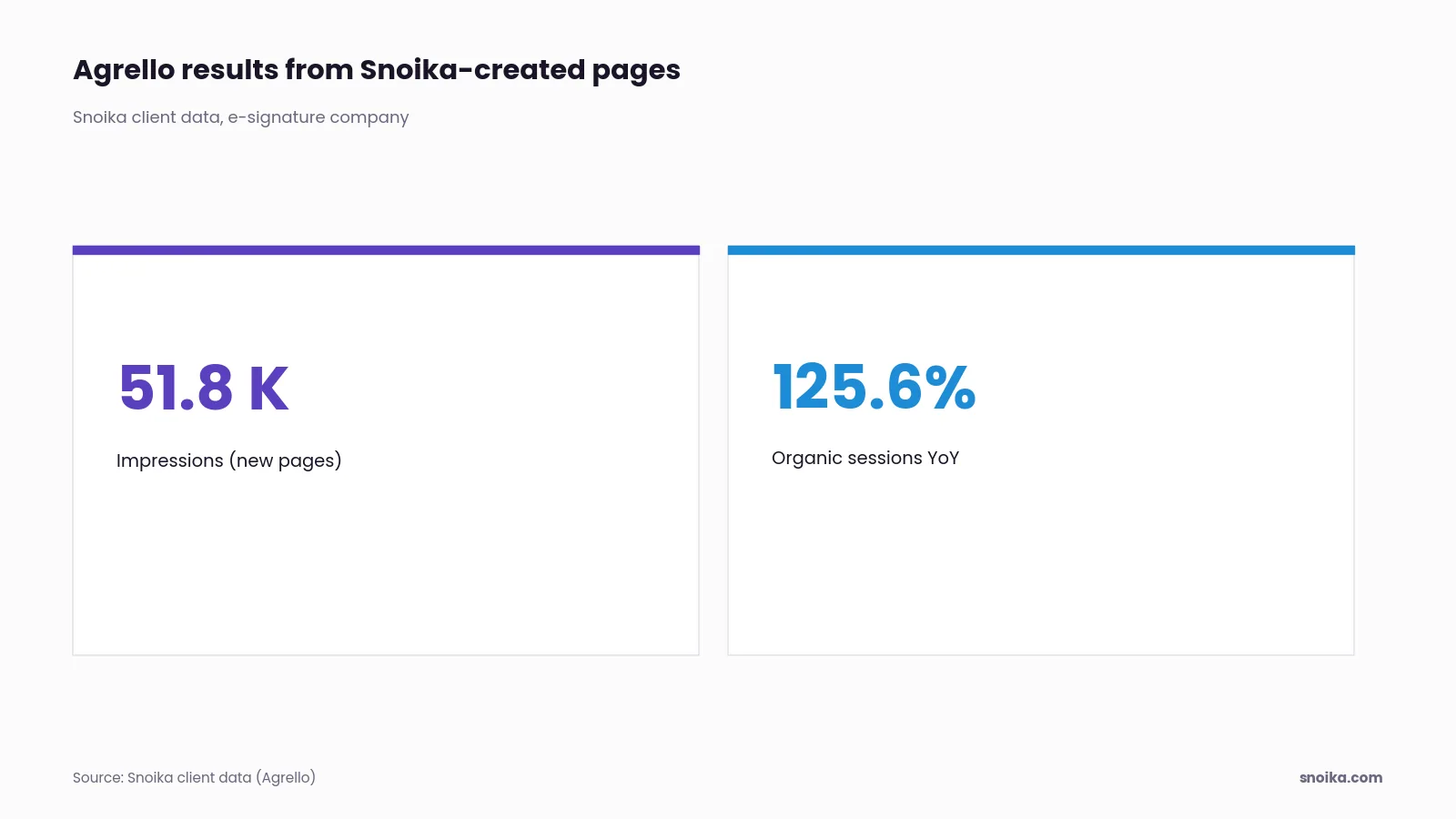
Snoika uses a DNS connection to publish new pages on the client's own domain. This works on any CMS without a migration. The client approves each page in the dashboard before it goes live. For Agrello, an e-signature company, those pages generated 51.8K impressions, and organic search sessions rose 125.6% year over year.
Gaps traditional tools miss
Traditional SEO tools miss the signals that happen off your site and the text of the answers themselves. A rank tracker reports position 4 for a keyword. ChatGPT rankings don't have a stable position 4. And a backlink tool counts links, even though the Ahrefs 75,000-brand study found backlink count correlated with AI Overview visibility at just 0.218 for backlinks. That's far weaker than unlinked mentions of the brand name.
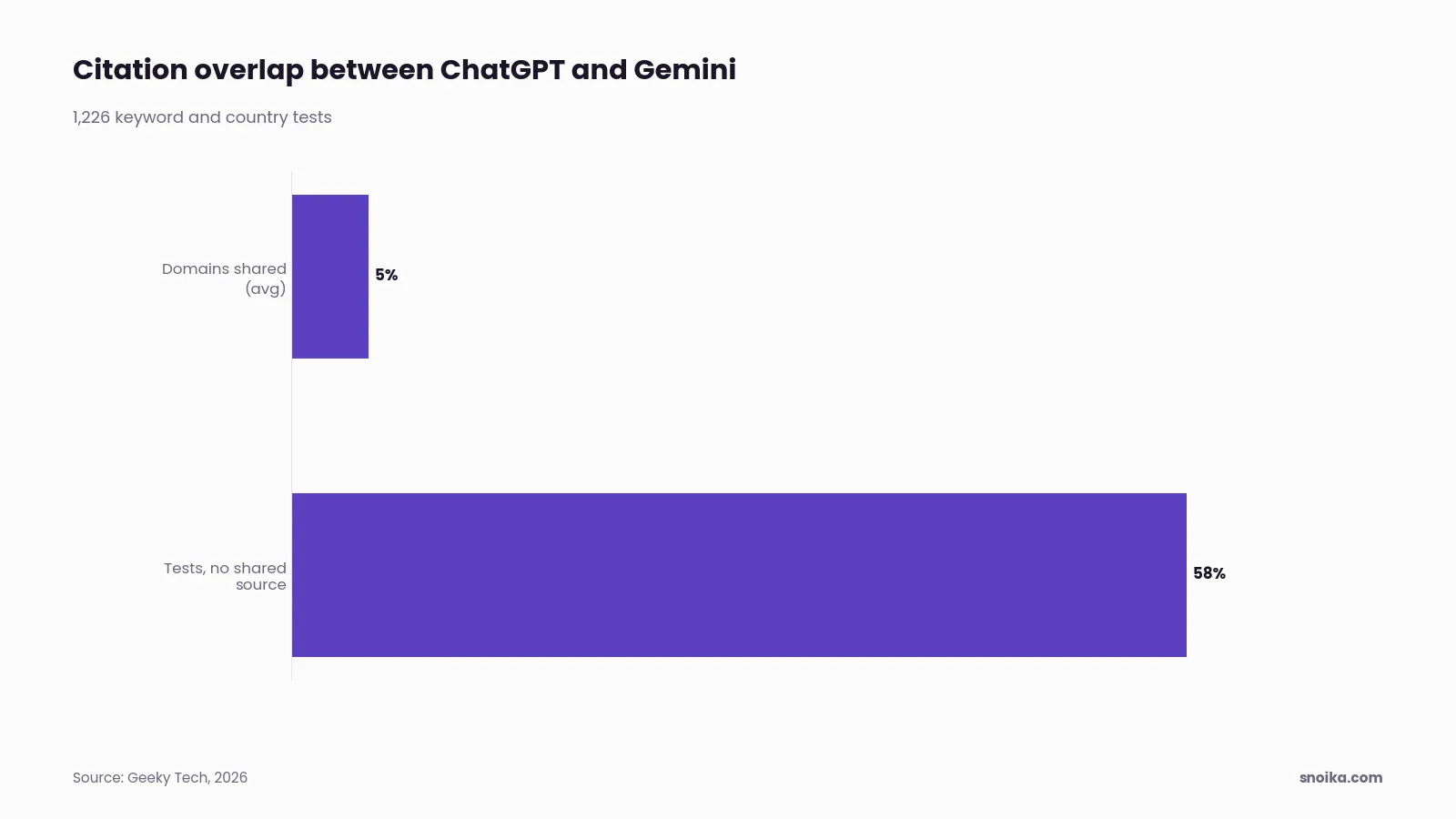
Geeky Tech compared citations across 1,226 keyword and country tests and found that ChatGPT and Gemini shared an average of just 5% of cited domains. In 58% of tests, the two engines cited completely different sources. A Google position report can't tell you which of those lists you're on.
ChatGPT answers in the language the user writes in, and it cites local sources. If you only test English prompts, you can't see your position in German or Polish answers. Snoika creates content in 135+ languages and regional variants. Whichever tool you choose, check that it can run prompts in each market's language from that market's location.
A technical audit checks whether a page can be crawled, while an AI checker assesses whether ChatGPT describes your product correctly. Errors in your pricing or category only show up when someone reads the answer text, so these checks require separate tools.
Choosing the right platform
Choose by what your team will do after the report arrives. A prompt monitoring tool at $29 to $189 a month is enough for writers and an SEO lead with free time to act on the data; a cheaper dashboard just records the same gaps every week for a team with nobody available to act on them.
Then match the plan to your prompt count. A company with one product in one country can cover its buyers with 25 to 50 prompts. A company selling in four markets, with a different competitor set in each, needs several hundred prompts. For that company, Semrush's 25-prompt allowance or Otterly's 15 runs out in the first week. Profound's Starter plan sees only ChatGPT, and Peec AI makes you choose three engines.
Snoika starts every engagement with onboarding to learn about the category and its buyers. The team establishes the goals and asks for access to GA4. It also requests access to Google Search Console and Google Tag Manager. It also asks for CMS access when it will publish pages. Self-serve LLM SEO tools skip that step, which is faster to start, but you write the prompt set yourself.
Judge results by what a vendor can show you, and ask for named cases. 3DPrinterOS reached #1 visibility in ChatGPT for industry-specific queries and turned AI search into a steady source of 3–4 qualified inbound leads/day. Ask every vendor on your shortlist for cases like that, with the client named and the starting point included.
Tracking AI citations over time
Track AI citations weekly, and judge the trend over eight to sixteen weeks. Because answers vary between runs, a five-point drop in one week is noise. A falling line across six weeks means something has changed.
Keep a log of every change to your site and your content next to the AI visibility data. When a citation rate rises, you can then check which page went live first. That correlation is the best evidence you'll have about what works. Add ChatGPT referral sessions from GA4 so the visibility numbers connect to real visits.
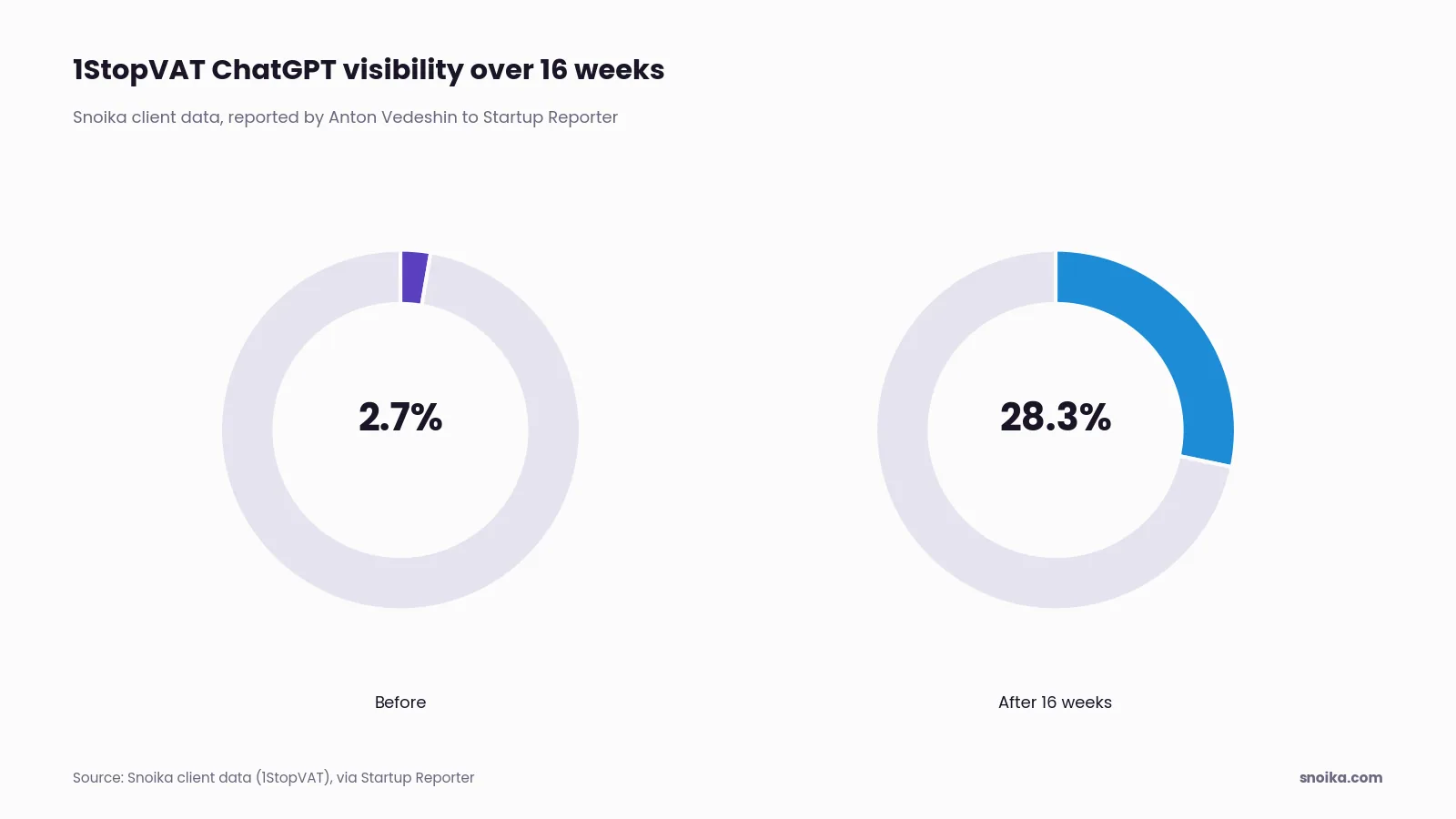
Snoika's founder Anton Vedeshin reported to Startup Reporter 1StopVAT's move from 2.7% to 28.3% ChatGPT visibility in 16 weeks. Vespia, a fintech SaaS, recorded a 220% increase in AI brand mentions. Numbers like these only mean something when the prompt set stayed fixed the whole time. If you change the prompts mid-period, start a new baseline.
Picking from this list
Before you pay for anything, run the six-step audit by hand with 20 prompts. It takes an afternoon. It tells you whether ChatGPT searches the web in your category, and it shows which competitors take your place in the answers. Choose a tool that reports cited URLs and pair it with page work when answers cite links, or focus on wider brand mentions and track them when answers come from memory. Your hand-built prompt set also becomes the baseline you load into whichever of these ChatGPT SEO tools you choose, so your first weeks of paid tracking measure change against a known starting point.
FAQ
Test buyer questions repeatedly and calculate the percentage of answers that mention your brand. Use the same wording in clean sessions with memory turned off. A single answer isn't a reliable measure because recommendations vary between runs.
ChatGPT can help draft pages and rewrite titles, but it can't replace a site auditor or visibility checker. Use it for writing assistance, then use separate tools to check crawl access and measure how often your brand appears in answers.
Run 20 to 50 buyer prompts at least 10 times each in clean sessions. Save exact prompts and answers, including citations. Record the model and date, plus location. Compare mention rates against three to five competitors. Separate missing mentions from answers needing citation checks or corrections.
Dedicated chatgpt seo tools should measure mention frequency across repeated answers rather than report a single ranking. Check whether they export raw answers and cited URLs. Confirm how answers are collected, since API results can differ from what people see in the app.
Track results weekly and assess the trend over eight to sixteen weeks. Keep your prompt set fixed so comparisons remain meaningful. If you change the prompts, start a new baseline rather than treating the new results as a continuation.