
Prompt tracking across AI assistants
Prompt monitoring shows you whether ChatGPT and Google AI Overviews name your brand when buyers ask the questions that come before a purchase. Every week, Snoika runs a fixed set of buyer prompts that you approve and logs the mentions, citations, sentiment and competitors in each answer. You can see where your brand is cited, where a competitor has taken your place and what has changed since last week.
Trusted by

























The free AI visibility audit is the place to start. It needs no access to your systems, returns results in about two hours and shows which of your buyer prompts already cite competitors, which is the first list your prompt monitoring should cover.
Citations per AI assistant
We record each prompt result separately for every AI assistant, because the same question can cite you in ChatGPT and leave you out of Google AI Overviews. Each weekly run records:
Mentions
Whether the answer names your brand at all.
Citations
Which of your pages the assistant links to as a source.
Share of voice
How often you appear compared with the competitors in the same answers.
Sentiment
Whether the answer describes you favorably, neutrally or critically.
Competitor positions
Which rivals the assistant names, and whether they come before you.
We pay attention to the cited page. If the assistant cites an old blog post when it should cite your product page, buyers land on the wrong page.
How prompt grouping works
We group prompts by pillar and by buyer stage, both taken from your content map. Each prompt runs in every assistant we track, and the results roll up by group, so you manage buyer prompts across more than one large language model (LLM) in one library, with one view split by assistant.
Pillar
One topic you want to own.
Research stage
Early questions a buyer asks while learning about the problem.
Comparison stage
Questions that weigh vendors or approaches against each other.
Purchase stage
Questions asked just before a purchase.
Check how many prompts each group holds. A group with only 2 prompts swings a lot from week to week, so its share of voice tells you little.
Which AI assistants we monitor
We monitor ChatGPT and Google AI Overviews, because that's where most AI search traffic happens.
ChatGPT citations for your brand
You find out whether ChatGPT cites your company by running the same buyer prompts on a fixed schedule and recording the URLs it links to. A single manual check can mislead you, because answers change from one session to the next. OpenAI CEO Sam Altman said at Dev Day 2025 that "more than 800 million people use ChatGPT every week."
Google AI Overviews coverage
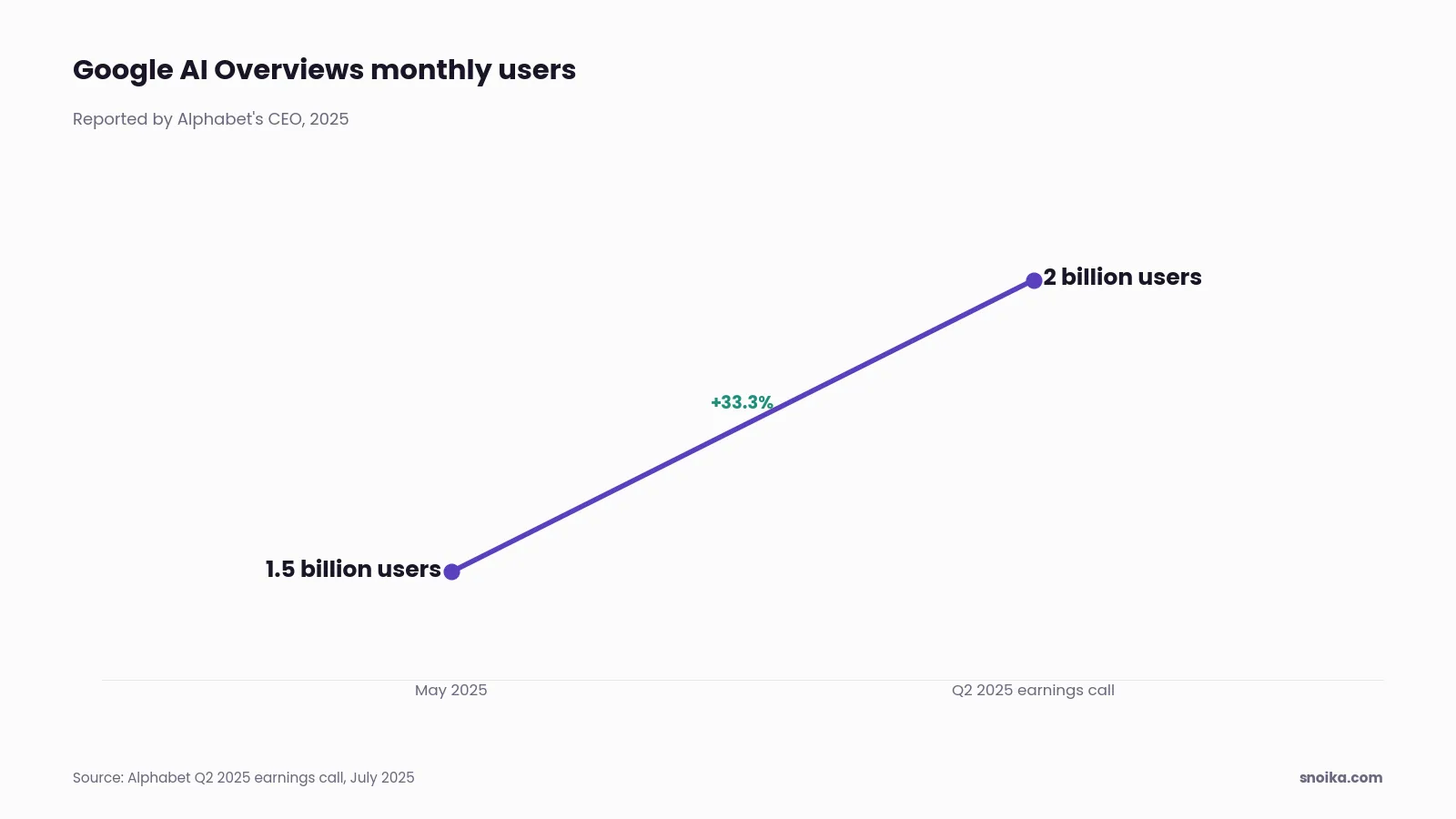
AI Overviews sit above the regular Google results, so a buyer reads them before any organic link. On Alphabet's Q2 2025 earnings call, CEO Sundar Pichai said the feature had reached 2 billion monthly users, up from 1.5 billion in May 2025. We track which of your pages the Overview cites and which competitors it names alongside you.
Measuring citation changes weekly
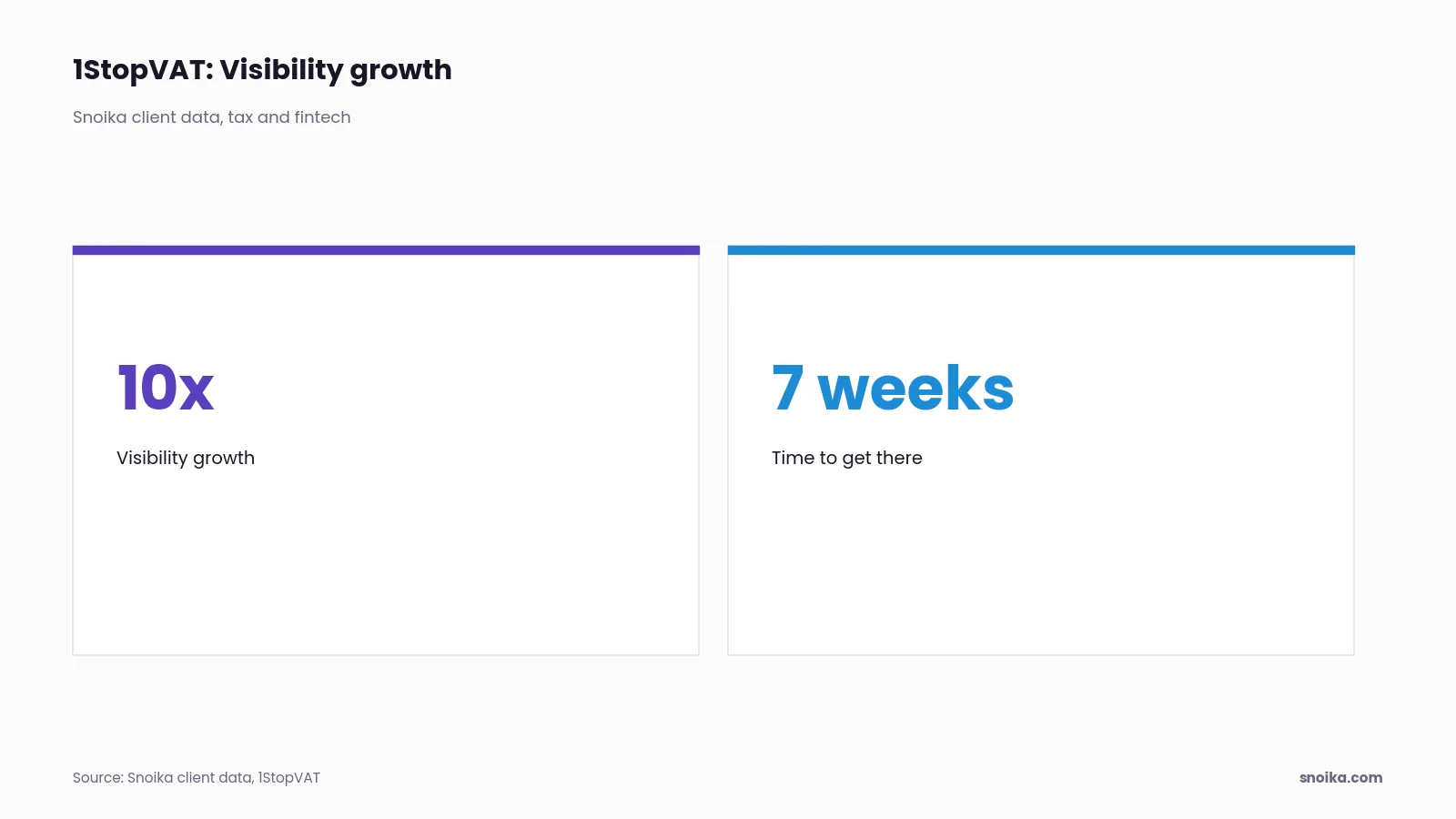
Snoika shows week-over-week changes in AI brand citations because the prompt set stays fixed, so any movement comes from the answers. Each weekly report shows mentions gained or lost, new citations and competitors that have moved ahead of you or dropped behind. Steady weekly measurement is also how you prove that the work paid off. 1StopVAT, in tax and fintech, saw 10x growth in ChatGPT visibility in 7 weeks.
We read the trend over several weeks before acting. A dip in one week can come from normal variation between answers, while a drop that lasts three weeks means something has changed.
Discovering high-intent buyer prompts
Snoika generates prompts from your content map, and you can add custom prompts of your own. During onboarding, we build the prompt set from the questions your buyers actually ask. High-intent prompts include questions about alternatives, comparisons between vendors and requests for the best option for a specific use.
We choose prompts by buyer intent and how close they sit to a purchase because prompt-volume data comparable to Google's keyword data is unavailable from AI assistants. Every prompt should read like something a buyer would type, so we drop prompts that read like internal jargon.
Setting up your prompt library
You set up your library in five steps, and you approve the set before tracking starts.
Run the free audit
Fill in a short form, and we hold a quick onboarding call. The automated check then covers buyer prompts, competitors, markets and gaps.
Define the scope
Onboarding for a client engagement covers your goals in the context of your category and your buyers.
Approve the prompts
You review the prompt set we built from your buyers' questions.
Connect analytics
We ask for access to Google Analytics 4 (GA4), Google Search Console and Google Tag Manager so AI visibility connects to the traffic you already measure.
Track weekly
The approved set runs every week in each assistant.
Reporting visibility to stakeholders
Our reports link published content to changes in AI visibility, so stakeholders see results along with activity. Each report covers:
- Visibility change. Mentions and citations in ChatGPT and Google AI Overviews, with share of voice measured in both.
- Lead sources. Which pages bring leads, measured with the GA4 and Tag Manager events Snoika sets up.
Before a report goes to leadership, check that its lead events match how your sales team defines a lead.
Fitting your SEO stack
Snoika's visibility data is also available through the Snoika MCP server and the Snoika API. Your team can use our visibility data and content maps inside AI assistants such as Claude, ChatGPT or Cursor. You can also pull the data into business intelligence (BI) dashboards and automate reporting, and our team arranges access after a call.
Tracking that closes gaps
Snoika tracks your brand in ChatGPT and Google AI Overviews every week and creates the pages that close the gaps it finds. Here is what that adds to the tracking:
Content on your domain
We publish pages on your own domain through a DNS connection, with no migration and on any CMS.
Your approval
You approve every page in the dashboard before it goes live.
Weekly proof
The same prompt set shows whether the new pages start to get cited.
If you already have writers on staff, a monitoring-only tool is enough for you.
FAQ
Snoika's prompt monitoring records brand mentions separately for ChatGPT and Google AI Overviews. Each result distinguishes a plain mention from a linked citation.
We run the same buyer questions every week and record the source URLs in each answer, since a brand mention alone isn't a citation. We also check which page each link points to, because an older article may appear instead of your product page.
Snoika reruns a fixed prompt set every week, so its reports show new citations, lost mentions and competitor movement. We review several weeks before treating a single dip as a trend.
Snoika keeps one approved prompt library, grouped by pillar and buyer stage, with results separated by assistant, and you can add custom buyer questions. Check group sizes before comparing performance, because a group with only two prompts can fluctuate sharply.