
SEO agency for startups in AI search
Buyers now ask ChatGPT and Google's AI answers for a shortlist before they visit a single website. If your startup appears in those answers, you're on the list before the first sales call. A good SEO agency for startups delivers a weekly count of how often assistants name your brand, alongside the Google rankings you already track.
Trusted by

























We built Snoika to do this for early-stage teams. The first step is a free AI visibility report. It shows which buyer prompts name you today and which name your competitors.
AI visibility for startups
The right agency for getting an early-stage startup into AI answers is one that checks those answers every week and changes your pages based on what it finds. Rank tracking alone can't show you this. Pew Research Center followed the Google searches of 900 US adults in March 2025. People clicked a regular search result in 8% of visits with AI summaries, compared with 15% when no summary appeared.
ChatGPT is a second place buyers look. At OpenAI's Dev Day in October 2025, CEO Sam Altman said "more than 800 million people use ChatGPT every week."
Our AI visibility tool measures mentions and share of voice in ChatGPT and Google AI Overviews, where most AI search traffic happens. It also measures sentiment and citations in those answers, using weekly sets of prompts. You see the prompt list and a starting number before work begins, so progress has something to be measured against.
Why early movers win categories
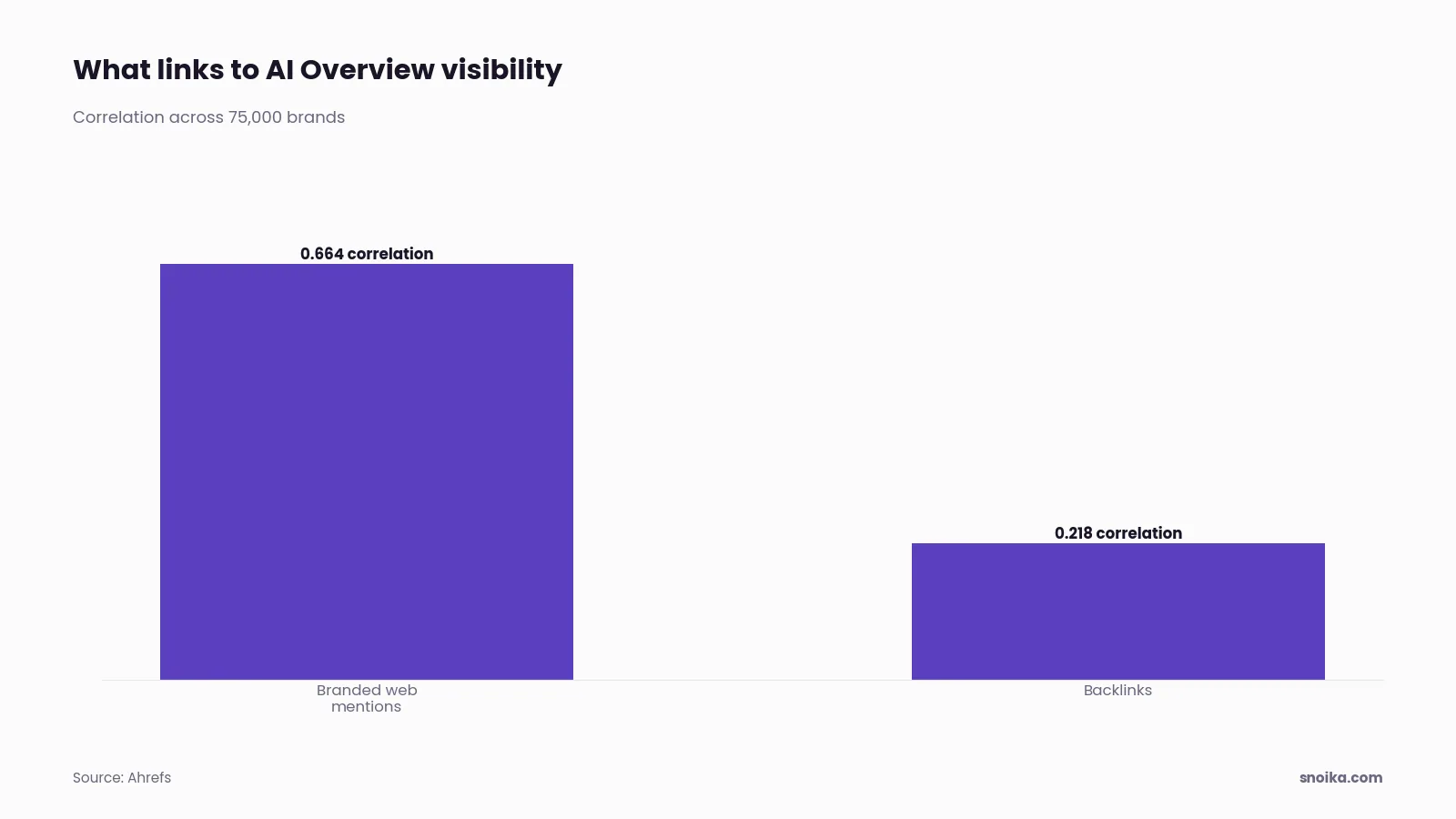
AI assistants learn which brands belong to a category from what the web says about them, and the first startup that gets written about steadily becomes the default answer. A study of 75,000 brands found that brand mentions across the web correlate with AI Overview visibility at 0.664 versus 0.218 for backlinks. Those mentions add up over time. A brand that arrives later has to push out an answer the assistant already gives, and that's harder than filling an empty spot.
How fast this happens depends on how crowded your category is. Snoika's founder Anton Vedeshin reported to Startup Reporter 1StopVAT's move from 2.7% to 28.3% ChatGPT visibility in 16 weeks. Before we plan your content, we check how many competitors already appear for your top 10 prompts.
How Snoika gets you cited
We get startups cited by publishing researched pages on their own domain, then checking every week whether assistants pick those pages up. The work follows four steps:
- 1OnboardingWe learn about your category, buyers and goals, and ask for access to Google Analytics 4 (GA4), Google Search Console and Google Tag Manager.
- 2Publishing accessWe need your content management system (CMS) only if we'll be publishing pages.
- 3Your approvalYou review and approve each page in the dashboard before it's published.
- 4Going liveNew pages go live on your own domain through a DNS connection, with no migration and on any CMS.
The same team runs the platform and the SEO solutions, and people review the output of every automated step. You can use our self-serve plans at this stage. Larger teams can choose Enterprise, or we can do the work for you.
A lean seed-stage retainer
A lean seed-stage retainer from Snoika covers four components. It leaves out link-building packages and keyword lists with thousands of terms, because a seed-stage team can't act on that much.
- Baseline audit — An audit sets your starting visibility.
- Short content map — A focused plan of the pages that matter first.
- Steady publishing — Researched pages go live on a regular rhythm.
- Monthly report — A report tied to your visibility numbers.
GEO signals assistants trust
A young brand with little authority can still get cited by ChatGPT. That happens when other sites mention it by name and when its own pages give answers precise enough to quote. Generative engine optimization (GEO) works on both of those signals, and neither one requires years of backlinks.
Mentions on sites you don't own
Founder interviews and review sites teach assistants that your brand belongs in a category. Comparison articles reinforce that association, and a short profile on a niche industry site helps too. Start by listing the 5 publications your buyers read and pitch one story to each.
Pages with cited figures
Researchers from Princeton and IIT Delhi tested this in a paper presented at KDD 2024 (the ACM conference on Knowledge Discovery and Data Mining). They wrote that GEO "can improve the visibility of websites by up to 40% on a wide range of queries." Their strongest methods included additions of statistics, quotations and cited sources. Pages that make claims without evidence give an assistant nothing it can attribute.
One description of what you do
Describe your product in the same words on your site, your LinkedIn page and every directory listing. Contradictory descriptions make an assistant less sure which category you belong to. If you sell in more than one market, publish in your buyers' languages; we create content in 135+ languages and regional variants.
Technical SEO without bloat
Lean technical SEO fixes whatever stops crawlers from reading your pages and ignores the rest of a 200-item audit. Our technical work starts with three checks:
- AI crawler access. robots.txt doesn't block AI crawlers.
- Content in HTML. Your main content loads in the HTML before scripts run.
- Current sitemap. The sitemap stays up to date.
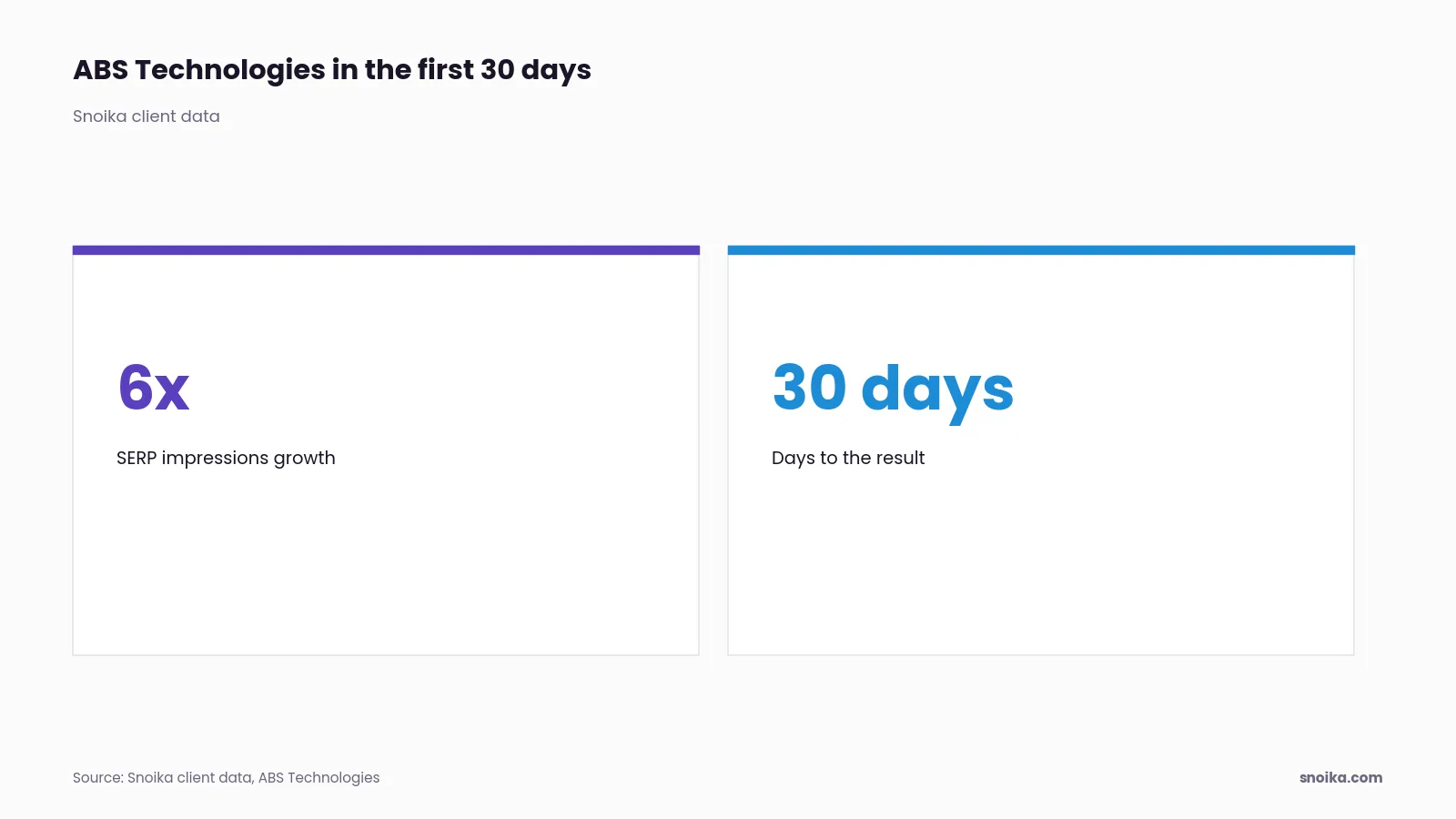
Broken indexing hurts both channels at once, since assistants draw on pages that search engines have already indexed. ABS Technologies got "6x SERP impressions; improved keyword indexability and significantly increased search visibility within the first 30 days." If you don't have a site yet, we build AI-ready websites from scratch, so you start without problems to fix.
Is SEO worth it early
SEO is worth doing early once you know who buys from you and what they ask. SEO content keeps working after it's published, while paid traffic stops the day the budget runs out. But if you're still changing who you sell to every month, put SEO off. You're ready if you can write down 20 questions your buyers ask before they buy.
What replacing SEO means
GEO keeps the SEO groundwork and changes what you write and how you measure results. Traditional SEO aims for a ranked link and a click, while GEO aims for your brand's name inside the answer itself and measures share of voice.
Gartner predicted in 2024 that traditional search engine volume would drop 25% by 2026. Alan Antin, VP Analyst at Gartner, said: "Generative AI (GenAI) solutions are becoming substitute answer engines." For a startup, the practical AI SEO change is to spend part of the content budget on mentions on other sites and on pages that are easy to quote.
GEO keeps the SEO groundwork and changes what you write and how you measure results.
FAQ
Snoika is an SEO agency for startups that tracks AI answers every week and updates pages based on what it finds. Our reporting shows brand mentions and citations alongside your Google rankings, measured against a starting number set before work begins.
Snoika's lean seed-stage retainer covers a baseline audit, a short content map, steady publishing and a monthly visibility report. It leaves out large keyword lists and link-building packages that a seed-stage team can't act on.
A young brand gets cited through mentions on relevant external sites and precise answers on its own pages. We publish pages with figures and named sources and keep your product description consistent, none of which requires years of backlinks.
Traditional SEO targets ranked links and clicks, while generative engine optimization (GEO) targets your brand's inclusion in AI answers. Both depend on accessible pages, and Snoika adds work on external mentions and measures how often assistants name you against competitors.