
Why is my brand not showing in ChatGPT? A diagnostic for marketers
If you're asking "why is my brand not showing in ChatGPT?", the cause is almost always one of four things. AI crawlers can't reach your pages, or the model mixes your brand up with another company. Thin coverage on other websites is the third cause. The fourth is that you describe your category in words your buyers don't use. A repeated prompt audit tells you which one applies before you spend anything on fixes.
 Jevgenia PogadajevaCFO, Snoika · 5 min read























Why brands go missing
ChatGPT names a brand only when it finds that brand in its training data or in the live search results it pulls for a prompt, and when the source describes the brand as a fit for the question. If you're missing from both, you're missing from the answer. ChatGPT's web searches rely on Bing independently of your Google ranking. Seer Interactive compared 500+ ChatGPT citations with search results for the same queries. It found that 87% matched Bing's top results. Only 56% matched Google, and those matching pages sat at a median rank of 17.
A crawler block shows up as zero citations to your domain, even when ChatGPT mentions your name. Entity confusion produces wrong facts about you. When coverage is thin, competitors get named in your place. And a category mismatch puts you in answers to the wrong prompts, or in no answers at all.
Blocked AI crawlers
A blocked crawler keeps your pages out of ChatGPT search answers, however good those pages are. OpenAI uses GPTBot to collect training data and OAI-SearchBot to build the index behind ChatGPT search. According to OpenAI's crawler documentation, sites that opt out of OAI-SearchBot "will not be shown in ChatGPT search answers." Teams that want to keep their content out of training block GPTBot and catch the search bot with the same broad rule.
Crawler blocks also occur at the content delivery network level. On July 1, 2025, Cloudflare started blocking AI crawlers by default, and the company says it manages traffic for 20% of the web. For the first of three access checks, open robots.txt and look for a Disallow rule under OAI-SearchBot or a wildcard user agent. Then review the bot settings in your firewall or content delivery network. Finally, load your key pages with JavaScript turned off, because a page that loads its text only through scripts can look empty to a crawler.
Entity confusion hides brands
Entity confusion happens when the model can't tell your brand apart from something with a similar name, or when it holds outdated facts about you. If a model is unsure which company you are, it leaves you out. Generic names and names shared with a bigger company raise the risk, which also increases after a rebrand.
To check for this in a brand audit, turn web search off and ask ChatGPT what your company does and who it serves. Then ask again with search turned on. Wrong founders or products merged with another firm's mean the model has confused you with someone else. A vague answer means it has too little data about you. The fix is to describe your company in the same words everywhere it appears, on your site and your LinkedIn page alike. Use that wording in your directory profiles too. Add Organization schema (structured data that tells search engines who you are) with sameAs links that point to those profiles.
Thin third-party coverage
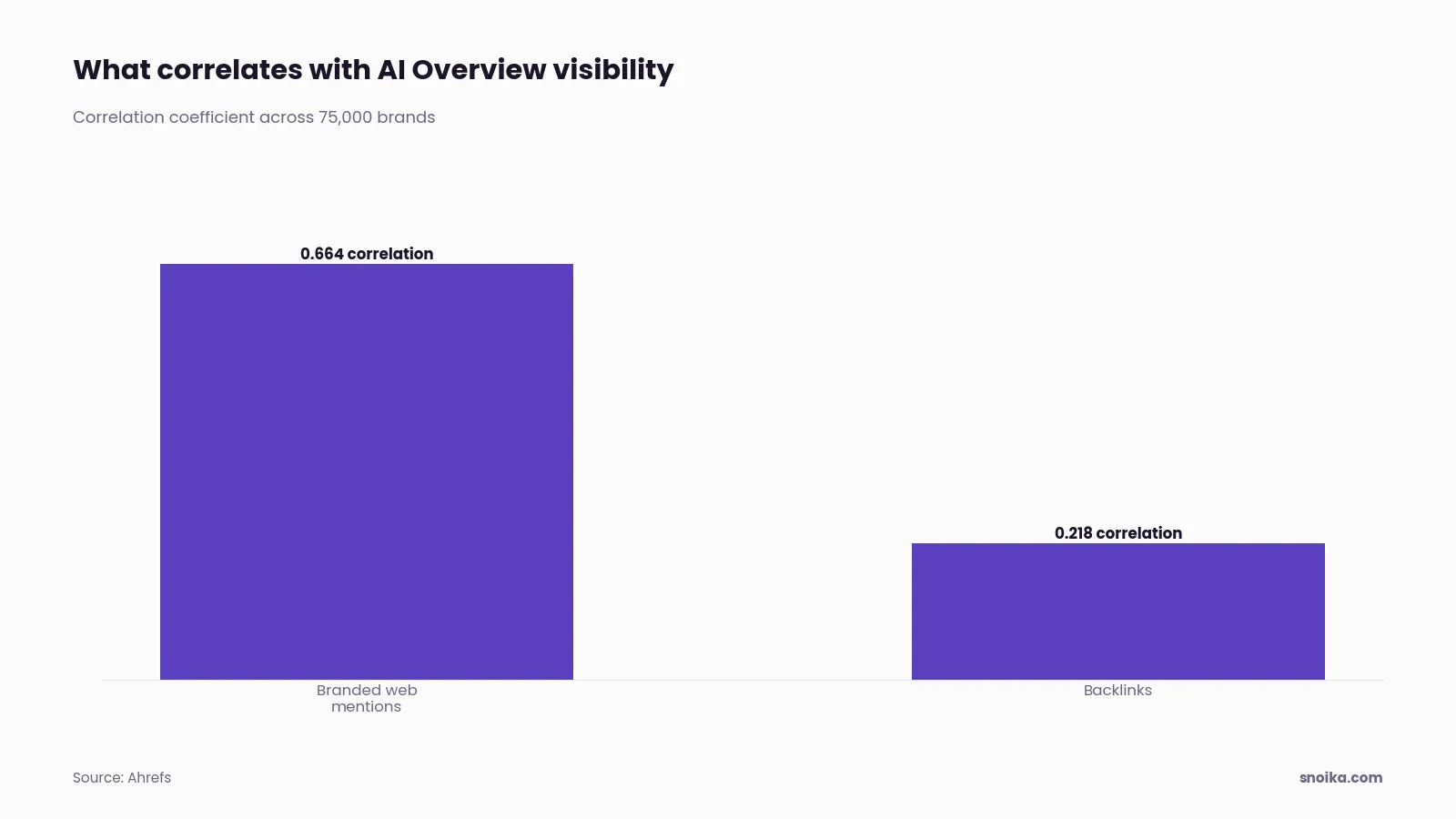
ChatGPT starts citing a brand once independent sites discuss that brand in the context of the buyer's question. No published threshold tells you how much coverage is enough. The strongest evidence comes from Ahrefs, which studied 75,000 brands and found that branded web mentions had a 0.664 correlation with visibility in AI Overviews. Backlinks scored just 0.218. Unlinked mentions counted too.
The coverage that matters most appears in the sources buyers read before they choose, such as "best tools" roundups and comparison articles. Review sites and forum threads in your niche matter for the same reason. To find your own gap, write down which domains ChatGPT cites when it names your competitors. If those sites keep mentioning your rivals and never mention you, that list is your coverage plan.
Category mismatch
A category mismatch happens when your site describes the product in terms buyers never type, so the model files you under another category or under none. A company that calls itself "revenue intelligence infrastructure" won't come up when someone asks for a tool to forecast their sales pipeline. An enterprise product's absence from small-business prompts reflects appropriate scoping.
Ask ChatGPT what category your brand belongs to and which alternatives it would suggest. Compare its answer with the words customers used on your last sales calls. If the two don't match, rewrite your homepage headline and product page descriptions in the buyer's words.
How to run the diagnostic
The diagnostic is a repeated prompt audit. You run a fixed set of buyer prompts several times on each assistant, then score the share of runs that mention you. You need the repeats because one answer proves nothing. In a SparkToro study with 2,961 runs, there was under a 1-in-100 chance that ChatGPT would return the same brand list twice. Rand Fishkin, SparkToro's co-founder, put it bluntly: "If you don't like an answer, or your brand doesn't show up where you want it to, just ask a few more times."
Which prompts to test
- Write unbranded prompts as full sentences with a real constraint in them, such as budget or team size.
- Phrase them neutrally, so nothing nudges the model toward your brand.
- Add branded prompts, such as "what is [brand]" and "[brand] vs [competitor]", to test entity recognition.
- Leave out prompts about markets you don't serve.
How to score the runs
Start each run in a fresh chat. Ten runs per prompt per assistant is a workable minimum for a manual GEO audit. For each run, record whether you were mentioned and which competitors were named. Also note the URLs it cited and any wrong facts. Your baseline is the mention rate, which is the share of runs that name you. We track the same signals with weekly prompt sets in ChatGPT and Google AI Overviews, because that's where most AI search traffic happens.
What the results point to
| Pattern in the runs | Likely cause | First check |
|---|---|---|
| Mentioned, but your domain is never cited | Blocked AI crawlers | robots.txt and CDN bot settings |
| Wrong facts on branded prompts | Entity confusion | Answers with search off vs. on |
| Competitors named, you absent | Thin third-party coverage | Domains cited for competitors |
| Named for prompts you don't target | Category mismatch | Category ChatGPT assigns you |
Mentioned, but your domain is never cited
- Likely cause
- Blocked AI crawlers
- First check
- robots.txt and CDN bot settings
Wrong facts on branded prompts
- Likely cause
- Entity confusion
- First check
- Answers with search off vs. on
Competitors named, you absent
- Likely cause
- Thin third-party coverage
- First check
- Domains cited for competitors
Named for prompts you don't target
- Likely cause
- Category mismatch
- First check
- Category ChatGPT assigns you
A healthy citation profile
A healthy AI visibility profile means you show up in a steady share of runs for the prompts you qualify for, and ChatGPT describes you correctly when it does. Watch the trend in that rate over weeks in your AI visibility report. Then look at where the citations come from. Citations confined to your own domain leave you reliant on a single, fragile source; citations confined to third parties suggest your own pages can't be retrieved.
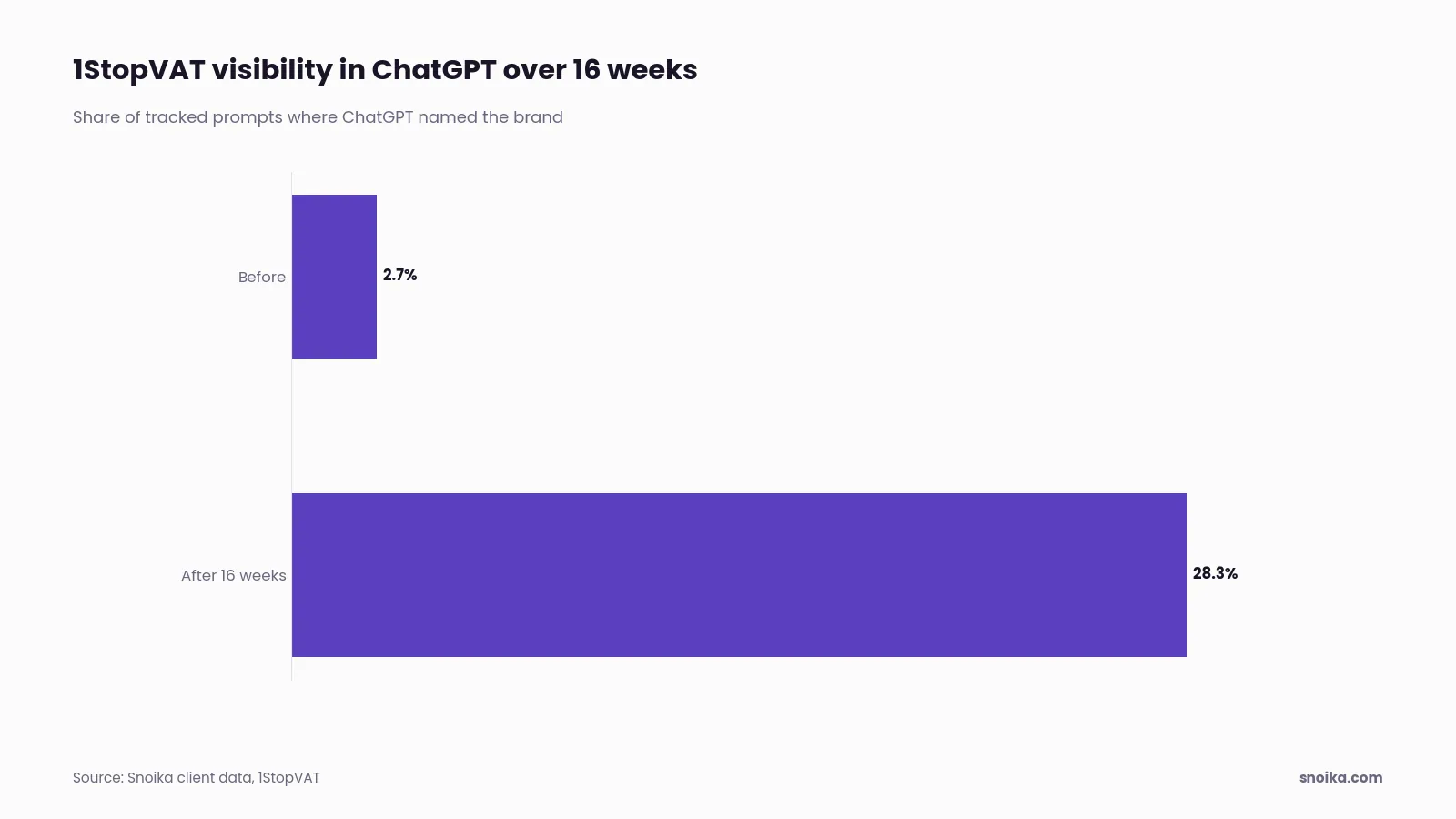
Healthy profiles also hold steady on brand sentiment, and their share of voice against named competitors keeps rising. Progress shows up as a rate over time. Snoika's founder Anton Vedeshin reported to Startup Reporter 1StopVAT's move from 2.7% to 28.3% ChatGPT visibility in 16 weeks.
Fixing your AI presence
Fix the causes in the order the diagnostic found them, and start with crawler access, because a block wipes out any content work. Correct your entity data next. Coverage and category wording come last because they take the longest. 3DPrinterOS, for example, reached #1 visibility in ChatGPT for industry-specific queries, and AI search became a steady source of 3–4 qualified inbound leads/day for the company.
Start this week by checking your robots.txt file and your CDN bot settings. Then run your prompt set ten times per assistant and write down your baseline. Run the same audit again after each fix. Over time, the question of why your brand is not showing in ChatGPT turns into a number you can track and move.
FAQ
Google rankings don't guarantee mentions because ChatGPT's web searches rely on Bing independently of Google. When investigating “why is my brand not showing in chatgpt”, compare Bing results for your buyer prompts and check which sources ChatGPT cites for competitors.
Ask ChatGPT what your company does with web search off, then repeat with search on. Facts borrowed from another company suggest confusion, while vague answers suggest limited information. Compare those answers with your current website and directory profiles to find inconsistencies.
There's no published minimum amount of coverage that guarantees citations. Look for independent mentions that connect your brand to the buyer's question, such as relevant comparisons or reviews. Record the domains repeatedly cited for competitors to identify gaps in your coverage.
Yes, OpenAI uses separate crawlers for training and search. GPTBot collects training data, while OAI-SearchBot supports search visibility. Check that rules blocking GPTBot don't also block OAI-SearchBot, including broad rules in robots.txt or your content delivery network settings.
Track mention rates over weeks, repeating the same prompt set after each fix. The page gives no fixed recovery deadline, and timing depends on the cause being addressed. Use repeated runs rather than a single answer to judge whether visibility is improving.
Keep reading
All articles