Google AI search explained for brands: AI Overviews, AI Mode, what changes
Google AI search is the group of Gemini-powered features that answer a query inside Google before anyone clicks a link. The two that matter for brands are AI Overviews, the summary at the top of regular results, and AI Mode, a separate chat-style space for longer questions. Both draw on Google's index and cite web pages as sources. A brand used to aim for a ranking link, and now it also wants to be a source the answer names.
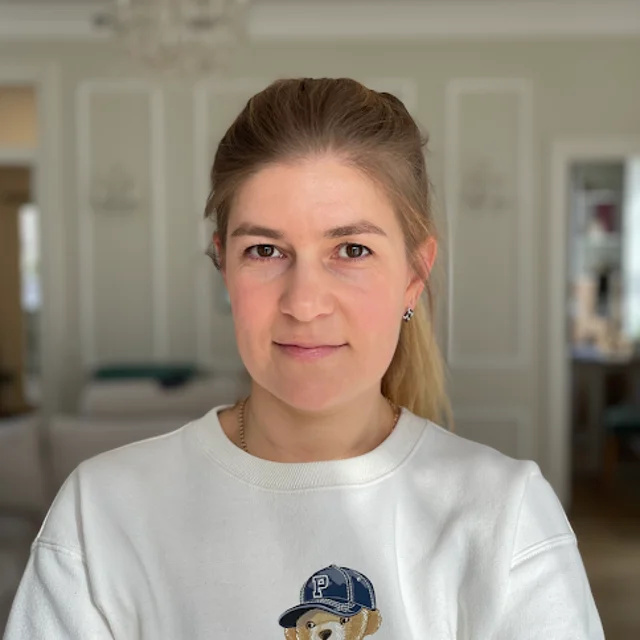 Jevgenia PogadajevaCFO, Snoika · 7 min read




















Google AI search explained
Google AI search is regular Google Search with a language model added on top: Google still ranks pages, and then Gemini reads the best of them and writes an answer. AI Overviews appear on their own whenever Google decides a summary helps. You enter AI Mode on purpose, and it keeps the conversation going across follow-up questions.
Alphabet CEO Sundar Pichai told investors in July 2025 that AI Overviews had 2 billion monthly users across 200 countries and territories. AI Mode had passed 100 million monthly active users in the US and India at the time. The table puts the two side by side.
| Attribute | AI Overviews | AI Mode |
|---|---|---|
| Where it appears | Above the organic results, triggered automatically | Its own tab, opened by the user |
| Typical query | Short to medium questions | Long, multi-part questions with follow-ups |
| Reported reach | 2.5 billion+ monthly users (May 2026) | 1 billion+ monthly users (May 2026) |
| Model | Gemini 3 by default since January 2026 | Custom Gemini at launch, Gemini 3.5 Flash default since May 2026 |
| Links shown | A short list of cited sources beside the summary | Inline citations plus a source panel |
Where it appears
- AI Overviews
- Above the organic results, triggered automatically
- AI Mode
- Its own tab, opened by the user
Typical query
- AI Overviews
- Short to medium questions
- AI Mode
- Long, multi-part questions with follow-ups
Reported reach
- AI Overviews
- 2.5 billion+ monthly users (May 2026)
- AI Mode
- 1 billion+ monthly users (May 2026)
Model
- AI Overviews
- Gemini 3 by default since January 2026
- AI Mode
- Custom Gemini at launch, Gemini 3.5 Flash default since May 2026
Links shown
- AI Overviews
- A short list of cited sources beside the summary
- AI Mode
- Inline citations plus a source panel
Check which of the two your own queries trigger before you plan anything. Each one rewards slightly different content.
How AI Overviews build answers
An AI Overview is a summary grounded in pages Google has already retrieved from search results. Google calls this retrieval-augmented generation. The system finds pages for the query and for related sub-questions. Gemini then writes a short answer and links the pages it drew from.
A Pew Research Center study of 900 US adults found that users clicked a traditional result in 8% of visits when an AI summary appeared, compared with 15% when it didn't. Links inside the summary got clicks in just 1% of visits.
In the same Pew data, long questions triggered summaries more often than one- or two-word searches. So if your traffic comes from detailed informational queries, check how much of it now sits under an AI Overview.
How AI Mode changes queries
AI Mode turns one question into dozens of hidden searches. Elizabeth Reid, Head of Google Search, described the method in Google's AI Mode announcement: "Under the hood, AI Mode uses our query fan-out technique, breaking down your question into subtopics and issuing a multitude of queries simultaneously on your behalf."
Reid has said AI Mode queries run 2-3x longer than traditional searches, because users expand keyword searches into descriptions of their whole situation. A person who once searched "CRM for small teams" now asks for a CRM for a team of six that works with Gmail and costs less than a set monthly budget.
For a brand, this means a single page rarely answers the whole question. AI Mode picks the best passage for each sub-question, and it can pull those passages from different sites. Look at the sub-questions behind your main topics. Then check whether a clear answer to each one exists somewhere on your site.
Gemini's role in Google search
Gemini plans the sub-queries that power Google search. It reads the retrieved pages to write the final answer, while Google's ranking systems still decide which pages it gets to read. The model decides what to say, but it can only cite what search has already found.
Google keeps putting its newest models into Search first. When Gemini 3 launched in November 2025, Google called it "the first time we've brought a Gemini model to Search on day one." The same announcement described automatic model routing. Search sends the hardest questions in AI Mode and AI Overviews to the frontier model and keeps faster models for simple tasks.
The Gemini app is a different product. It's a standalone assistant, and it uses its own retrieval. When people say "Google Gemini search," they mean Gemini inside Google Search, the system this page covers. Better reasoning in each new model produces sharper sub-queries. Pages that answer narrow questions precisely gain the most from that.
What signals Google AI cites
Google AI cites crawlable pages it can rank when they answer a specific sub-question better than the alternatives and add something the other sources don't. Google's own guide to generative AI features says AI Overviews and AI Mode run on the same core ranking and quality systems as Search. There's no separate AI index to submit to.
Does ranking in the top 10 still matter?
It helps, but it's no longer a gate. Ahrefs analyzed 4 million AI Overview URLs across 863,000 search results pages and found that only 37.1% of cited URLs also ranked in the organic top 10 for the same query. Another 36.7% didn't rank in the top 100 at all. Those pages were retrieved for a fan-out sub-query.
Why do sub-query rankings count?
Each hidden sub-query is a fresh chance to be retrieved. In a study of 10,000 keywords, Surfer found that pages ranking for the main query and its fan-out queries were 161% more likely to be cited in AI Overviews than pages ranking for the main query alone.
What kind of content gets picked?
Google's guide asks for "non-commodity" content: expert-led material that gives value beyond common knowledge. A page that repeats what the top five results already say gives Gemini no reason to cite it over them. The same Ahrefs study found YouTube was the most cited domain, and its URLs made up 5.6% of all AI Overview citations.
Get cited by AI
A page must be indexed and crawlable for Google AI to cite it. It must also be eligible to show a snippet. If robots rules or a `nosnippet` tag block a page, Gemini can't quote it, however good the content is.
Past that, citations follow from being the clearest source for one narrow question. I'd audit a site on these points before writing anything new:
- Key pages are indexed, and nothing blocks snippets on them.
- Each important question has one page that answers it in the opening lines.
- Pages contain original material, such as first-hand tests or pricing data. A named expert's view also qualifies.
- Facts are current, because a stale figure loses to a fresher source. This applies to dates and prices too.
- Video and images exist where the topic is visual, since Google cites them too.
Google's guide says it doesn't process llms.txt files in any special way. It also says content can remain intact for AI features. Spend the time you would use to create artificial chunks on the page itself.
Optimising content for AI Overviews
You optimise content for AI Overviews the same way you optimise for search, with more attention to direct answers and sub-questions. Google's guide says "optimizing for generative AI search is optimizing for the search experience, and thus still SEO."
Start each section with the sentence an AI Overview could lift whole. Write it as a full answer to the heading, and make it true without the paragraphs around it. Then give the evidence. Gemini picks passages, so a section that buries its answer in the fourth sentence competes badly against one that opens with it.
Next, map the fan-out. Take a main query and write down the five to ten questions a careful buyer would ask next. Cover each one under its own heading, or on a linked page if it's big enough. Search the questions yourself in AI Mode and note which sources it names.
The mistake that costs the most is generic content. If your page reads like the average of the current results, Google has no reason to cite you. Add the thing only you can say. Use your own data or test results. Your process is another option.
Measuring AI search visibility
You measure AI search visibility in Google by combining Search Console data with a tracker that samples AI answers for your target prompts. Neither one shows the full picture alone.
Search Console counted AI Mode traffic toward its totals from June 2025, but it merged that data into the Web search bucket. Dedicated generative AI reports arrived on June 3, 2026 and show impressions by page and country. They also break impressions down by device and date. They don't break out clicks by surface. Google first released them to a subset of UK site owners, so check whether your property has access yet.
- List 30 to 100 prompts your buyers would type, and include long AI Mode-style questions.
- Record which sources AI Overviews and AI Mode cite for each prompt, every week or month.
- Track your citation share against two or three named competitors.
- Compare those results with Search Console impressions and branded search volume.
- Recheck after each content update to see which changes moved citations.
AI answers vary from one run to the next, so read the trends rather than single results. And expect fewer clicks per impression than classic search gave you.
All Google AI guides
The topics here each get their own guide in this series. The AI Overviews guide covers trigger rates and click effects in more depth. The AI Mode guide follows query fan-out and multi-turn conversations. Separate guides explain how Gemini fits into Search and which signals drive citations. Another covers how to set up visibility tracking. Start with the one that matches your biggest gap. For most brands, that's measurement, because you can't improve citations you haven't counted.
Next steps
Establish a baseline with your 30 most valuable queries. Run them in AI Overviews and AI Mode, and record who gets cited today. You need that list to identify which pages need a direct answer and which sub-questions you've missed. It also lets you check whether later changes worked. Repeat the check after Google's next model update, since each new Gemini version has reshuffled citations. Snoika audits websites and tracks brand visibility in Google and AI assistants, with human review on top. To see where your pages stand in Google AI search, request a visibility audit from Snoika.
FAQ
Gemini plans related searches and writes answers from the pages Google's ranking systems retrieve. Those ranking systems still determine which pages are available as sources. The standalone Gemini app uses its own retrieval, so its answers aren't equivalent to Search results.
AI Overviews draws citations from retrieved pages that answer the query or a related sub-question and contribute useful information beyond other sources. Pages must be crawlable and indexed, with snippets allowed. Ranking in the main query's top 10 isn't required.
Optimize for google ai search by opening each section with a direct answer and supporting it with original evidence. Cover related questions where they fit, and keep facts current. Check that important pages are indexed and eligible to show snippets before rewriting content.
Combine Search Console data with repeated checks of citations for your target questions. Sample 30 to 100 prompts weekly or monthly, recording which sources appear in each search feature. Compare citation trends with impressions rather than judging visibility from a single answer.
AI citations can bring visits, but they don't guarantee more traffic. In Pew Research Center's study of 900 US adults, links within AI summaries received clicks in 1% of visits. Track citations separately from website traffic.
Keep reading
All articles