Snoika vs Peec AI for AI visibility
Peec AI and Snoika differ in who acts on the data. Peec AI is a self-serve analytics tool that tracks how ChatGPT and Perplexity mention your brand, then gives your team a list of suggested fixes. Snoika combines AI visibility tracking with content production, writing and publishing the pages meant to change those answers. Peec AI fits teams that already have writers and an SEO lead, while Snoika fits teams that need content produced for them.

























Peec AI vs Snoika compared
Peec AI measures your visibility, while Snoika also does the content work. The table sets the two AI SEO tools side by side on the points buyers check first.
| Attribute | Peec AI | Snoika |
|---|---|---|
| Core job | AI search analytics and recommendations | Audits, tracking, content creation and publishing |
| Tracking cadence | Daily prompt runs | Weekly prompt sets |
| Default engines | 3 models of your choice on the entry tier | ChatGPT and Google AI Overviews, more in larger setups |
| Content creation | Suggested actions only | Content in 135+ languages and regional variants |
Core job
- Peec AI
- AI search analytics and recommendations
- Snoika
- Audits, tracking, content creation and publishing
Tracking cadence
- Peec AI
- Daily prompt runs
- Snoika
- Weekly prompt sets
Default engines
- Peec AI
- 3 models of your choice on the entry tier
- Snoika
- ChatGPT and Google AI Overviews, more in larger setups
Content creation
- Peec AI
- Suggested actions only
- Snoika
- Content in 135+ languages and regional variants
Peec AI is a legitimate, well-funded company. TechCrunch reports that it's based in Berlin and raised a $21 million Series A led by the European fund Singular in November 2025. CEO Marius Meiners told the outlet the company's valuation had passed $100 million. Dealroom lists Wix and HomeToGo among its customers.
What Peec AI tracks
Peec AI tracks how often your brand appears in AI answers, where it sits in those answers and how it's described. It runs your prompt library every day and logs the source domains each answer cites. You start by writing prompts that cover brand and buyer-intent questions, and Peec then sets your share of mentions against the competitors you add.
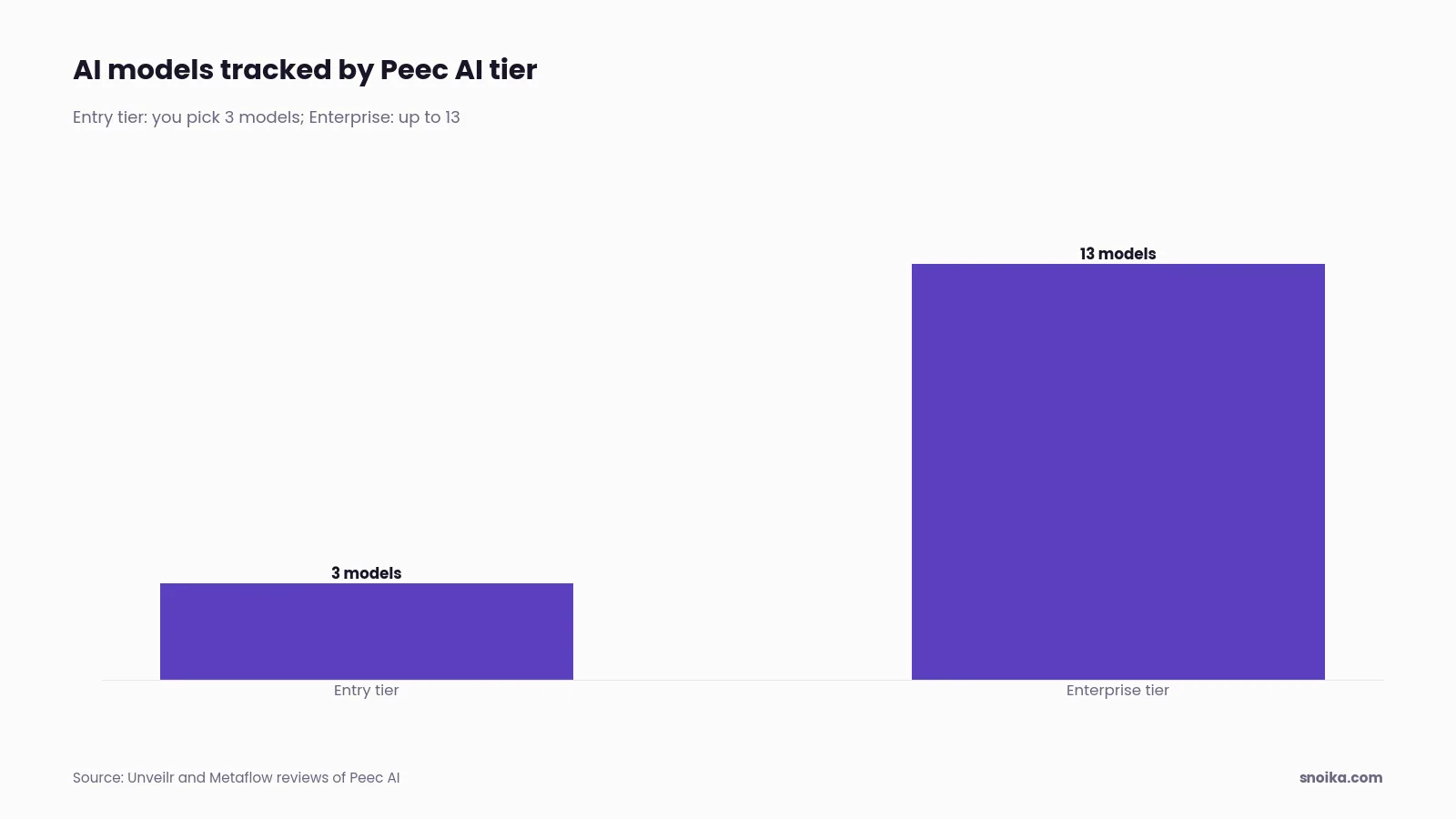
The entry tier lets you pick 3 models, and Unveilr notes that extra models can be added on top. The custom Enterprise tier tracks up to 13 models, and Metaflow's review places API access, single sign-on and Model Context Protocol (MCP) connections at the Enterprise tier. Every tier includes unlimited countries and data exports. We'd check first which engines your buyers use, because a brand whose buyers live in Claude or Gemini needs those models in its set.
What Snoika tracks
Snoika tracks mentions, share of voice, sentiment and citations in ChatGPT and Google AI Overviews, where most AI search traffic happens, through weekly prompt sets. The platform also audits your website and tracks your Google visibility, so you read AI answers and organic rankings in one place. Larger setups monitor all AI platforms with 500 or more prompts and add advanced competitor intelligence. Snoika Enterprise adds custom integrations and an API, so your visibility data can feed the dashboards you already use.
Weekly runs fit content programs like ours that publish on a monthly rhythm, while daily runs fit teams that report on day-to-day swings.
Content creation vs analytics
Peec AI leaves content publication to your team. Its Actions engine sorts citation sources into owned, editorial, reference and UGC (user-generated content) groups, scores each opportunity from 1 to 3 and returns ranked steps. The GenerateMore review, updated in August 2026, says Peec "identifies the opportunity; your team still executes it." Snoika handles the execution side itself:
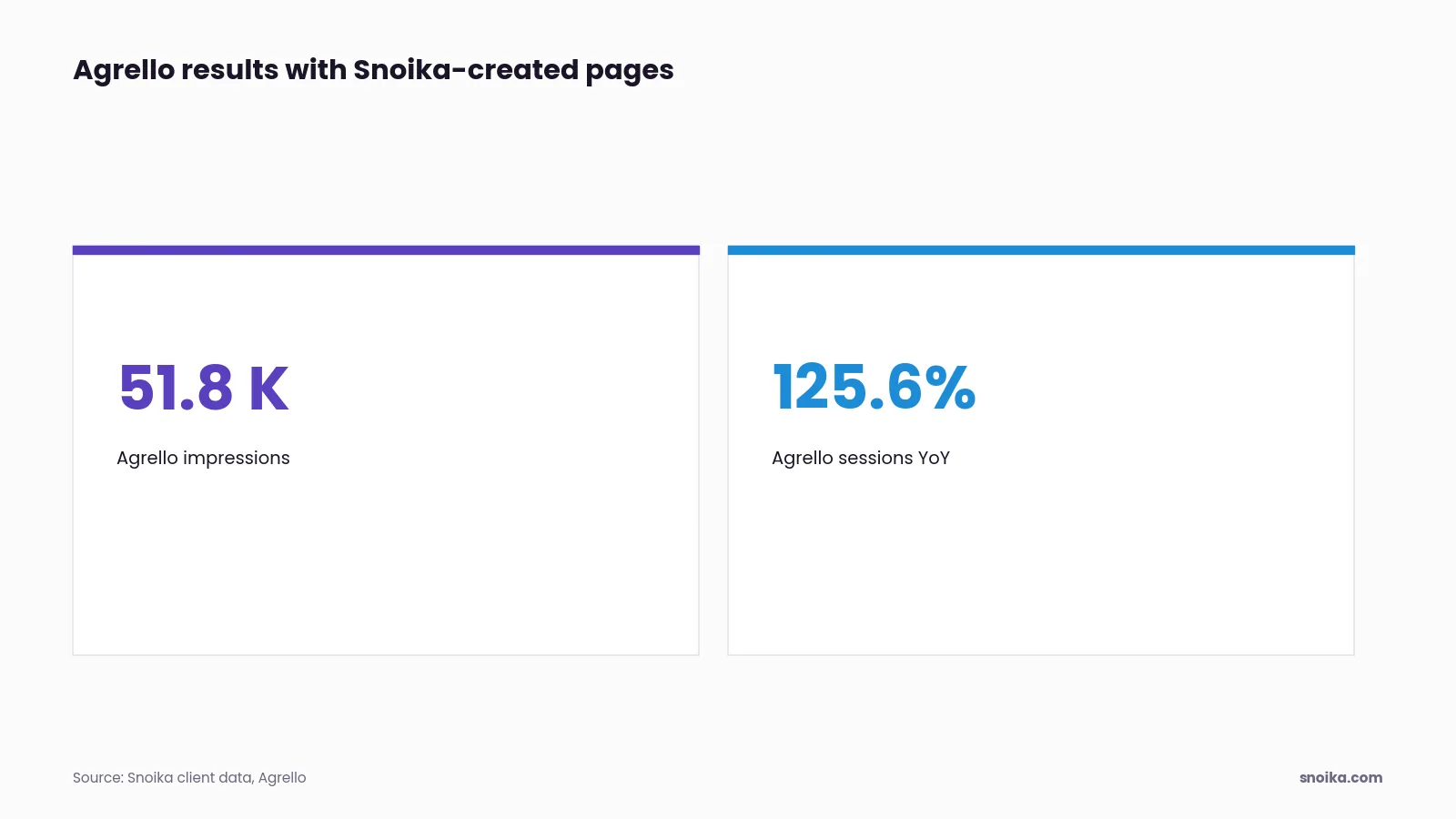
Agrello, an e-signature company, saw "+125.6% organic search sessions YoY" and "generated 51.8K impressions from Snoika-created pages." Content closes the gap that analytics identifies, and if your team is already stretched, more insight won't move your AI visibility.
Citation depth measured
Citation depth is how far a tool goes past "were you mentioned": which URL got cited, how often, and in how many runs. It matters because AI answers shift between runs. SparkToro, the audience research company co-founded by Rand Fishkin, found that ChatGPT and Google's AI return the same brand list in fewer than 1 in 100 repeated runs. Citations also come from pages that don't rank, since an Ahrefs study of 863,000 keywords found that only 38% of cited pages in AI Overviews ranked in Google's top 10 for the same query.
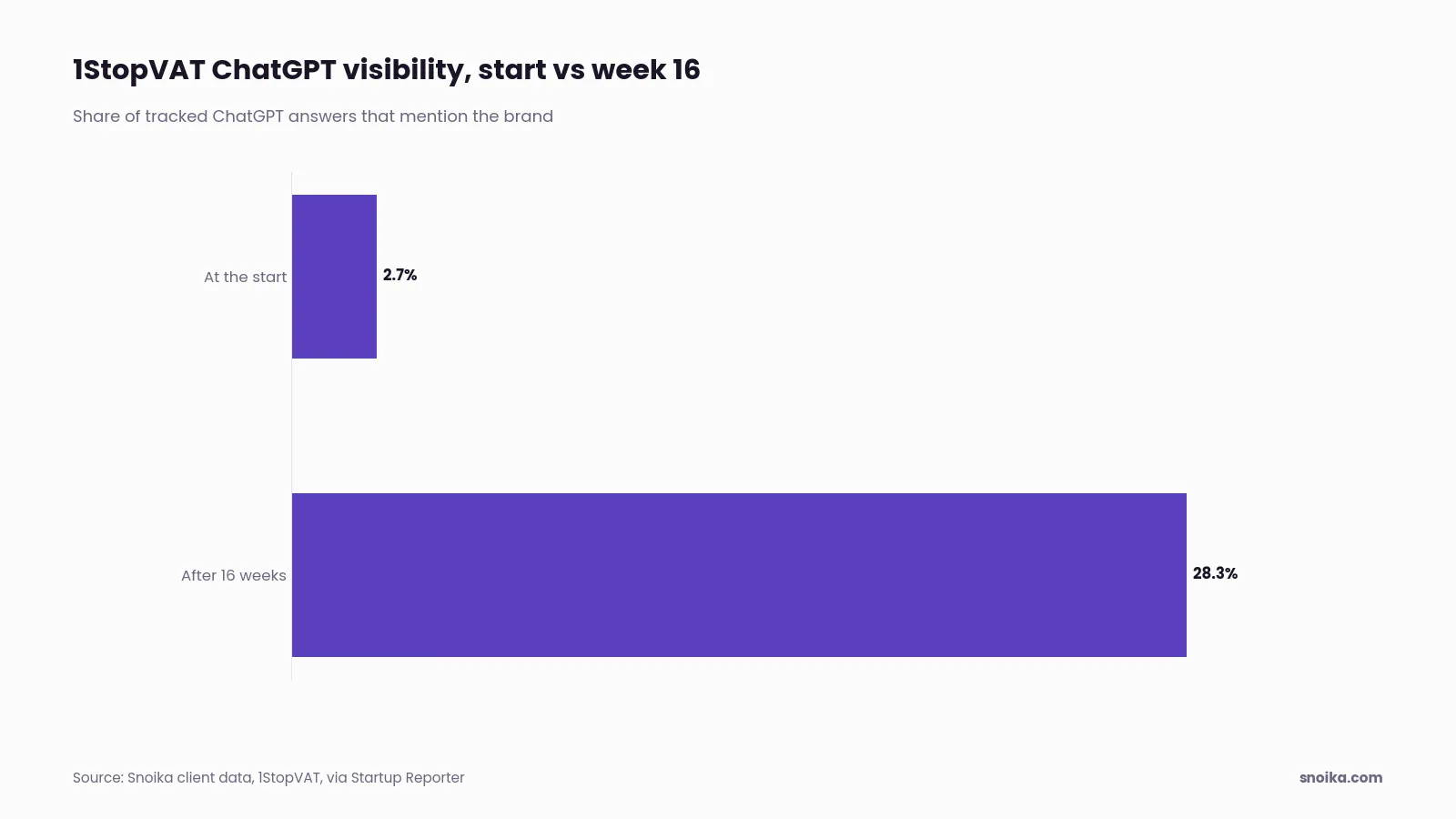
So we read visibility as a percentage across many runs, and treat any single rank with suspicion. Peec's more frequent prompt runs give tighter daily percentages, while Snoika links citations to the pages it then publishes. Snoika's founder Anton Vedeshin reported to Startup Reporter 1StopVAT's move from 2.7% to 28.3% ChatGPT visibility in 16 weeks. Whichever Peec AI alternative you test, we'd check whether it shows the cited URL as well as the domain.
Which team fits each
As in our comparison with Profound, the right fit depends on how many hours your team can spend acting on reports. If those hours were close to zero last month, extra tracking data will sit unused, and a service that publishes the pages is the better choice.
Teams that fit Peec AI
Peec suits in-house marketing teams and agencies that already produce content and need clean daily numbers. Because seats are unlimited, an agency can give every client lead a login. If your weekly meeting already has someone responsible for content, PR and technical fixes, Peec's action list goes straight into their backlog.
Teams that fit Snoika
Snoika suits companies with no spare writers, and brands selling in several markets, since content comes in 135+ languages and regional variants. It also suits B2B firms that want AI search to bring in leads and prefer to review and approve pages rather than write them. Plans are on the pricing page.
Switching from Peec AI
Switching takes a few steps, and your history comes with you because Peec allows data exports on every tier. We run the move in this order:
- 011Export your dataExport your Peec prompt library, competitor list and visibility history.
- 022Set a baselineWe start with a free AI visibility report to set a baseline on Snoika.
- 033OnboardingWe learn your category, your buyers and your goals, and ask for access to Google Analytics 4 (GA4), Google Search Console and Google Tag Manager.
- 044CMS accessGrant CMS access if you want pages published on your domain.
- 055Overlap periodKeep Peec running for at least one month, so you can compare readings for the same prompts.
- 066First pagesApprove the first pages in the dashboard, then track their citations.
We advise against cancelling the old tool before both platforms have measured the same prompts. Daily and weekly cadences produce different numbers, so without an overlap period a change in method can look like a change in visibility.
FAQ
Peec AI tracks mentions and recommends actions, but it doesn't publish content, so your team has to turn those recommendations into pages. Snoika writes, reviews and publishes those pages on your own domain after your approval.
Yes. TechCrunch reported that the Berlin-based company raised a $21 million Series A in November 2025, and Dealroom lists Wix and HomeToGo among its customers. Those facts support its legitimacy, but they don't establish whether its features suit your needs.
We advise keeping both tools running for at least one month before cancelling the old subscription, and comparing the same prompts during that overlap, since daily and weekly tracking produce different readings. Export your visibility history beforehand so it stays available for reference.
Other comparisons