
AI Search Visibility
Get visible in ChatGPT, Gemini & Perplexity
How It Works
Our 5-step AI visibility process
Features
Full-stack AI + SEO marketing suite
AI Visibility Platform
Explore the full suite of tools to dominate AI search results.
Explore FeaturesBy Industry
SaaS
Software companies and SaaS platforms
Startups
Growth and AI visibility for early-stage startups
Enterprise
Large organizations and enterprise companies
For Agencies
Solutions for marketing and consulting agencies
Ecommerce Retail
Online stores and retail brands
Real Estate Advertising
Marketing and advertising solutions for real estate businesses
By Role
By Use Case
AI-Powered Content Generator
AI-powered content generation
AI & SEO Topic Generator
Generate content ideas and topic clusters
SEO Content Strategy
Strategic SEO content planning
SEO Media Plan
Structured SEO media planning
AI Visibility Report
Measure and track AI search visibility
Visibility Booster
Boost SEO visibility at scale
Blog & SEO Growth
Scale organic traffic through blog content
Media Publishing
Reddit Growth Strategy
Community-driven growth and visibility
YouTube Content Strategy
Video content distribution and audience growth
LinkedIn Thought Leadership
Build authority and professional visibility
Backlinks Strategy
Strategic link building for authority and visibility
Wikidata
Structured brand entity data for search and AI
Website Rewriting
Answer-first rewrites of your highest-value pages
Website Creation
SEO + AI-optimized websites built in days
Trustpilot Growth
Review strategy, reputation, and AI visibility
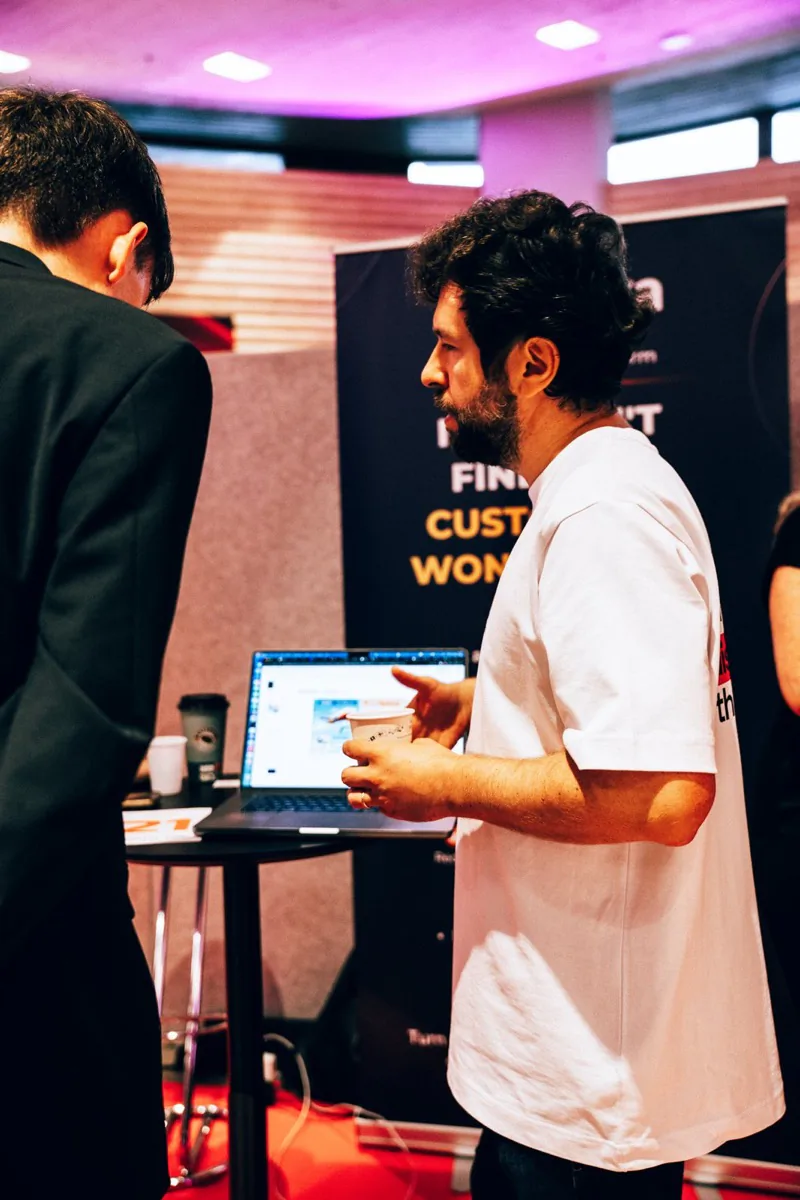
Snoika at NORDEEP 2026 in Espoo
Snoika went to NORDEEP Espoo to learn how deep tech founders get found by the buyers and investors they need. The summit suits that question because it's built around investment and commercial growth. At its core are 1:1 meetings with startups and investors.


Corporates and researchers also take part. Those meetings show how much of a company's reputation arrives before the founder does. An investor who already knows a startup has read about it somewhere, and that somewhere is now an AI answer.
We work on AI visibility, so we asked founders what ChatGPT says when a buyer describes the problem they solve.
Most hadn't checked. The ones who had checked found a larger competitor or nothing at all. That gap shaped the rest of our conversations at the event.
What deep tech founders asked
Founders wanted to know whether AI answers affect a deep tech sale at all and what a small team can change.


Do buyers use AI to find suppliers?
They do, and the share keeps rising. G2 surveyed 1,076 B2B software buyers in March 2026 and found that 51% of buyers now start software research with an AI chatbot more often than with Google, up from 29% in April 2025. In the same survey, 69% said they picked a different vendor than planned because of what a chatbot told them.
Corporate scouts choosing sensor suppliers have different needs from software buyers, but engineers and procurement teams use the same tools and ask a chatbot to explain a field before they ever email a vendor.
Does a stage demo reach AI answers?
Only when someone writes about it. A live demo reaches the people in the hall. AI models learn about a company from readable text in news coverage and partner pages. Forum threads and documentation also provide that text.
Ahrefs studied 75,000 brands and found that branded web mentions had the strongest link to visibility in Google AI Overviews, at a 0.664 correlation for mentions against 0.218 for backlinks. So what an event is worth for AI visibility comes from the coverage and partner announcements that name your product in plain words.
Is this SEO under a new name?
Partly. Classic search optimization still matters, because Google AI Overviews and ChatGPT's search mode pull from indexed pages. SEO measures rank and clicks, while AI visibility measures whether the model names you and describes you correctly. The Pew Research Center found that users who saw an AI summary clicked a traditional result in 8% of visits, compared with 15% when no summary appeared.
AI search visibility explained
For a technical product, AI search visibility means an AI assistant names your product and describes it accurately when a buyer asks about the problem it solves.
Sam Altman, CEO of OpenAI, said at DevDay in October 2025 that "more than 800 million people use ChatGPT every week."
Technical products face a harder test than consumer apps because the model has to translate your spec sheet into the words a non-specialist uses. A buyer asks which sensor works on mining trucks in heavy dust, so the model has to connect that question to specifications such as "solid-state lidar with 905 nm emitters." If no page links your specifications to that question, the model can't make the link either.
Why technical products stay invisible
Your technical startup is missing from AI answers because the web holds little text that explains what you do in the words a buyer uses. Deep tech websites speak to other engineers or to investors. Young companies haven't been written about much yet. And the useful detail sits in gated whitepapers or scanned PDFs that models read poorly, or that they skip altogether.
Anton Vedeshin, Snoika's visionary, described this from his own early career in a Startup Reporter interview: "At that time I was creating great products, but the market didn't see them." A good product needs readable information for the market to see it.
Start by asking ChatGPT what your company does. If the answer is wrong or thin, look at the sources it cites. Those are the pages shaping your reputation. A missing answer means too few sources, while a wrong one means an old press release or a competitor's comparison page is doing the talking for you.
How AI finds niche products
You get a deep tech product cited by AI when models can match a specific problem to your company across several independent sources.
Vedeshin argues that deep tech startups and truly niche companies get good AI visibility results far more easily than the flood of new AI apps up against big marketing budgets.
He says established firms with real customers also have this advantage. A narrow question has few credible answers, so one well-documented company can own it.
List the 10 to 20 questions a buyer asks before they know your name. Write them in their words.
Publish one page per use case that answers the question directly, with the specifications in readable HTML text.
Get named in independent places, such as trade press and partner pages. University pages also help, as do industry threads on LinkedIn or Reddit.
Keep your one-line description the same everywhere, so models don't piece together conflicting versions.
Rerun the same questions every month and record who gets named. Answers shift, so a single check tells you little.

A spinout with published research already has credibility and only needs the plain-language pages, while a startup with a clear website but no press needs outside mentions first.
NORDEEP 2026 at Dipoli
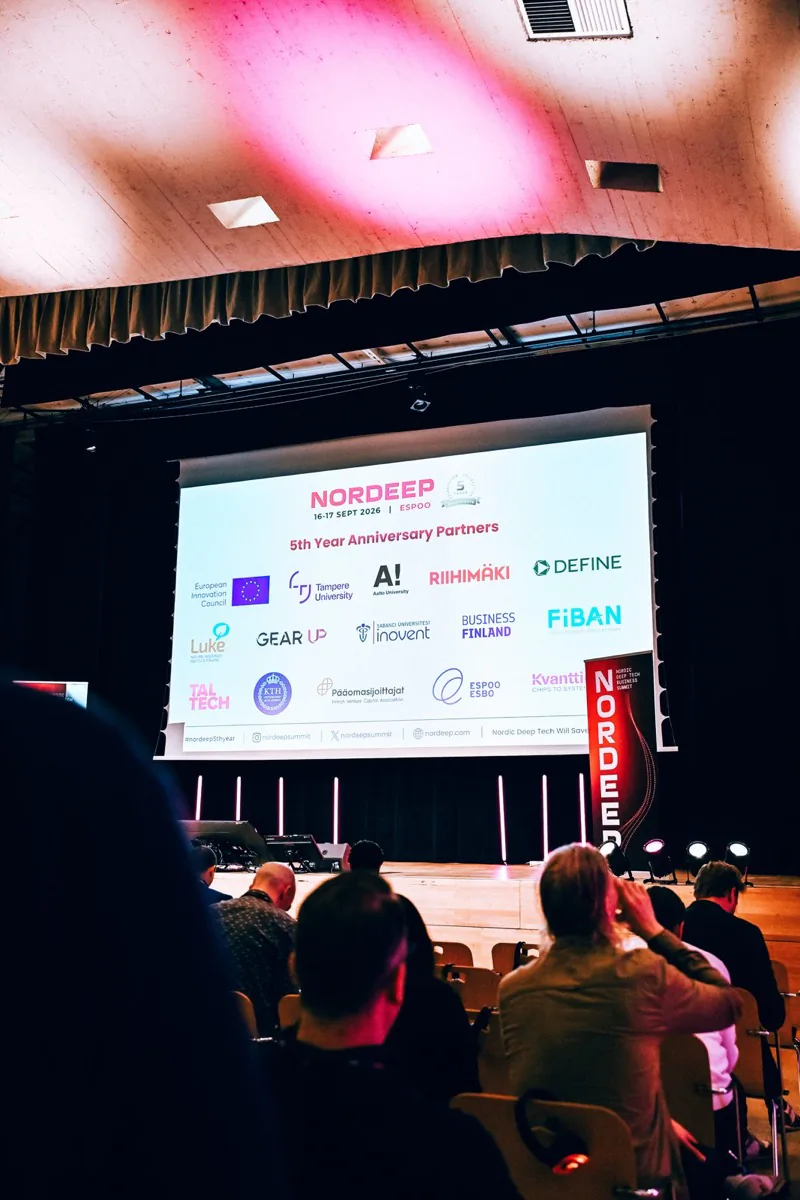
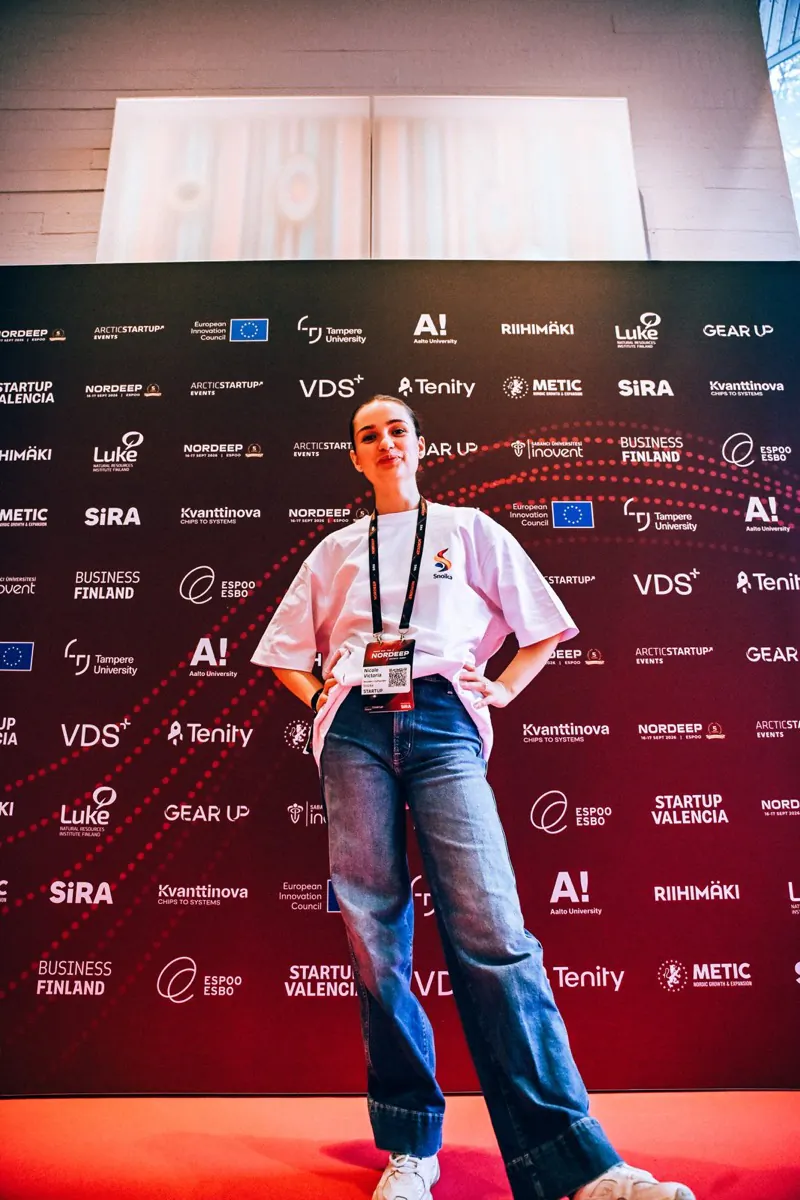
NORDEEP 2026 ran on 16 and 17 September 2026 at Dipoli, the Aalto University building in Otaniemi, Espoo. It's a short metro ride from central Helsinki. ArcticStartup Events organized this fifth anniversary edition, and organizers expected more than 1,500 attendees, among them founders and corporate leaders
The programme ran across eight strategic tracks and focused on working technology. Startups gave live demonstrations in the Discovery Zone exhibition. In the Global Deep Tech Showcase, selected startups had three minutes on the main stage in front of specialized VCs and corporate scouts, with expert juries judging.
Axelera AI and Furhat Robotics were among the companies set to show their technology. Aurora Propulsion Technologies and Aquatica were also on the programme.
Because the format puts hardware and demos first, what happens on stage only reaches AI answers once someone writes it up afterwards.
Patterns Snoika noticed
The strongest technical teams we met were the hardest to find online.
At conferences, Vedeshin regularly meets teams that have been executing for one or two years but that he had never come across online. At NORDEEP, founders showed us working hardware, but a search for the category they lead didn't bring them up.
Where press coverage of these companies existed, it reported the funding round and said little about what the product does.
So an AI model learns the company raised money but can't say what for. We also noticed that founders who tracked search at all tracked only their Google ranking. None of them had a record of what AI assistants say about them, which is the channel their buyers increasingly start with.
Next steps for founders
This week, write down five questions a buyer asks before they know your company exists.
Put each one to ChatGPT and Perplexity, and note who gets named and which sources get cited.
Fix the first gap on your own site with one plain-language page per use case.
Then work on getting named in places you don't control.
If we met you at NORDEEP 2026, you'll know this is the gap we kept asking about.
Snoika builds brand context for AI models through content that it creates and publishes across channels, so deep tech teams don't have to manage three to five separate providers. To see where your product stands today, get a free AI visibility report.
FAQ
What is NORDEEP in Espoo?
NORDEEP is the Nordic Deep Tech Business Summit, a two-day event connecting startups with investors and corporate buyers. The NORDEEP 2026 edition took place on 16 and 17 September at Dipoli in Espoo, Finland.
How do I get my deep tech product cited by AI?
Publish readable pages that connect your product to specific buyer problems, supported by independent coverage. Explain each use case in plain language and include relevant specifications as HTML text. Keep your product description consistent across your website and outside mentions.
Why is my technical startup missing from AI answers?
Your startup may be missing because available pages don't explain its product in buyers' words. Check whether useful details are trapped in gated documents or scanned PDFs, then review whether independent sources describe what the product does.
What does AI search visibility mean for technical products?
AI search visibility means an assistant names your product and describes it accurately when someone asks about a problem it solves. A mention alone isn't enough to assess it. Check whether the answer connects your technical capabilities to the buyer's intended use.
How often should I check my product's AI visibility?
Repeat the same buyer questions monthly across at least two assistants. Record which products appear and which sources get cited. Answers can change between runs of the same question, so a single result doesn't establish whether your visibility has improved.