Building a repeatable tracking workflow
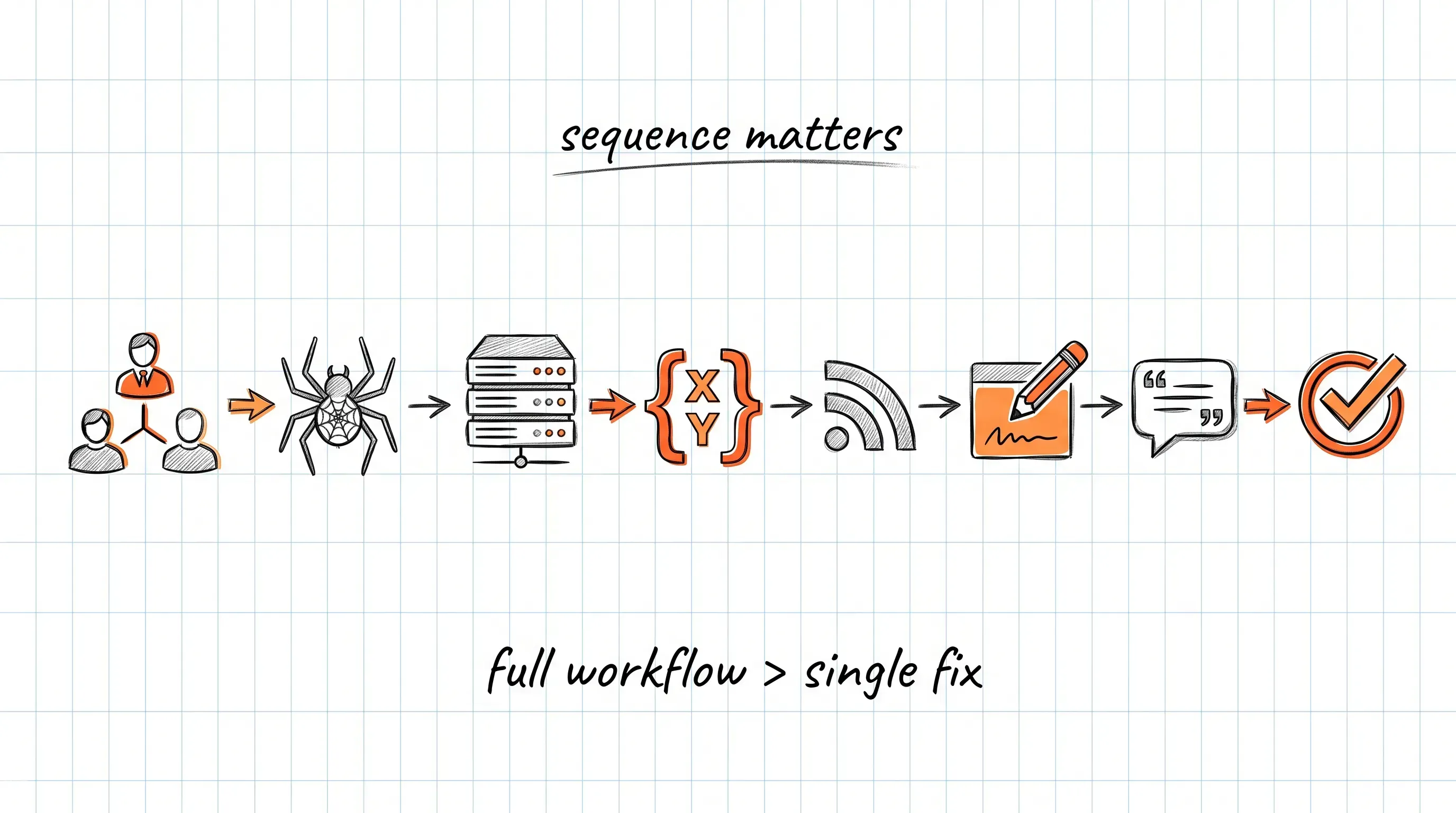
A one-off audit tells you where you stand today and nothing about whether you're improving. To make these metrics useful, you turn them into a process you run on a schedule and store so you can compare deltas over time. The workflow starts with the prompt set, because everything downstream depends on it being representative and stable.
Build your prompt set around the questions real buyers ask across the buying process. A good set covers four query types:
-
Unbranded category queries, like "best tools for X."
-
Competitor queries, where someone names a rival and asks for alternatives.
-
Problem queries, where the buyer describes a pain point without naming any product.
-
Branded queries about your own name, to check how the model describes you.
Then run that set across the major models and store every answer with a timestamp, so March can be measured against January on identical prompts.
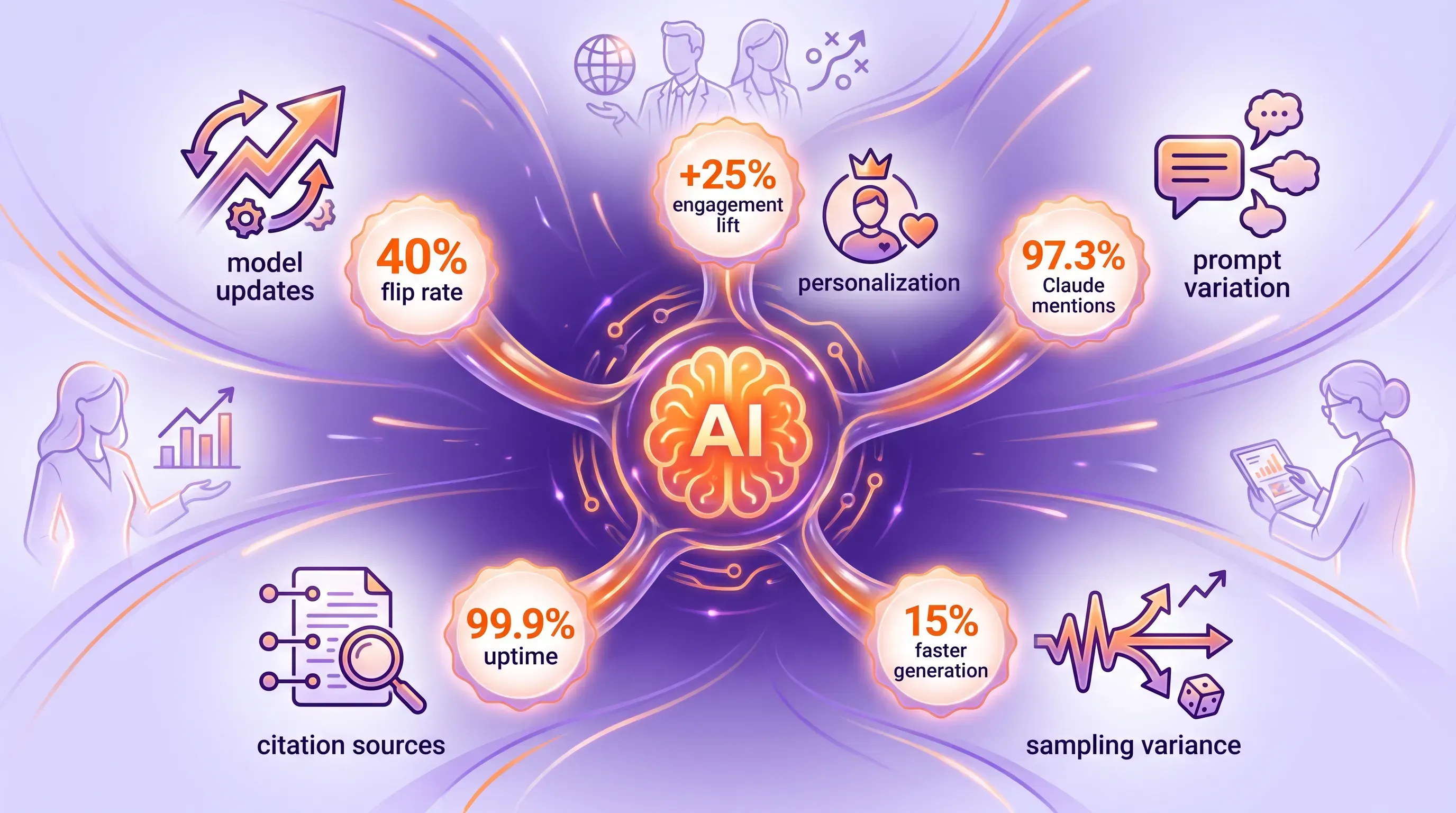
Here's the trap that ruins most manual checking. When you open ChatGPT in your own logged-in browser and type a prompt, you're not seeing what a stranger sees. The model personalizes around what it knows about you. One practitioner who spot-checked LLM visibility tracking tools found ChatGPT silently rewrote a generic prompt about "trusted brands in electronics" into "electronics retail trusted brands NYC store" based on his location. It returned a completely different list. Your personal account is the worst possible measurement instrument. Trustworthy data comes from depersonalized API-level runs that strip out your history and location, so the numbers reflect the category.
LLM search optimization and the feedback loop
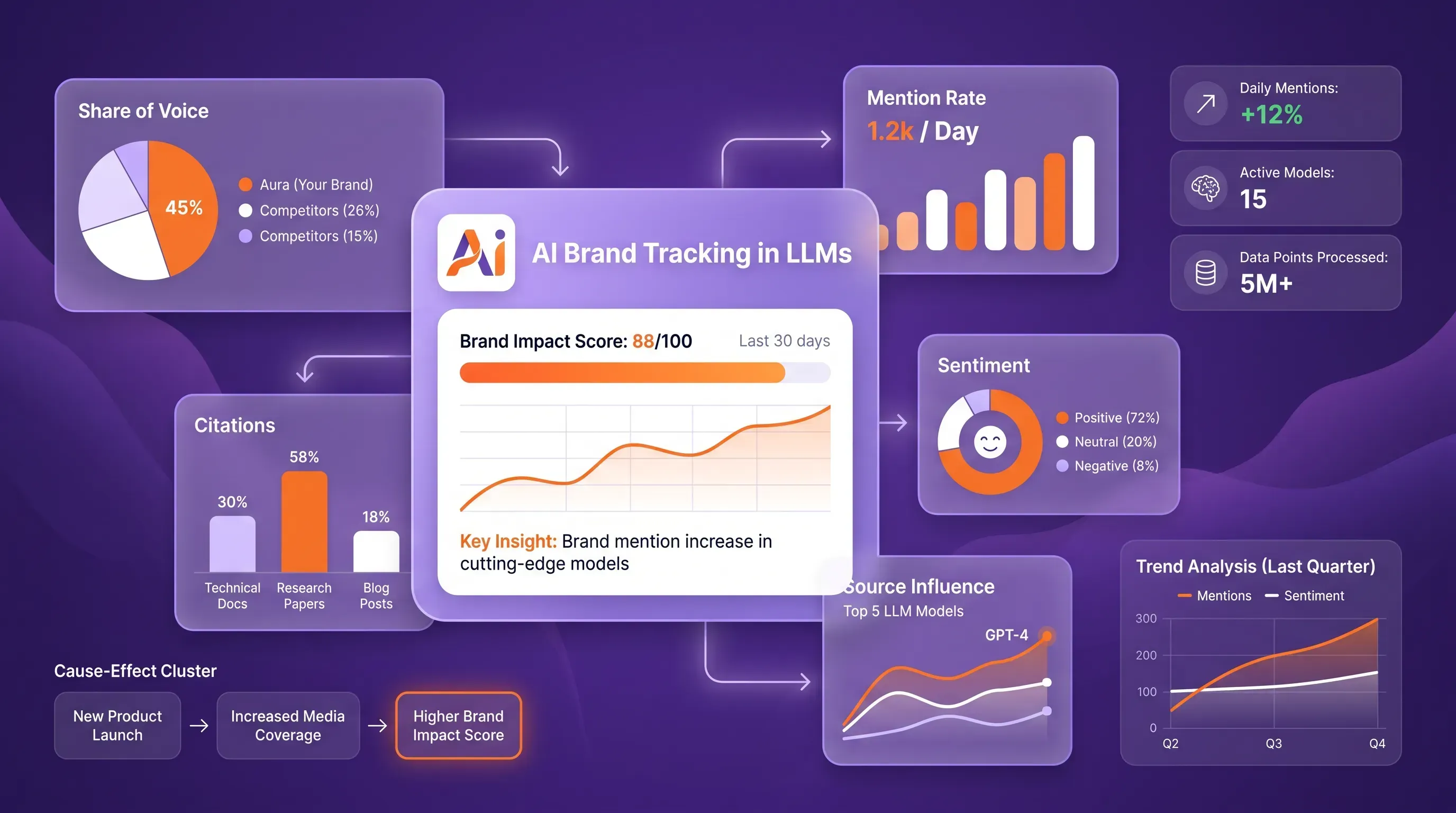
AI brand tracking is the signal that tells you what to fix. Treated as a scoreboard alone, it's a report nobody acts on. Treated as a feedback loop, it directs every move you make in LLM search optimization, which is the whole reason to measure in the first place.
Read the metrics as instructions. A low citation rate on pages where you should be the authority means your content needs a structure the model can quote, so you restructure it into extractable claims and clear answers. Heavy source influence from a community or review site you're absent from means that's where you earn your next mention. A competitor dominating share of voice on a specific prompt tells you exactly which query to target next. LLM search optimization works because tracking hands you a ranked list of fixes instead of a hunch.
What you already know still applies. Strong fundamentals and structured, quotable content still drive AI visibility, and the sources models trust skew toward authority and real discussion. LLM search optimization extends SEO. The measurement loop is what makes that extension precise: after you change something, you re-run the prompt set to see whether the number moved. That's the same discipline you've always run, pointed at a surface that finally has metrics worth reporting.
Running AI brand tracking with Snoika
Everything described above can be done by hand. Your own browser biases the work, and the process falls apart the moment you need to run hundreds of prompts across four platforms every week. This is the job Snoika is built to do. It operationalizes the prompt sets and cross-platform runs, with historical comparison built into the reporting, so you're reporting on clean data instead of wrestling with spreadsheets.
The capabilities map directly onto the metrics this article already covered. Snoika does weekly testing across leading LLMs with real-time scoring and competitive benchmarks, which is the stable, scheduled run your mention rate and share of voice depend on. Its reporting tracks mentions, sentiment, and citations in one view, so the awareness and trust signals sit side by side in the same tool. The competitive intelligence view shows where rivals win the answers you're losing, so raw counts become the benchmark that makes them mean something.
The part that closes the loop is what Snoika does with the gaps it finds. It pairs AI brand tracking with entity optimization and signal injection. The schema and authority signals help models recognize and trust your brand, and the content is built and tested against AI prompts. So the same platform that tells you where you're invisible also feeds the LLM search optimization work that fixes it. That's the difference between a dashboard you stare at and an engine that drives the cycle this article has been describing.
Where to start this week
With LLM visibility tracking, AI visibility stopped being a mystery you can only guess at. It's a measurable channel now, with a defined scoreboard you can track and improve on a repeatable cycle, the same way you've always run rank tracking. The argument of this piece is simple: measure it on a schedule and re-measure after you fix what the gaps point to.
The low-friction first move is a baseline. Your baseline should use 20 to 30 prompts across category and competitor queries, with problem queries included in the set; after a depersonalized run across ChatGPT and Gemini, with Perplexity included as well, record where you show up. That single measurement is your starting line, and from there the cycle of AI brand tracking gives you a number to beat every week.