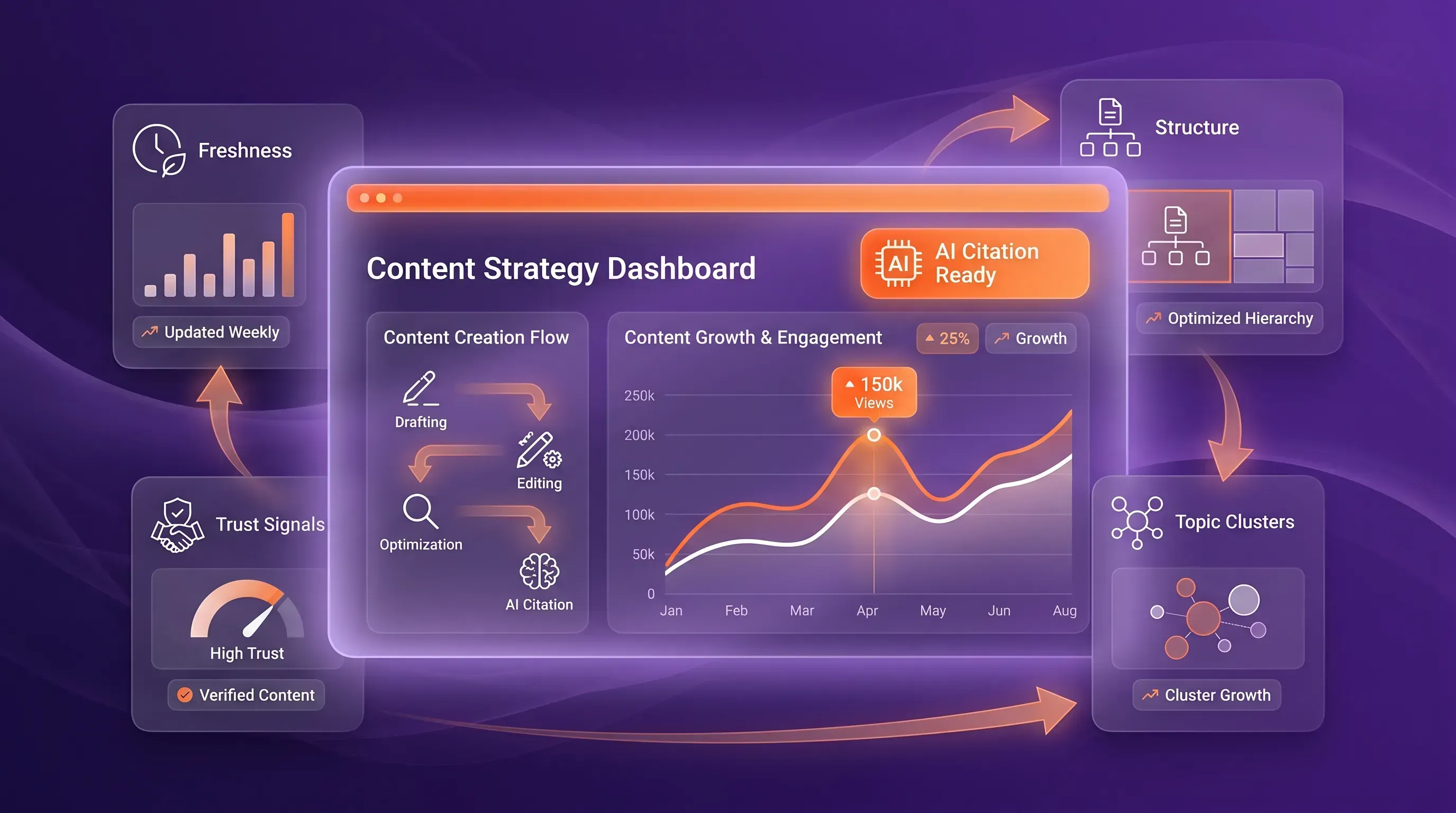
Trust signals that build authority
A model cites sources it considers safe, which means demonstrable expertise earns repeated citation. The credibility markers are concrete. Name your authors and give them real credentials, then use sourced claims and original data to keep the page accurate. ZipTie found that adding author credentials alone improved citation rates from 28% to 43% across 15 articles in four weeks, a single variable moving the needle.
Original data is the strongest trust signal you control. A page that says "recurring giving is growing" gets ignored, while a page reporting a specific figure with a date and a denominator gives the model something quotable and verifiable. The GEO research showed that statistics addition alone lifted source visibility by 32% in their tests, because a number with attribution is exactly the kind of self-contained, checkable claim a model wants to lift.
Off-site mentions matter as much as on-page signals. SE Ranking found that pages mentioned on Reddit earn an average of 5.5 AI citations, far more than pages without community validation. Trust signals compound with cadence and clusters: a site with steady publishing and cluster organization becomes a source the model returns to when named authors and original data back every claim.
Merging SEO content strategy with AI
The relief here is that this is one workstream. The five levers connect your classic SEO content strategy to the demands of machine extraction, so you are not standing up a separate AI team that competes for the same budget. Around 60 to 70% of the signals are shared between what ranks on Google and what AI cites, which means most of your process carries straight over.
Three categories help you sort the work:
-
Carries over unchanged: keyword and entity research, topic clusters, internal linking, fast and crawlable pages, and the E-E-A-T habits you already practice
-
Needs adjustment: answer-first formatting, quarterly refresh cadence instead of annual, and claims backed by specific numbers rather than general statements
-
Genuinely new: tracking citations and brand mentions inside answer engines, which classic rank tracking never measured
Where a traditional SEO content strategy and AI optimization diverge is mostly at the surface layer, on freshness and structure, while the technical foundation stays identical. Google itself states that best practices for SEO continue to be relevant because its generative features are rooted in core Search ranking and quality systems. Build the AI content marketing strategy once and it serves human readers and AI engines from the same pages.
Turning this into a repeatable system
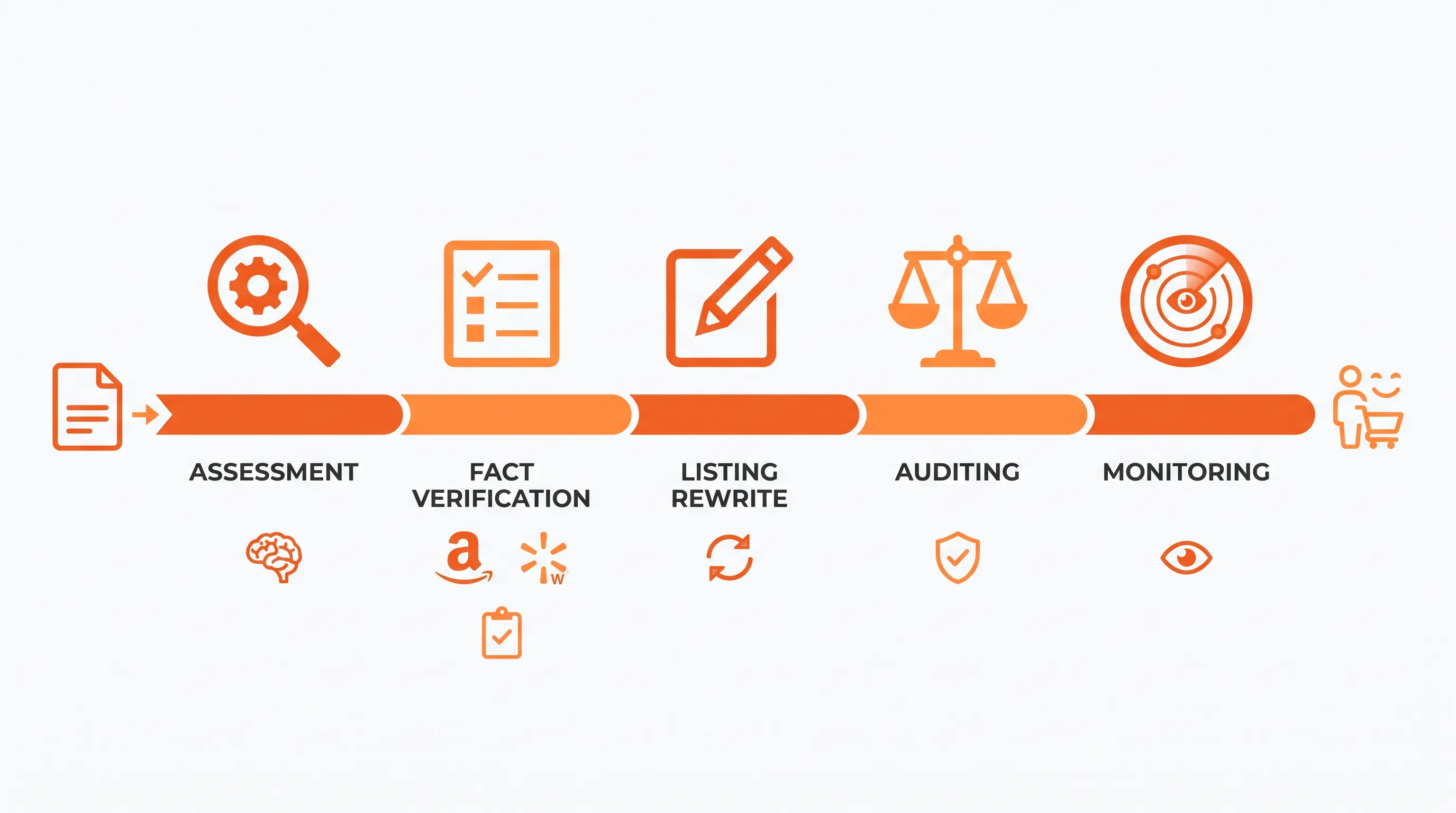
An AI content marketing strategy that lives in a doc dies after the first burst of enthusiasm. Operationalize the five levers into a recurring loop with named owners and dated steps, so the work survives past the launch high. Start by auditing what you already have before you produce anything new.
Run the audit in this order:
-
Inventory your top pages and check each for an answer-first opening and a named author, with at least one original or cited statistic
-
Map those pages to clusters and flag the orphans with no pillar and no supporting links
-
Mark anything older than 13 weeks on a priority topic as a refresh candidate
-
List the semantic gaps where your audience and the answer engines ask questions you haven't answered
That audit gives you a backlog ranked by impact. From there, set a sustainable loop. A monthly rhythm covers new publishing against your cluster map plus structural fixes to existing pages, while a quarterly rhythm handles deeper refreshes and a fresh gap analysis. Assign an owner to each step, because a system without a name attached to it is a wish. The goal is compounding, where every cycle adds nodes to clusters and trust to the domain.
Measuring AI search visibility
Measurement here is messier than rank tracking, and pretending otherwise will only burn your credibility with stakeholders. You can't pull a clean position number, so you watch a set of signals instead. Track how often your brand appears as a citation in answer engines for your target queries and how your branded mentions trend; the topics you cover in AI answers show the gaps that remain.
Referral patterns give you a second read. Perplexity is built to cite and send clicks out, and its referral traffic converts at 14.2% versus 2.8% from Google, so even small volumes are worth isolating in your analytics. Purpose-built tools such as Profound and Otterly, along with AI modules inside Ahrefs and SE Ranking, can monitor citation share across major answer engines, which is the part your existing stack never tracked.
Set expectations on timing before anyone asks. Content can enter citation pools within days, but meaningful citation frequency takes 60 to 90 days of focused effort. Report the leading indicators early, with citations and mentions as topic coverage develops, and let the referral and conversion data follow. That AI content marketing strategy framing keeps stakeholders invested while the system compounds.
Start building today
Pull the five levers back into one picture. You publish on a cadence you can hold and cover the full semantic space of your topics; that coverage becomes clusters with extractable passages, and each claim carries the trust signals that make you safe to cite. None of these works alone. Being cited by LLMs is the cumulative payoff of an AI content marketing strategy that runs every cycle.
Your next step is the audit. Use the five levers to inventory your top pages, then commit to one full cycle before you judge the ranked fixes. Snoika is the AI search visibility platform built for this work; its LLM Visibility Engine and Synthetic Q&A Benchmark use signal injection so your AI content marketing strategy earns citations across ChatGPT and Gemini and holds ground in classic search. Request an AI Visibility Report to see where your gaps sit, then run your first cycle.