
Automatic internal linking tool
Snoika's automatic internal linking tool plans every link a page needs before anyone writes it. Each new page joins its topic cluster on the day it goes live. We set the links in the content map, publish the page on your own domain and then check the site for orphan pages and broken links. To see where your site stands, start with the free AI visibility audit, which shows which clusters are already visible and requires no access to any of your systems.
Trusted by

























Links placed by content pillar
Snoika places internal links by content pillar because the content map sets each page's links before the writing starts. The map lists the pages each new page links out to, so pillar guides, cluster posts and product pages link to each other as one set. The map also tells you which page owns a topic.
Up to the pillar
Every cluster post links to the pillar guide it supports.
Across the cluster
Sibling posts link to each other where their subtopics meet.
To product pages
Posts that answer a buying question point to the product page that solves it.
Down from the pillar
The pillar guide links to every cluster post under it.
Before you approve a map, check that each pillar matches a topic your buyers search for.
Why clusters need automatic links
A cluster only works when every page in it is connected, and manual linking stops keeping up once the library grows. Every new post needs links from older posts, and those older posts are rarely reopened. Google's own guidance says that "every page you care about should have a link from at least one other page on your site."
John Mueller, Search Advocate at Google, called internal linking "one of the biggest things that you can do on a website to guide Google and guide visitors to the pages that you think are important." With a large content library, automation is the only way to keep up. We plan the links in the map and let publishing add them, so nobody has to go back and patch old pages later.
Links follow your content plan
Our automated internal linking follows the content plan, so it works from topic clusters as well as keywords. Keyword matching adds a link wherever a phrase shows up, even when the target page covers a different intent. Our researched content map instead gives each page a pillar and a role inside its cluster, and that role determines its links.
So if two posts share a phrase but serve different buyers, they don't get linked by accident. When you review a map, look at the pages each post links to. If a link would surprise a reader, it shouldn't be there.
No manual linking after publish
Once a page is published, the pages the map lists link to it, and nobody edits old posts by hand. Here's how a page moves from plan to live:
Plan
The map sets the page's links to the pillar and the cluster, plus the links it gets from existing pages.
Approve
You review and approve every page in the dashboard before it goes out.
Publish
The page goes live on your own domain through a DNS connection. It works on any CMS and needs no migration.
Check
After publishing, Snoika scans for orphan pages and broken internal links.
How link decisions are made
Every link decision comes from the page's place in the content map and the cluster around it. Automated workflows propose the links, and a human review layer checks them before anything ships. The same team runs both the platform and the services, so nobody passes the work between vendors along the way.
Which pages link out
A new page links up to its pillar and across to the cluster posts that answer the reader's next question. It also links to a product page when the topic calls for one. Anchor text describes the target page, as Google's link guidance asks, so a reader knows where each link goes.
Which pages link in
The map names the existing pages that will point to the new one. These are the pillar and the cluster posts closest in topic. A page that no other page links to is an orphan, and the map is built so that doesn't happen.
Where humans review
Our reviewers read the proposed links in context. They remove any link that breaks the flow of the text or sends the reader off topic. You then approve the finished page yourself.
Ranking signals internal links send
Internal links tell search engines and AI assistants which pages exist, which matter most and what each page is about. Google says the vast majority of new pages it finds every day are found through links.
| Signal | What it tells crawlers |
|---|---|
| Discovery | A new page exists and can be crawled |
| Importance | Pages with more internal links matter more |
| Topic context | Anchor text describes the target page |
| Cluster depth | The site covers a subject in full |
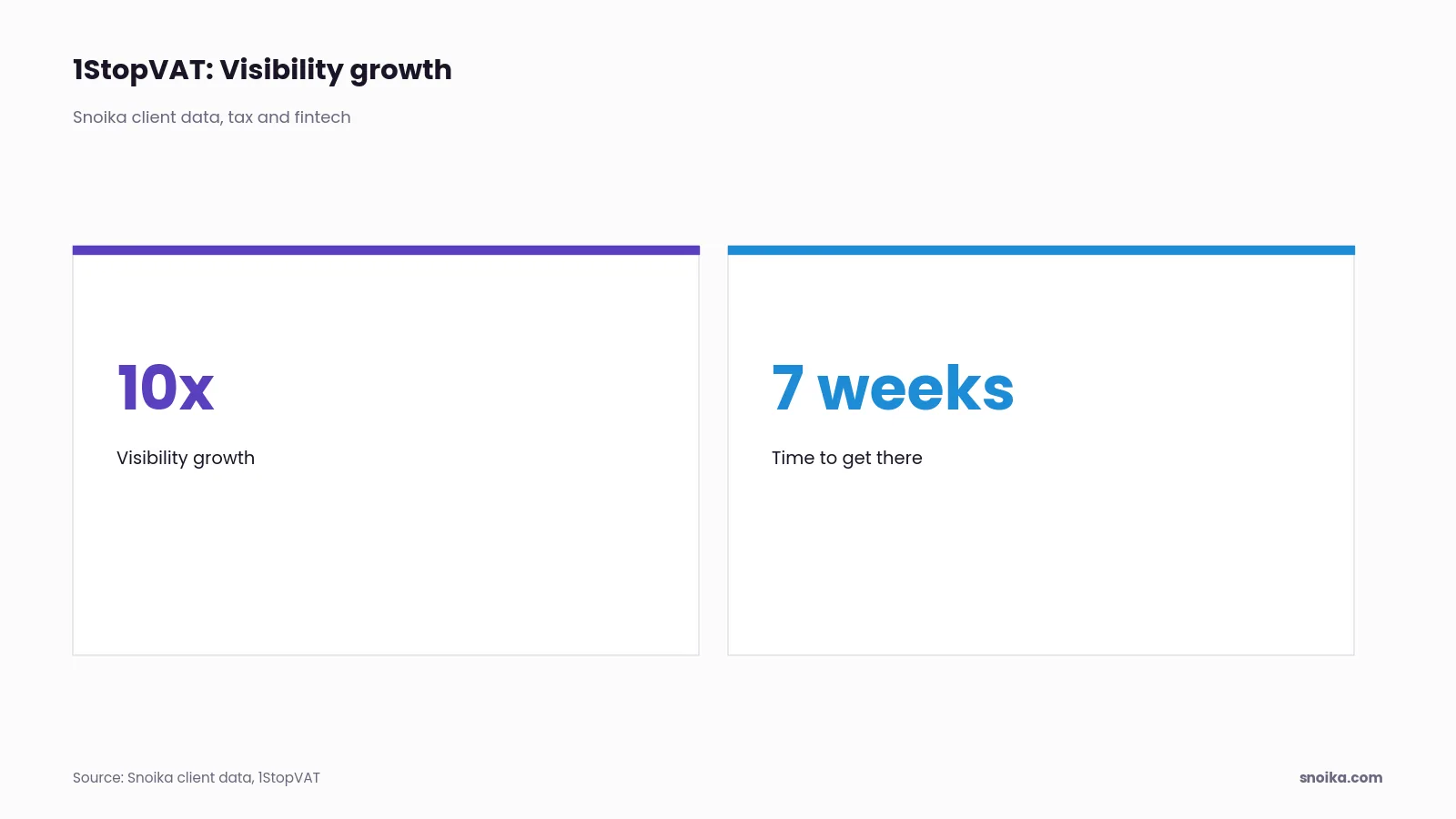
For B2B sites, AI internal linking helps you get cited because assistants pull answers from pages they can find and trust on a topic. A linked cluster gives an assistant the whole answer by connecting the definition to the product page. 1StopVAT, in tax and fintech, saw 10x growth in ChatGPT visibility in 7 weeks.
What broken link structures cost
A broken link structure costs you crawl attention and buries pages that merit rankings or citations. In the app, you can check your internal links and backlinks:
Orphan pages
No internal link points to them, so crawlers and readers rarely reach them.
Broken links
They send visitors to error pages and lose the value the link carried.
Links to redirects
Each extra hop slows crawling and weakens the signal.
Referring domains gained or lost
A lost domain means a page needs more internal support.
We fix orphan pages first, because they're the cheapest fix.
Measuring link equity across clusters
We measure link equity by comparing how each cluster performs in search and AI answers against how well its pages link to each other. When an engagement starts, we ask for Google Analytics 4, Google Search Console and Google Tag Manager access. That lets us tie the results to the traffic you already measure.
With weekly prompt sets, our tracking measures mentions, share of voice, sentiment and citations in ChatGPT and Google AI Overviews. If a cluster has strong internal links but no citations, the content needs work. If it has weak links and few impressions, the structure is the problem.
FAQ
Snoika assigns internal links from the content map, according to each page's pillar and role within its topic cluster. The map specifies both the links a new page sends out and the links it receives from existing pages.
We define outgoing and incoming links in the content map before publishing, and publishing applies those connections. Existing pages then link to new content without manual edits, and follow-up scans find orphan pages and broken links.
Snoika proposes links from each page's topic and purpose in a researched content map, so shared wording alone never triggers a link. Our reviewers check every proposed link in context before publication.
Internal links help assistants discover related pages and understand their topic context. Connecting explanatory content to the relevant product pages gives an assistant the whole answer in one linked cluster.
Our automated check takes about two hours, after a short form and an onboarding call. The audit doesn't require access to any of your systems.