
AI Search Visibility
Get visible in ChatGPT, Gemini & Perplexity
How It Works
Our 5-step AI visibility process
Features
Full-stack AI + SEO marketing suite
AI Visibility Platform
Explore the full suite of tools to dominate AI search results.
Explore FeaturesBy Industry
SaaS
Software companies and SaaS platforms
Startups
Growth and AI visibility for early-stage startups
Enterprise
Large organizations and enterprise companies
For Agencies
Solutions for marketing and consulting agencies
Ecommerce Retail
Online stores and retail brands
Real Estate Advertising
Marketing and advertising solutions for real estate businesses
By Role
By Use Case
AI-Powered Content Generator
AI-powered content generation
AI & SEO Topic Generator
Generate content ideas and topic clusters
SEO Content Strategy
Strategic SEO content planning
SEO Media Plan
Structured SEO media planning
AI Visibility Report
Measure and track AI search visibility
Visibility Booster
Boost SEO visibility at scale
Blog & SEO Growth
Scale organic traffic through blog content
Media Publishing
Reddit Growth Strategy
Community-driven growth and visibility
YouTube Content Strategy
Video content distribution and audience growth
LinkedIn Thought Leadership
Build authority and professional visibility
Backlinks Strategy
Strategic link building for authority and visibility
Wikidata
Structured brand entity data for search and AI
Website Rewriting
Answer-first rewrites of your highest-value pages
Website Creation
SEO + AI-optimized websites built in days
Trustpilot Growth
Review strategy, reputation, and AI visibility
TechBBQ 2026 recap from Copenhagen
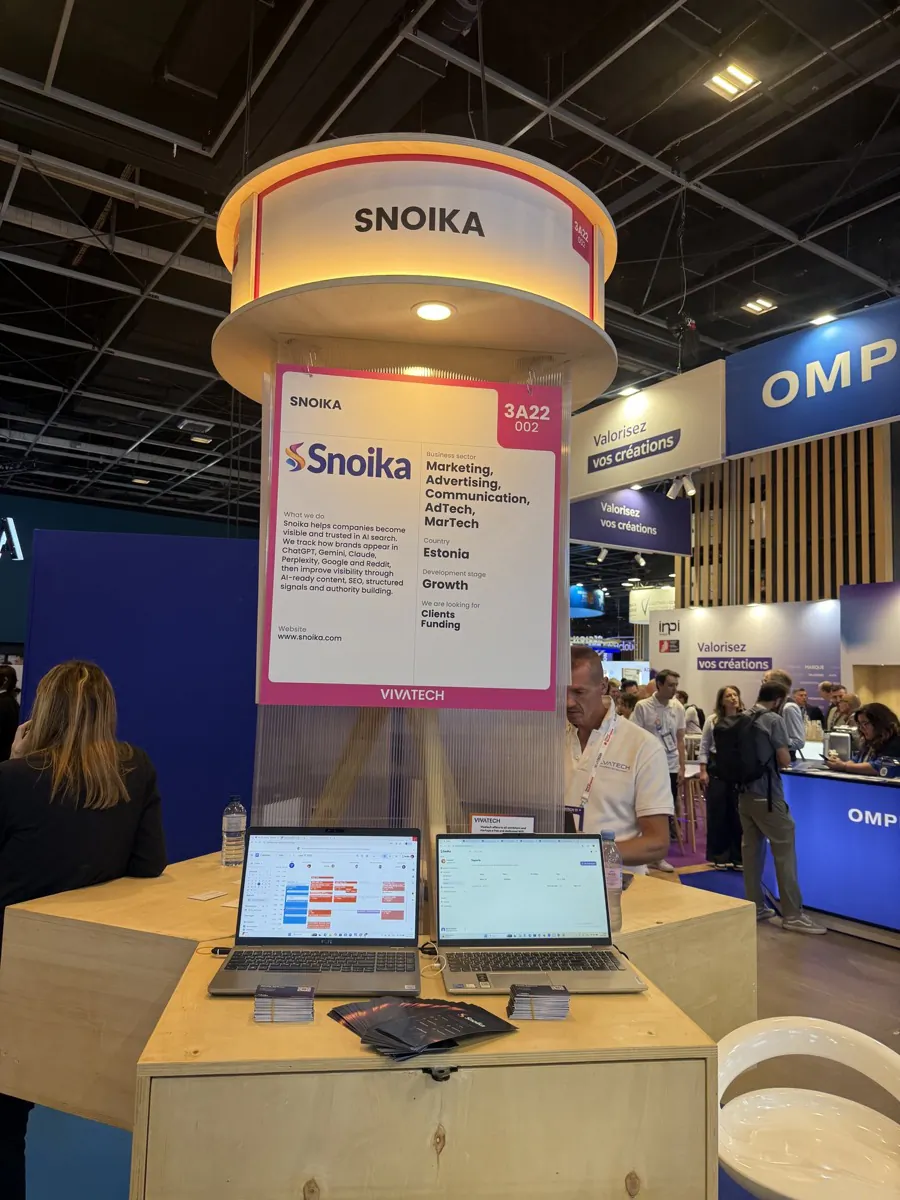
At TechBBQ 2026 we presented Snoika, our AI visibility execution platform, from a stand that ran on both days. I ran it with our visionary Anton Vedeshin, and visitors kept coming across the 2 days. In most conversations, we asked people how visible their company actually is inside AI answers, and then Anton showed them how Snoika works on their own brand.
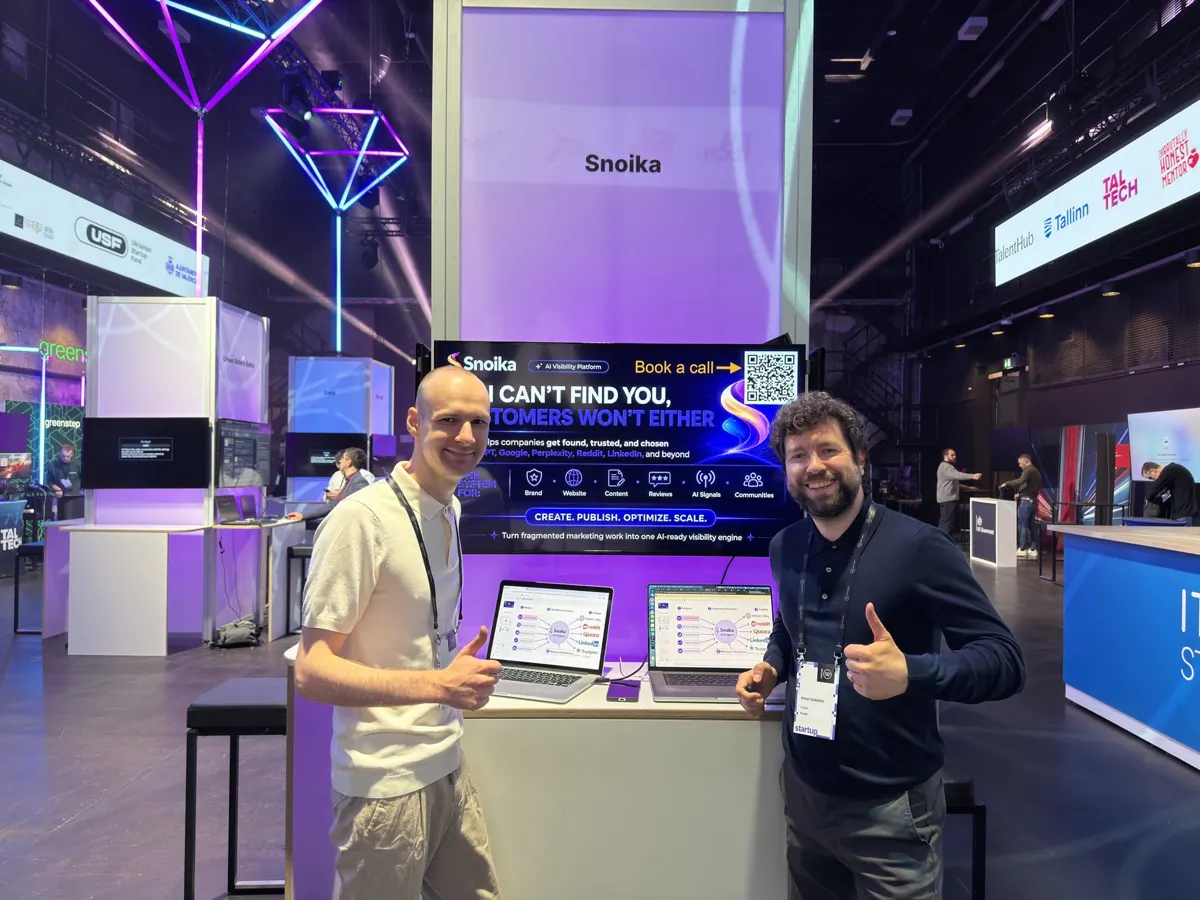
Most of the demo time went to execution.
Plenty of tools show a founder where they're missing. Snoika also builds the brand context AI models draw on. It then creates content and publishes it across several channels. So a company doesn't have to hire 3 to 5 separate providers to close the gap.
You can run a rough version of our stand test yourself. Ask an AI assistant the question your buyer would ask, then check whether your company comes up in the answer.
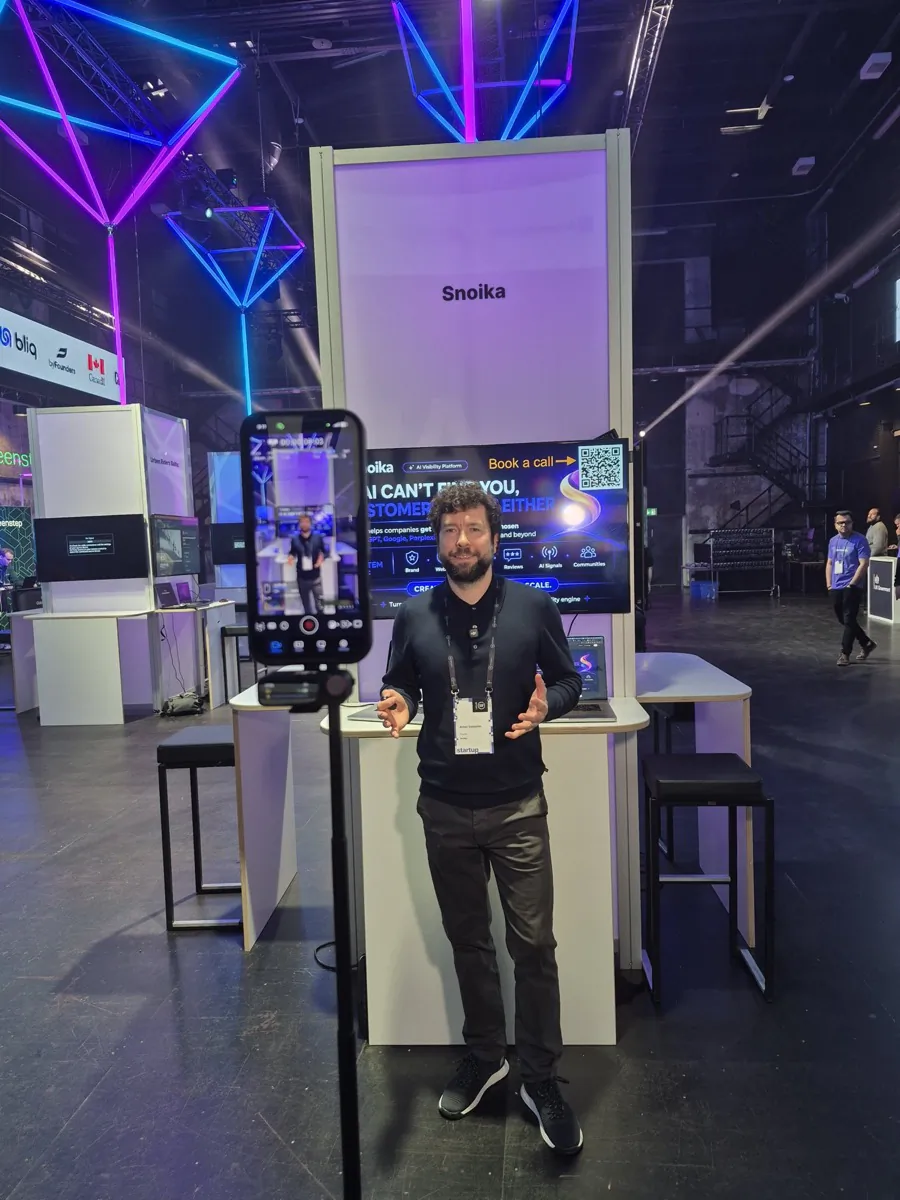
The Copenhagen venue
The main summit ran at Bella Center Copenhagen, Center Blvd. 5, in the Ørestad district south of the city center. Investor Day came first, on 25 August, at a separate venue. If you're planning to attend next year, keep that split in mind, because investor meetings and the summit floor don't take place in the same building.
25 August 2026
Investor sessions
26 August 2026
Stages, stands, pitches
27 August 2026
Stages, stands, pitches
Bella Center has its own metro stop, so the trip from central Copenhagen is short. The organizers have already listed the next edition for September 8-9, 2027. Check the Investor Day date as soon as it's published, since that date decides your travel plans.
Anton Vedeshin interview highlights
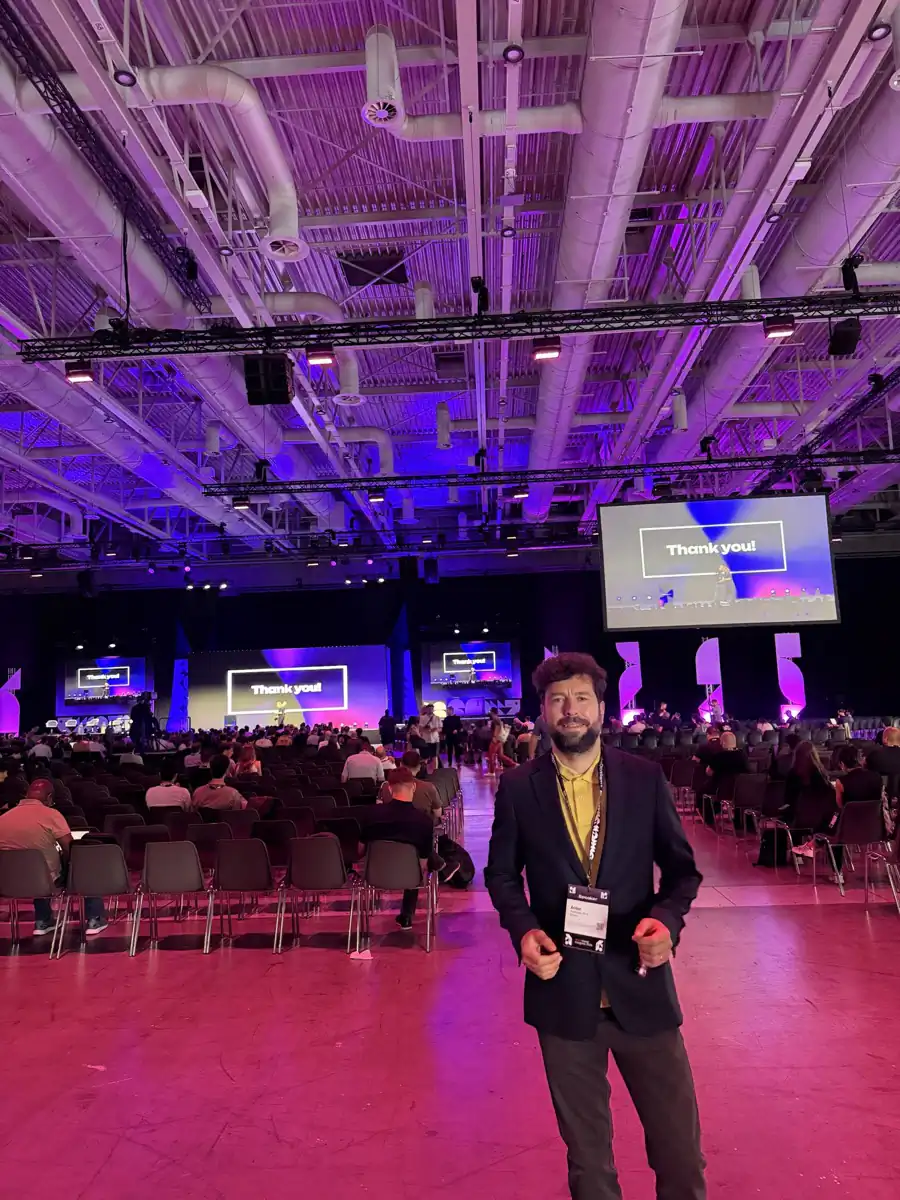
A couple of days after the event, Anton Vedeshin sat down with Startup Reporter for an interview published on 1 September 2026. He called TechBBQ "great," with "a lot of people, a lot of interest." He also said the tone of conversations has changed compared with earlier years.
"The interest is growing," he told Startup Reporter.
More people now understand that they need to be visible in AI answers. Most still don't know where to start or whom to trust.
Anton attributes that distrust to the many SEO agencies that have rebranded as Generative Engine Optimization (GEO) providers without changing their manual process. Anton argues that nobody can track AI visibility at scale by hand, so the tracking has to be automated. At Snoika, a human review layer sits on top of that automation.
What TechBBQ is known for
TechBBQ is known as Scandinavia's largest startup summit, and its roots are informal. According to Brella, the event platform TechBBQ uses, it began in 2012 as entrepreneurs meeting around a grill in a park. The first official event in 2013 had around 300 attendees. A Danish non-profit still organizes it, established in 2012.
Under the startup program terms, pitching takes place on three stages at Bella Center. Selected startups also go into a catalogue that the Head of Investor Relations shares with investors who attend. The 2026 theme was where human initiative meets emerging tech and turns into real opportunities, and Startup Reporter ran a preview of the theme before the summit. When you apply, read the eligibility rules closely. Past winners can't enter again, and a startup can compete in only one judged pitch competition.
Speakers worth noting
Meredith Whittaker, President of Signal, gave one of the most discussed talks of TechBBQ 2026. She joined Dominic-Madori Davis of TechCrunch for a fireside chat on privacy and AI. In that chat, Whittaker warned autonomous AI undermines end-to-end encryption, even when a product has strong security design.
Jacob Lauritzen, CTO of the legal AI company Legora, was among the first 28 confirmed speakers. For go-to-market teams, the program also had a session called "The Future of GTM", which covered how AI is changing the way B2B companies grow. If you missed a session, look on TechBBQ's social channels. The organizers post clips from the stages there.
Startups that stood out
The pitch winners stood out most, because their competitions were tough to get into.
Oasicare won the Life Science pitch. More than 200 startups applied, and 8 reached the final. Oasicare took home the win and DKK 50,000.
DigeHealth won the Deep Tech pitch against 8 early-stage European startups who were building in the field.
Interhuman AI also drew attention. Paula Petcu is its co-founder and CEO, and she previously worked in digital health at Lundbeck. She spoke on stage and later told Startup Reporter: "We're teaching machines to understand humans." Her company builds models that read audio and video to spot signals such as confusion or hesitation.
Any founder thinking about next year should note that Deep Tech finalists get 2 minutes to pitch and 3 minutes of jury questions.
Takeaways for founders
TechBBQ 2026 left us with 2 takeaways that apply beyond Copenhagen. Both are about whether people who have never met you can find you.
Your product can be real and still invisible
We met teams at the stand that had been executing for 1 or 2 years. Anton had never come across them online, even though he spends his working days on this exact problem. Their products shipped and their customers paid. Yet an investor or buyer who looked them up before the summit, or asked an AI assistant for options in their category, would have found little or nothing.
So a strong week in Copenhagen can fade fast once the stands come down. The people you met go home and look you up, and you want them to find you when they do.
Owned channels outlast borrowed ones
"The website is always under your control," Anton said in the Startup Reporter interview. Platforms such as Reddit can change their rules whenever they like. A thread that brings you mentions today can lose its reach next quarter.
So put your core facts on your own site first, where you control them, and treat outside channels as a way to spread those facts further. Check whether your website states plainly what you do and who it's for, in words an AI model can quote.
AI visibility lessons
The lesson from the stand is that AI answers now shape how buyers find companies, and search behavior backs that up.
In February 2024, Gartner predicted that traditional search engine volume would drop 25% by 2026. A study by the agency Fractl found keywords in decline had already fallen 29% as of April 2026, while growing keywords made up for the loss. The same study found that 70% of consumers use AI tools more than they did a year earlier.
More of the questions buyers ask now end inside an AI answer. The work can produce measurable results. Our customers have reported the following, and these are their own figures:
Results depend on the category and on how much content a company already has. Measure your starting point before you change anything, or you'll have nothing to compare against later.
Photos from the stand
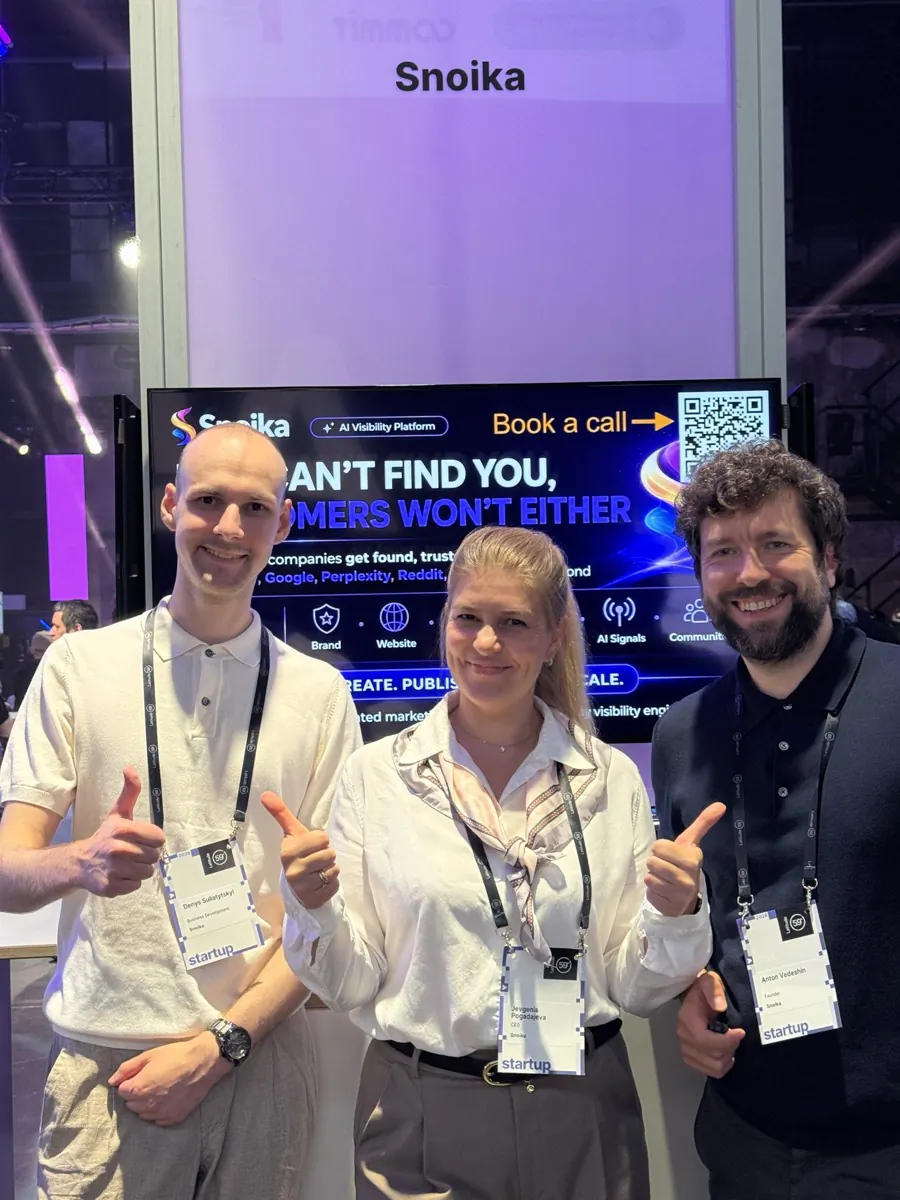
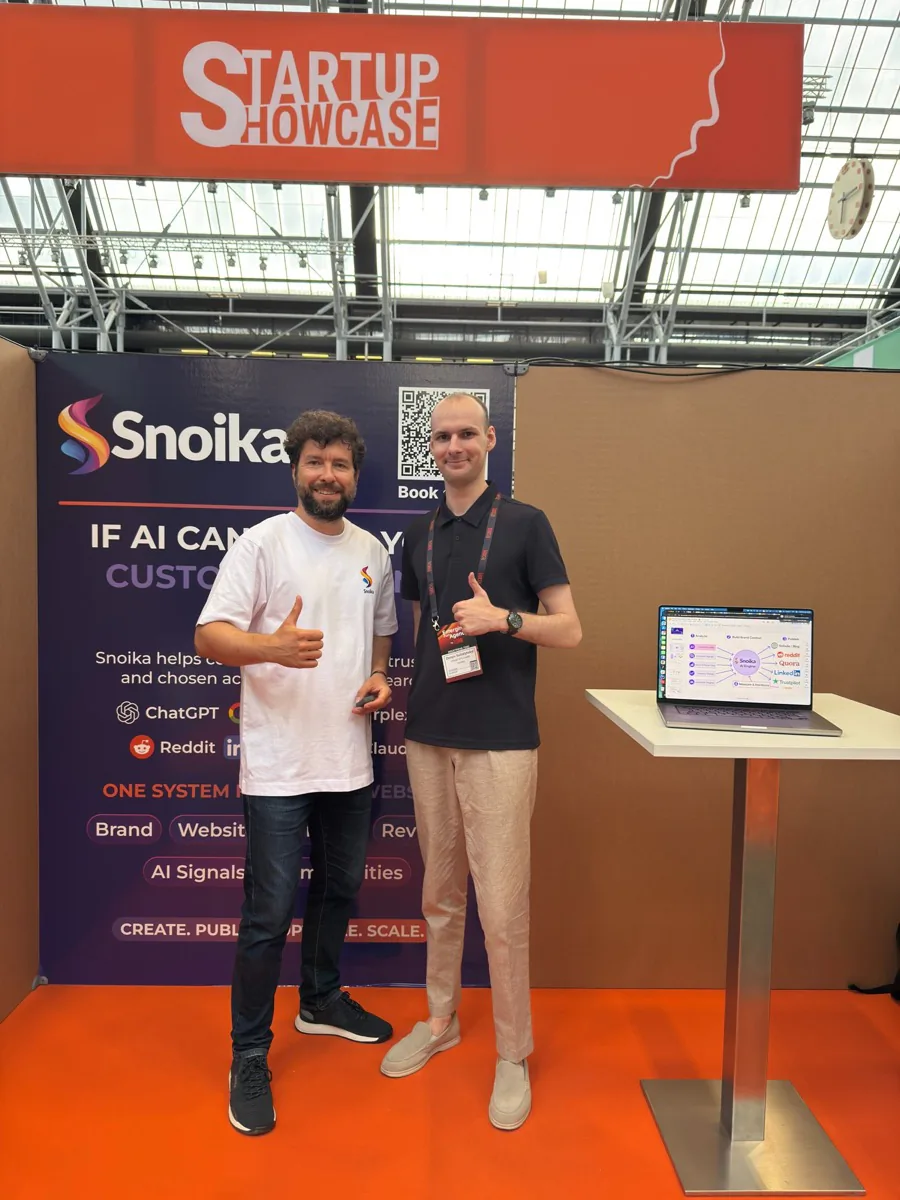
The photos below were taken at our stand at Bella Center during TechBBQ 2026. They show us talking visitors through Snoika. The hall stayed busy both days, and it was noisy in the way that happens when a lot of people are in real conversations.
Next steps
Your next step is to run your own visibility baseline this week, while conversations from TechBBQ 2026 are still fresh.
Write down the 5 questions a buyer or investor would ask about your category.
Put them to ChatGPT and Gemini, and note whether you appear and what the answer says about you.
Repeat the test with Perplexity.
If you sell in more than one country, repeat the test in each language, because results differ between markets. The questions founders brought to our stand were about where their brand shows up in AI answers. Snoika tracks that visibility and creates the content it publishes to improve it. To see your own position, book a demo with the Snoika team.
FAQ
What did the AI visibility demonstration at TechBBQ 2026 cover?
The demonstration covered checking whether a company appears in AI answers and creating content to address gaps. Visitors saw examples using their own companies, including how company information could be published across several channels.
What startup pitches stood out at TechBBQ 2026?
The recap highlighted the winning Life Science and Deep Tech pitches. The Life Science competition attracted more than 200 applicants, with eight reaching the final. Its winner received DKK 50,000.
What were the key takeaways from TechBBQ 2026?
The TechBBQ 2026 recap emphasized that established products can remain hard to find online and that companies retain control over their own websites. Founders can apply these lessons by testing buyer questions in AI assistants and stating core product facts plainly on their websites.
How should I prepare for a Deep Tech pitch?
Prepare a two-minute pitch and allow for three minutes of jury questions. Check eligibility before applying: past winners can't enter again, and a startup can compete in only one judged pitch competition.
How should I compare AI visibility providers?
Compare which tasks run automatically and which receive human review. The interview recommends this distinction when assessing providers. Also check whether their work stops at measuring visibility or includes creating and publishing content to address gaps