AI visibility tracking
Here's the AI marketing & SEO problem with everything above: your rank tracker can't see it. A tool that reports position one tells you nothing about whether ChatGPT named you, whether Perplexity cited your page, or whether a Google AI Overview pulled your answer and credited someone else. That visibility is invisible to the instruments most teams still run.
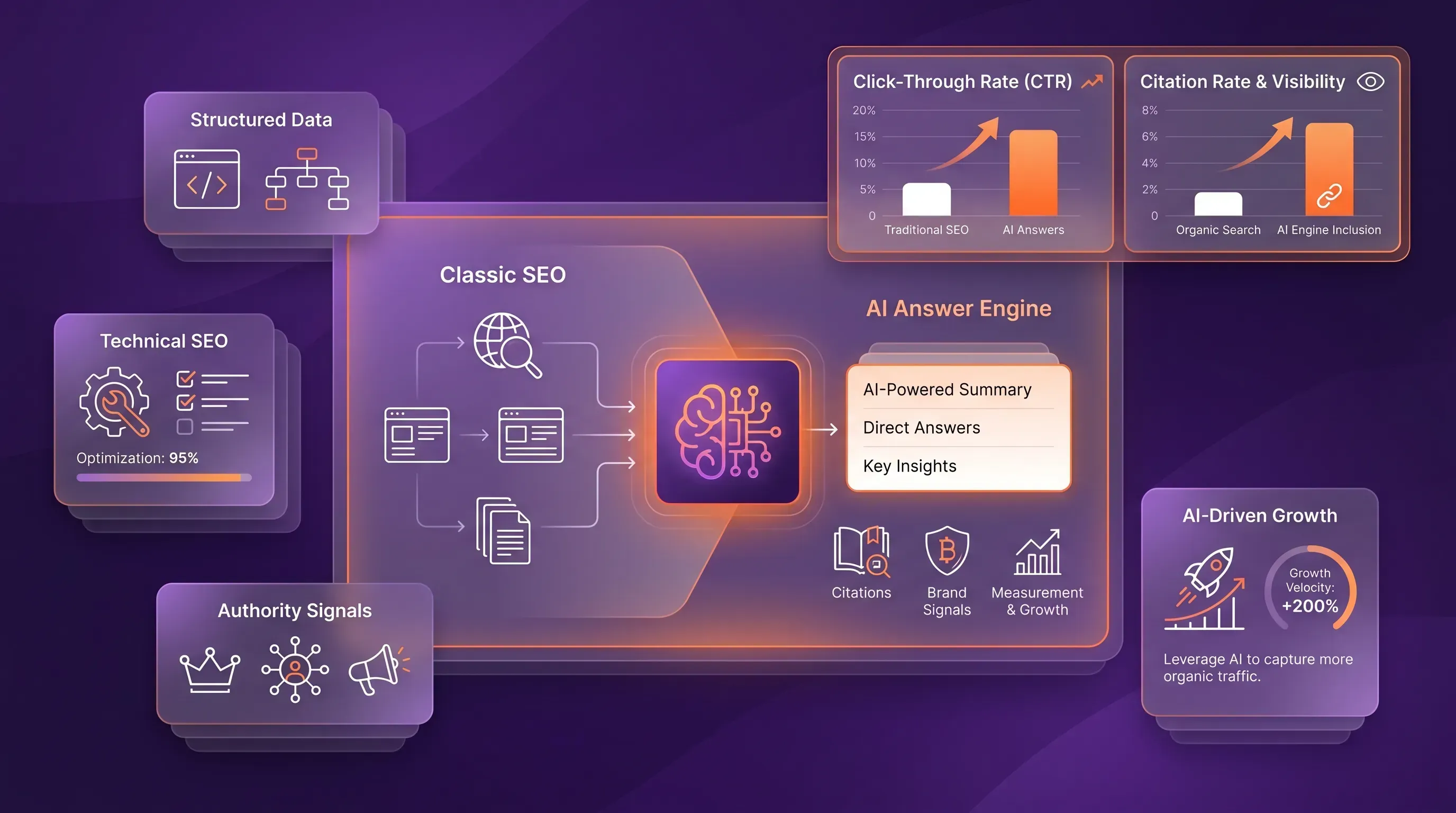
Tracking closes the loop. You query the platforms your buyers use with the prompts they'd actually ask, then record whether your brand appears, how it's described, which competitors show up, and what page gets cited. Doing this on a schedule turns AI visibility into a measurable signal instead of a guess. It's the feedback mechanism that tells you whether the content, entity, technical, and authority work is landing. Without it, you're optimizing blind and hoping. With it, you can see which prompts you own, which ones a competitor took, and where the next unit of effort should go.
What to keep, evolve, or drop
You don't have unlimited hours, so the real question is where to stop spending them. Plenty of legacy SEO still earns its place. The technical foundation stays exactly as it was, because crawlability and clean indexing now serve two surfaces. Genuine topical depth matters more, since extractable, well-researched content is what answer engines reach for. Quality earned links still signal authority. Keep all of it.
Some AI marketing & SEO practices have to evolve rather than retire. Keyword research shifts from chasing exact-match terms toward mapping the questions and intents behind them, because Pew's data shows longer, natural-language and question-form queries are what trigger AI summaries in the first place. Content structure evolves toward self-contained, answer-first passages. On-page optimization expands to include schema and entity signals that you might have skipped before. The skill is the same. The output target moved.
And some work no longer earns its keep. Thin pages built to rank a single keyword with no depth behind them are a dead end, since they satisfy neither the human nor the model. Chasing CTR through clickbait titles loses meaning when the click itself is vanishing. Low-quality link volume and keyword-density tactics were already fading, and answer engines finished them off. The honest move is to stop pouring effort into work that can't earn a citation and redirect it toward the components that can. That reallocation is the entire point of treating organic growth strategy as one system instead of a pile of habits.
Measuring organic growth beyond clicks
When clicks fall while your AI marketing & SEO work improves, your reporting measures the wrong thing. The right response is to measure what organic now actually produces. Raw sessions were always a proxy for visibility and demand, and that proxy broke. So track the things that still map to business outcomes.
Start with visibility and citations: how often your brand appears in AI answers across the platforms your buyers use, and whether you're cited, mentioned, or absent. Add branded demand, because a citation that earns no click still plants your name, and that shows up later as growth in branded search and direct visits. Then tie it to qualified outcomes by tracking pipeline and revenue from organic sources rather than session counts. One agency framed the discipline bluntly: your CFO "doesn't care that ChatGPT mentioned your brand 47 times last month. She cares that AI-referred leads drive measurable revenue." A workable scorecard looks like this:
-
Share of voice across AI platforms and citation frequency on your priority prompts
-
Branded search and direct-traffic growth as a downstream signal of AI exposure
-
Pipeline and revenue attributed to organic, segmented by source where you can capture it
Leadership still expects click-based reports, so don't ambush them. Show the click decline honestly, then put it beside the visibility, branded-demand, and revenue trends that are holding or climbing. The story is that organic still produces value because the destination moved off your site, and the instruments prove it. That reframing is what keeps an AI marketing & SEO budget funded when the old dashboard looks like a problem.
Where this is heading next
The direction is set even if the details keep moving. Answer platforms are getting better at synthesizing, more confident about which sources to trust, and a larger share of your buyers' discovery starts inside them. ChatGPT alone reached 900 million weekly active users by early 2026, which tells you where the questions are going. The brands that treat AI marketing & SEO as one discipline now will compound an advantage that gets harder to catch, because authority and entity signals build on themselves over time.
So audit your current setup against the five components in this framework and find the weakest link, since that's what's capping the rest. Snoika is built for exactly this work: it tracks your brand's mentions and citations across the answer surfaces your buyers use, from ChatGPT and Gemini to Perplexity and Google AI Overviews, then strengthens the entity and authority signals that decide who gets named. If you want to see where you stand before your competitors do, run an AI marketing & SEO visibility report and start closing the gap.