Why ai citations reshape search visibility in 2026

Content authorArtem Lozinsky, EMBA, MScPublished onReading time10 min read
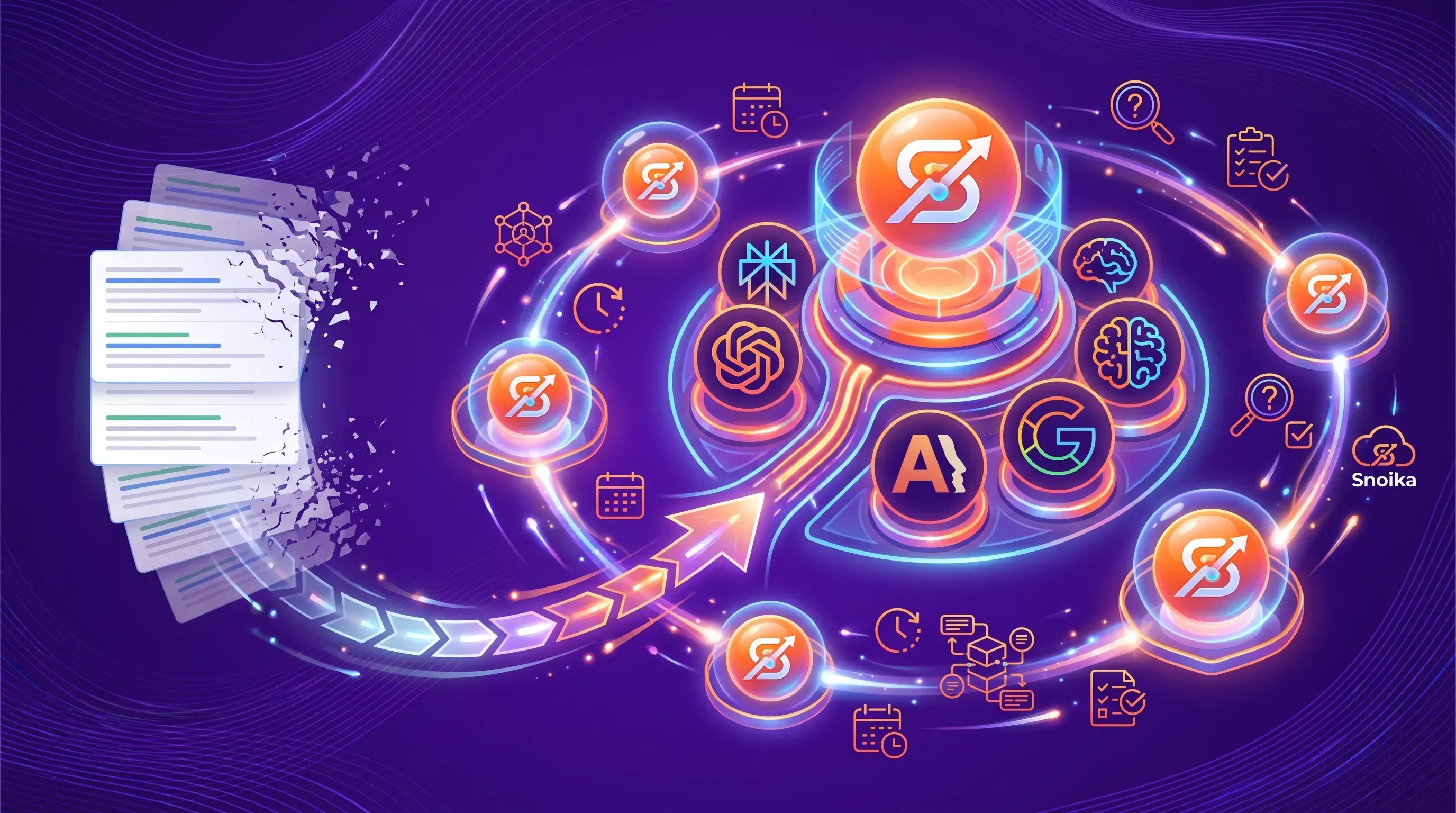
A vibrant SaaS marketing visual featuring a central AI hub with glowing icons for ChatGPT, Claude, and Google AI, surrounded by citation nodes and traditiona…

This article explains why a page that ranks well in Google can still go missing inside AI answers, and what that means for ai brand monitoring and how you measure visibility now. It walks through how the major answer engines diverge and why generative engine optimization sits on top of your existing SEO. It also identifies where to start once ranking stops being the finish line.

The visibility rule just changed

You already feel the gap. A page holds position two in Google, pulls its usual traffic, and yet the same query typed into ChatGPT or Perplexity comes back with an answer that names three other brands and skips yours entirely. That break between ranking and ai citations is the whole subject here, and it is no longer an edge case. A Search Atlas study of more than 18,000 queries found that only 12% of URLs cited by large language models rank in Google's top ten.

So the old proxy has quietly broken. For years, ranking was a reliable stand-in for visibility, because if you sat on page one, people found you. That inference no longer holds. The real unit of search visibility is now what ai brand monitoring reveals: whether an answer engine names you inside its response, and your organic position predicts that outcome far less reliably than it did a year ago.

Why ranking no longer predicts ai citations

Organic position and citation have decoupled, and the gap keeps widening rather than settling. Ahrefs tracked ai citations in AI Overviews against the top ten organic results and watched the overlap fall from roughly 76% in July 2025 to about 38% by early 2026. Google's own answer product, the one most tied to its index, is drifting away from its own rankings.

ChatGPT drifts furthest. A Profound analysis found that 28% of ChatGPT's most-cited pages have zero organic visibility on Google, and a separate audit put the overlap between ChatGPT citations and Google's top ten at just 6.82%. You can own the top slot for a category term and stay completely absent when the model answers a question about that category.

Why does this happen? This happens because answer engines synthesize a response from a handful of sources picked for extractability and authority, then name the sources they pulled from. A ranked page is now a background asset that helps your odds without guaranteeing anything. Being on page one gets you into the pool of candidates, while citation determines whether the answer includes your name.

How the major answer engines diverge

Each engine eats from a different plate. The source diet that feeds ChatGPT looks almost nothing like the one that feeds Perplexity, which is why the same brand can dominate one answer surface and vanish from another. This is the part of the shift that breaks the instinct to build one canonical page and expect it to travel.

The number that anchors it: an analysis of 680 million ai citations by Averi found that only 11% of domains are cited by both ChatGPT and Perplexity. Whitehat SEO's independent study of 118,000 responses landed on the same figure. Three methodologies, one conclusion. The four engines below behave as parallel but distinct cases, and each rewards a different behavior.

ChatGPT and consensus sources

ChatGPT leans on aggregated consensus, and Wikipedia sits at the center of it. Within ChatGPT's top ten most-cited sources, Wikipedia accounts for nearly half at 47.9%, according to Profound's dataset. The platform trusts the web's established consensus about you.

The implication is direct. Consistent, well-established entity information carries more weight here than a freshly launched landing page ever will. One practical nuance worth scoping before you measure: standard chat cites very little, while search mode pulls a handful of named sources. Decide which mode you're testing before you read anything into the results.

Need help with your AI visibility?

Book a free consultation with our experts we'll help you determine exactly which services your organization needs.

Perplexity and recency signals

Perplexity rewards the opposite behavior. It leans on Reddit, which makes up 46.7% of its top citations per Profound, and it prizes freshness more than any other engine. Otterly.ai's 2026 report found that content updated within the last 30 days earns an 82% citation rate from Perplexity, against 37% for older material.

That 45-point gap is the core of how Perplexity works. Community presence and a systematic refresh cadence matter far more here than they do anywhere else. The consensus that wins ChatGPT does little for you on Perplexity. What wins is recently maintained discussion-heavy material.

Claude and structured content

Claude is the most selective of the four, and it favors blog-style material whose structure is technically precise and cleanly sourced. Anthropic's Citations API, launched in June 2025, is built to ground answers in source documents, and early testing by Endex reduced source hallucinations from 10% to 0%. The platform's bias runs toward institutional trust and inline attribution.

Content that reads as casual or loosely sourced underperforms here. Formal writing with clear organization and attribution does better, because Claude cross-verifies before it names anyone. To translate that into formatting: open each section with a direct 40-to-60-word answer. Replace vague claims with cited statistics. Link to the original study rather than a summary of it. Named-source statistics carry a +30.6% lift in AI citations on Claude, and inline citations add another 27.5%.

Google AI Overviews and YouTube

Google AI Overviews is the one engine where ranking still carries real weight, though it no longer stands alone. seoClarity found that 94% of AI Overviews cite at least one URL from the top 20 organic results. But video is doing heavy lifting alongside your own site. YouTube is now the most-cited domain in AI Overviews, up 34% in six months per Ahrefs, and brand mentions on YouTube correlate strongly with Overview visibility across a study of 75,000 brands.

That closes the loop on the section. Four engines, four different behaviors:

  • ChatGPT rewards established, consensus entity information.

  • Perplexity rewards recency and community presence.

  • Claude rewards formal structure and verifiable sourcing, while Google AI Overviews rewards ranking plus off-site platform presence, especially video.

The 11 percent overlap problem

Put the four profiles together and the roughly 11% domain overlap between ChatGPT and Perplexity stops being a curiosity and starts being a constraint. When one engine ranks on authority and the other ranks on freshness, the winning pages differ between them. Roughly 71% of cited sources appear on only one platform.

That low overlap is the mathematical reason a single standardized page fails. You're satisfying four judges whose criteria actively conflict. Cross-platform coverage is a structural requirement baked into how these engines diverge.

Generative engine optimization as a layer

Generative engine optimization sits on top of SEO, which remains essential. Your technical foundation, including crawlability and ranked pages, still matters, because a ranked page stays in the candidate pool for Google AI Overviews and feeds the consensus that ChatGPT reads. What changes is that ranking stops being the finish line and becomes one input among several.

The levers that now drive ai citations run past backlinks and position. Earned third-party mentions and recency do work that a single well-optimized page cannot. Extractable structure and presence on platforms like YouTube do as well. If you're fluent in SEO, think of it as a mapping exercise. Domain authority maps to entity authority. Keyword targeting maps to fact-level clarity. Link building maps to earned mentions across the surfaces each engine trusts.

Need help with your AI visibility?

Book a free consultation with our experts we'll help you determine exactly which services your organization needs.

Entity optimization over backlinks

Entity optimization is the practice of making your brand's identity consistent and legible across external sources and your own schema. Answer engines skip brands whose data conflicts across sources, because a conflict signals an unstable entity. When your site gives 2023 as your founding year but Crunchbase lists 2022 and LinkedIn lists 2024, the model forms a weaker entity representation, which weakens its basis for naming you.

This reverses the backlink-first instinct. Ahrefs' study of 76 million AI Overviews found brand mentions correlate with ai citations at 0.664 versus 0.218 for backlinks, a roughly three-to-one gap. Semantic entity authority now does the trust work links used to do. Entity optimization is the closest thing generative search has to domain authority, and it's the layer most SEO teams under-invest in.

A writer can run these consistency checks directly:

  1. Confirm that company details read identically across your About page and external profiles.

  2. Implement Organization schema with sameAs properties that link your site to relevant entity entries.

Entity optimization done this way requires no new content. You're aligning what already exists, and that alone shifts how confidently a model can describe you. Teams that fix these conflicts see movement within 4 to 8 weeks on retrieval-based platforms. Consistent entity signals are the quiet foundation the rest of your generative engine optimization stands on.

Recency and structured content

Fresh, extractable content is the second lever, and Perplexity is the clearest case for why. Because its retriever weighs recency so heavily, content refreshed inside 30 days earns 3.2 times more AI citations than older material of equal authority. This is maintenance work more than production work. It's about keeping what you already have current rather than shipping more.

Structure matters because engines rarely cite a whole page. They lift a single tight paragraph. PingPrime's audits found that Perplexity favors self-contained passages of 40 to 80 words that answer a question directly. So fact-level clarity and refresh cadence now behave like ranking-style levers for citation. Write each answer so it stands alone, then mark your dates in the structured data and use a fixed update schedule so the freshness signal stays live.

What to measure and fix first

Measurement comes before fixing. The metric that matters is share of ai citations across engines, and until you know where you already appear and where you're invisible, any fix is a guess. Given the 11% overlap, a single visibility number is as misleading as checking your Google rank and assuming it holds on Bing.

Start by establishing your baseline across the divergent engines with AI brand monitoring, so you can see which platforms already cite you and which skip you. Then prioritize against the engine and vertical that matter most to your buyers, because a B2B brand whose customers live in Claude has a different first move than a consumer brand whose audience lives in Perplexity. A defensible order of operations looks like this:

  • Measure citation share across ChatGPT and Perplexity, then compare it with Claude and Google AI Overviews before touching anything.

  • Fix the entity conflicts and recency gaps that surface, then expand coverage into the engines where you're weakest.

Snoika sits at the measurement step. It tracks how often your brand is cited across answer engines, and its ai brand monitoring shows share of voice against competitors alongside the sources driving each citation. Its entity optimization view surfaces the brand signals and relationships these engines read, which is where most of the diagnosable gaps live. Measure first, and the fixes stop being scattered guesses.

The visibility that counts now

Being named inside an AI answer is the new measure of search visibility, and ranking alone no longer secures it. You've seen why: the engines diverge because their source diets barely overlap, so a page tuned for one rarely wins another. The honest move is to measure your citation share across engines before you optimize, then treat generative engine optimization as a layer you build deliberately.

The teams reallocating attention now are the ones who will show up inside answers next year. Start by tracking where you're cited and where you're invisible, because you can't grow your AI citations until you can see them.

Need help with your AI visibility?

Book a free consultation with our experts we'll help you determine exactly which services your organization needs.

Test a fixed set of buyer questions at least monthly, and repeat the test after a material content update or entity-data correction. Record the exact prompt, engine mode, date, country, and cited sources. This creates comparable results instead of treating one answer as a trend.

Location and search mode affect the sources an answer engine retrieves and cites. A search-enabled response can differ from a standard chat response, while local queries can surface regional publishers or listings. Use the same settings for each measurement period so changes reflect visibility rather than a changed test.

Yes. Compare your citation share with named competitors for the same prompt set, then inspect the cited pages that appear instead of yours. That review identifies whether the gap involves entity information, outdated content, or a source type your competitor has earned, such as an editorial mention.

Update the conflicting facts on your site and on the external profiles you control, then document the date of each correction. Keep names, founding dates, product descriptions, and official URLs aligned. Recheck the same prompts over the following weeks, since answer engines don't refresh every source at once.

Snoika can track brand citations, competitor share of voice, and the sources cited across answer engines. Use its results to establish a prompt-level baseline before changing content or external profiles. Start a free trial on the Snoika platform if you need a structured way to monitor these measurements over time.

Schedule a Meeting

Book a time that works best for you

You Might Also Like

Discover more insights and articles

Title:
15 best AI tools for SEO ranked for content keywords and competitors

Meta description:
Compare the best AI tools for SEO so you can find keyword gaps and analyze competitors without extra tool

15 best AI tools for SEO ranked for content keywords and competitors

This article ranks 15 best AI tools for SEO based on two jobs: finding worthwhile content keywords and exposing competitor openings. Each entry names one differentiator and the team it suits. Its limitation fixes its place, so you can pick one primary platform and add a specialist only when the data demands it.

A blonde woman works on her laptop at a table in a vibrant data center, surrounded by glowing server racks and dynamic workflow icons.

How to use chat gpt seo for competitor analysis

This article gives you one repeatable sequence for running competitor analysis with ChatGPT as part of a chat gpt seo workflow, from building a competitor list to producing a strengths and weaknesses table. It shows exactly where the model helps and where it fabricates. It also shows how to pair it with real ranking data so nothing made-up reaches your client.

A man in a suit examines a glowing plasma screen with a magnifying glass, set against a deep violet background with dynamic accents.

6 best ai seo tools for smarter keyword research and content optimization

In this article, I'll compare six AI SEO tools by naming what each one is best at and where it falls short, including how it handles work from clustering and intent through SERP analysis and content decay. By the end, you'll know which fits your research and content optimization needs.

A robot climbs a multi-step staircase toward a glowing golden trophy labeled 'SERP', set against a deep violet background.

How to improve ai ranking in search results

This article is a step-by-step guide to earning citations from AI answers like Google AI Overviews and ChatGPT. It also covers Perplexity when you already rank well in classic search. It walks through the work in the order you should do it, from auditing your baseline to tracking whether any of it moved the needle.