Why AI changed marketing work
Using AI for marketing is no longer a side experiment. Two forces now run at the same time, and both touch the same content. The first is using AI for marketing inside the team to clear the busywork that used to eat a workday, from early drafts to summaries. The second is AI between buyers and your brand, where it decides what gets quoted when someone asks a question out loud.
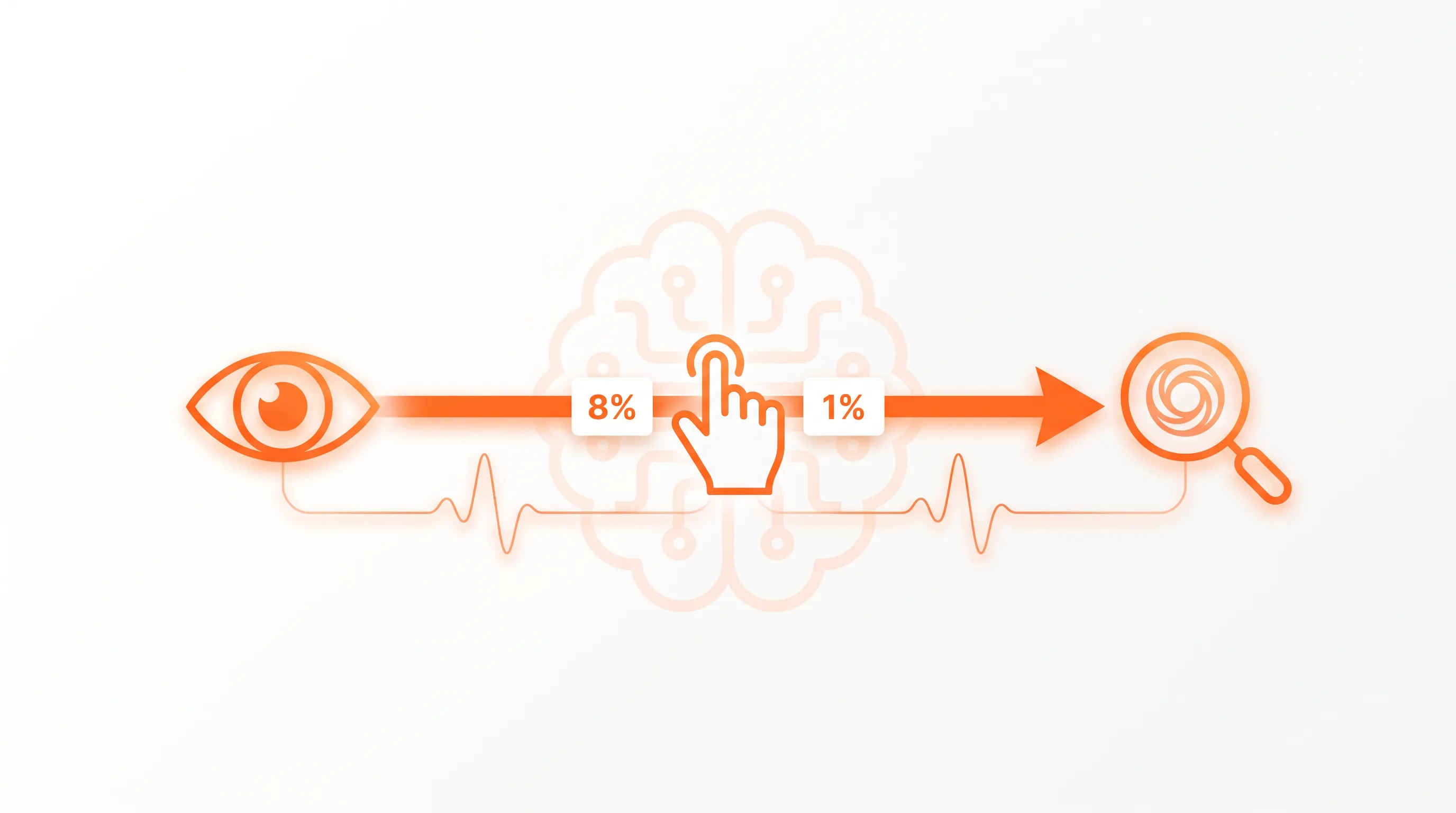
The scale behind that second force is hard to ignore. ChatGPT reached 800 million weekly active users by October 2025, and Google's Gemini app passed 750 million monthly users in its Q4 2025 earnings. On the search side, organic click-through rates on queries with AI Overviews dropped 61% between June 2024 and September 2025, according to Seer Interactive. People still find brands. They just find them differently.
That's the throughline for the rest of this playbook. The content you create and the visibility you earn are the same conversation now. A page that reads well for a buyer is the same page an engine pulls from when it builds an answer. So the goal is to write for both at once, then measure whether it worked.
Practical AI marketing use cases
The fastest wins come from giving AI the tasks that slow a team down without requiring much judgment. SurveyMonkey research found that 88% of marketers already rely on AI in their day-to-day roles, so adoption has already happened. The question is which tasks to hand over and which to keep. The AI marketing use cases below are starting points where the tool accelerates output, and the human still owns the call.
Content ideation and drafting
A blank page is expensive. Using AI for marketing removes the cost of the first 20 minutes by producing angles and an outlined draft you can react to. Feed it a clear brief that defines the audience and goal around the one idea the piece must land, and you get something to edit instead of something to invent.
The before-and-after is simple. Before, a writer stared at a cursor and built a structure from memory. Now they paste a brief, pull three candidate outlines, pick the one that fits, and spend their real energy on the argument and the original insight. AI doesn't know your customer's last objection or the detail your sales team heard on a call last week. That part stays with you, and it's the part that makes content worth reading.
There's a real risk here too. A draft that sounds fluent can be hollow, so editing is where the piece earns its place.
Repurposing and campaign planning

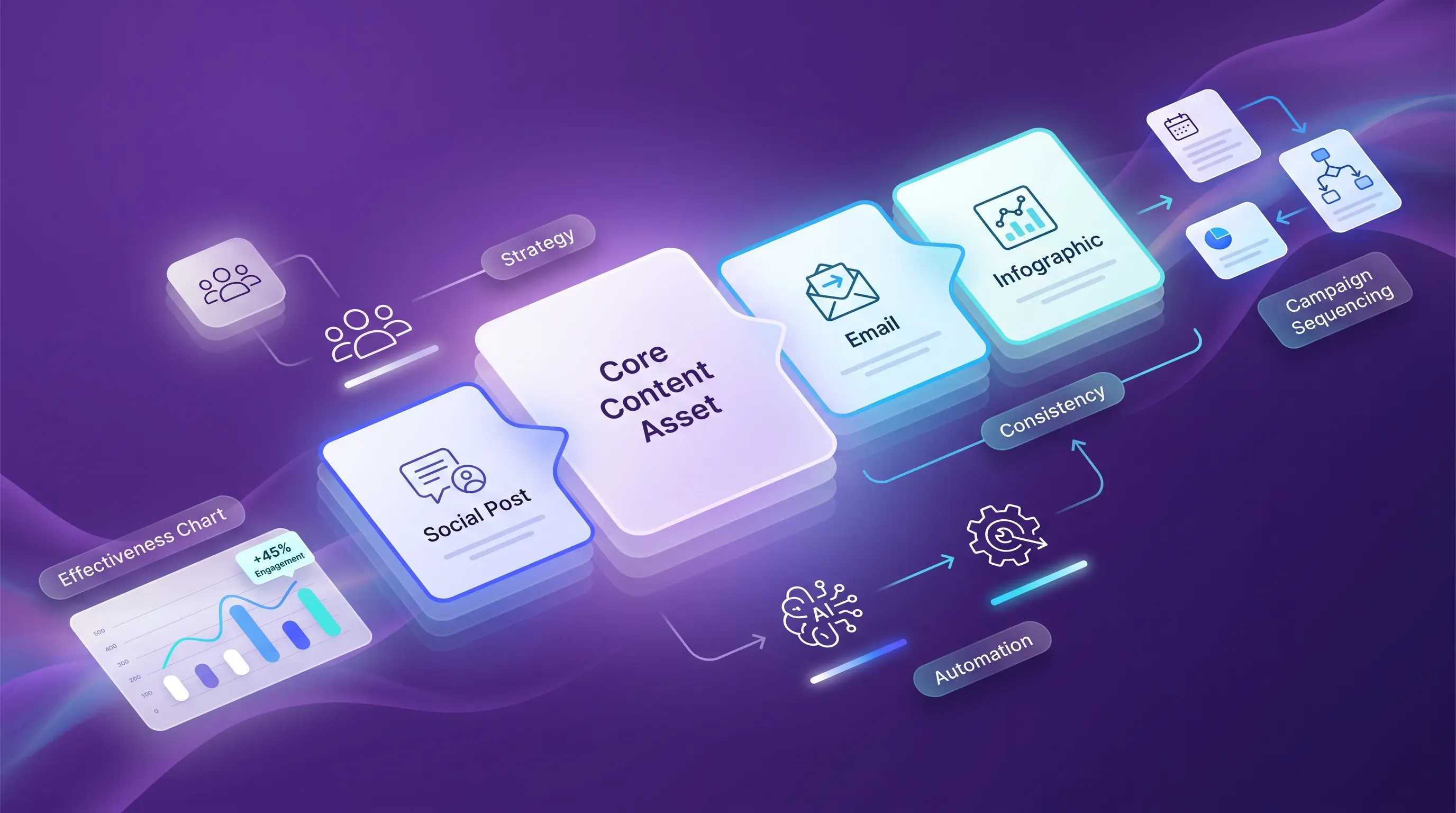
One strong asset should never live as one asset. A research post becomes a newsletter, a set of social posts, a short video script, and a handful of ad variations. With teams using AI for marketing, AI handles the mechanical translation between formats fast, which frees the team to decide what each channel actually needs.
Marketing automation tools also help you map a campaign before a single post goes out. You can sketch a content calendar and sequence the messaging from awareness to decision without rewriting from scratch, with tone adjusted per channel. Marketing automation tools speed up the repeatable parts. Strategy still leads, because a calendar full of consistent posts means nothing if the sequence doesn't move someone toward a decision.
Consistency across formats is the payoff. When every asset carries the same claim and the same proof, the brand reads as one voice instead of a committee.
Email workflows and reporting
Using AI for marketing fits email because it is full of small, repeatable writing jobs. It drafts body copy variations and subject lines you can test against each other. The segmentation copy is tuned to each list. The marketer chooses the winner and sets the logic, while the tool covers the volume.
Reporting is the other quiet time sink. AI can summarize a campaign's performance and turn a messy export into a readable stakeholder update that surfaces the trend hiding in the numbers. Here are the routine analysis jobs among AI marketing use cases worth delegating:
The caution is the same one that runs through every section. A summary tells you what happened while leaving you to decide whether that result is good against your goal.
Useful automation versus content noise
Using AI for marketing draws a clean line between automation that helps and automation that buries you. Useful marketing automation tools improve speed and consistency, with measurement built into the workflow. They take a workflow you already trust and run it faster with fewer errors. The trap is the use of the same tools to mass-produce generic content, which floods your own channels and the web with pages that say nothing new.
The distinction matters more now because AI engines actively filter for substance. Ahrefs analyzed 6 million URLs and found that the pages cited by AI are the ones doing the harder work of authority and original content, while cheaply scaled pages fall behind. Volume without a point adds to the noise the models are trained to skip.
So how do you decide what's safe to automate? Use a simple test. Automate the task when the output is verifiable and repeatable, with low stakes if it's slightly wrong. Keep human ownership when the task requires judgment or carries the brand's point of view, especially when it commits you to a claim. A subject line variant is safe to generate. A position on your customer's biggest problem is not.
Marketing automation tools should support strategy rather than replace it. The teams getting value from using AI for marketing treat the tool as a force multiplier on a clear plan. The teams drowning in content treat the tool as the plan, and the difference shows up fast in what gets cited and what gets ignored.
AI SEO and generative visibility

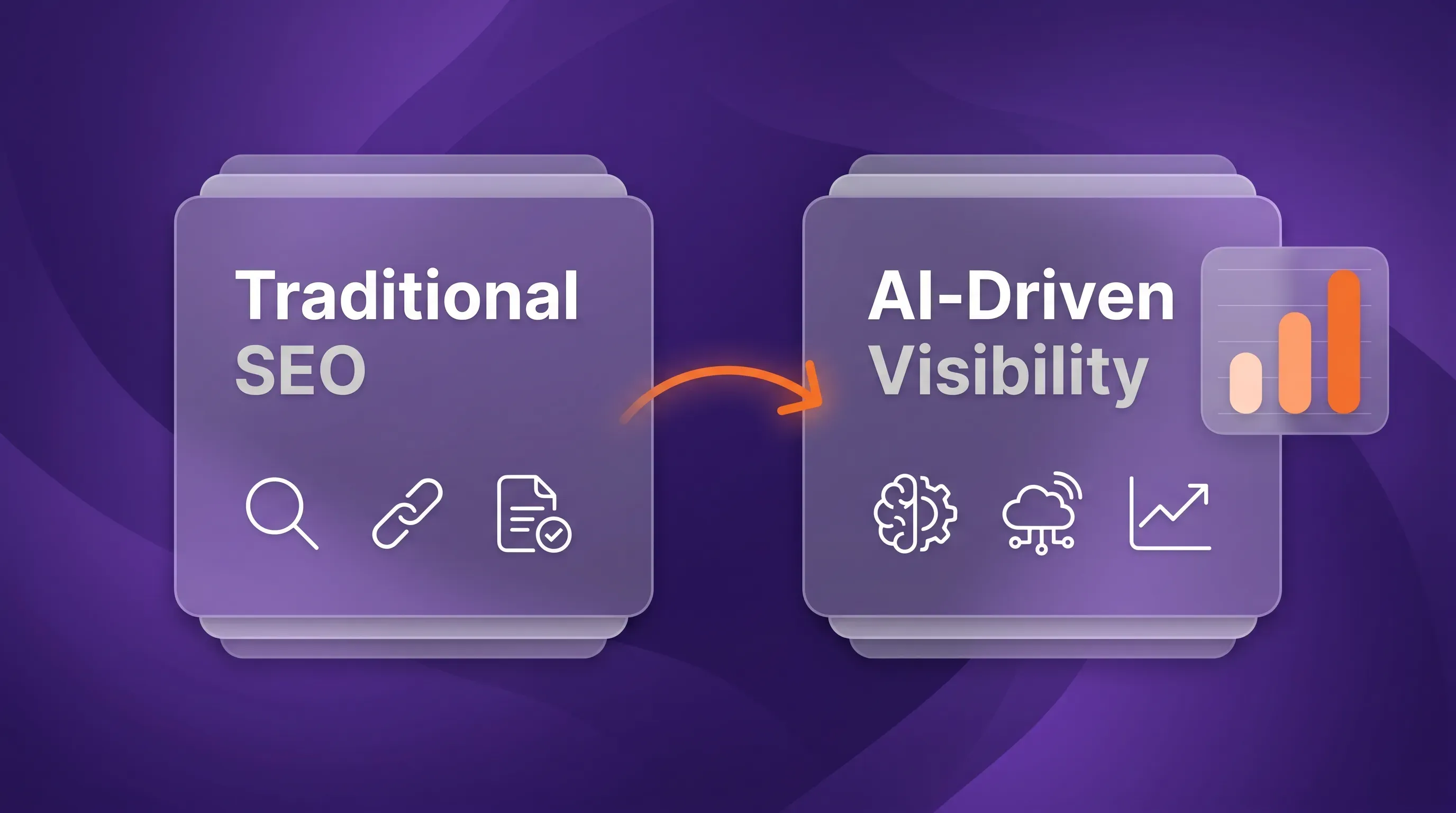
Now the conversation shifts from making content to being found. Generative engine visibility is the practice of structuring content so AI answer engines can extract and cite it as trustworthy. It differs from traditional ranking in a basic way. Classic SEO competes for a position on a results page, while generative visibility competes to be one of the few sources an engine quotes inside a synthesized answer.
That shift changes what you optimize for. AI Overviews now appear in 13 to 19% of all searches as of mid-2025, and that share keeps climbing. Perplexity visits around ten pages per query but cites only three to four of them. The prize now is being the source the model chooses to quote. The levers below are where brands earn that spot.
Structured content and entity clarity
Engines reward content they can parse without guessing. Clean heading hierarchy, short paragraphs, descriptive H2 and H3 tags, and clear definitions all make a page easier to extract. When you name what something is in plain terms, the model resolves the entity instead of leaving it ambiguous, and ambiguity is what gets a page passed over.
Schema markup helps the machine read your facts as facts. Ahrefs found that AI-cited pages were almost three times more likely to use JSON-LD than non-cited pages, though the study warned that schema's value flows through the stronger sites that use it. Treat structured data as one signal in a broader habit of clarity. The practical formatting moves are worth doing regardless:
-
Lead each section with a direct answer before the supporting detail
-
Use lists and tables for steps and comparisons so a model can lift them cleanly
-
Place evidence directly next to the claim it supports
Structure is the difference between content a model can quote and content it has to interpret, and interpretation is where you lose.
Topical authority and citation-worthy assets
Depth beats breadth in AI search. When you cover a topic cluster thoroughly across many connected pages, you build the topical authority that engines look for before they trust you as a source. A single thin post on a subject signals nothing. A well-linked set of pages that answer the full range of questions around it signals expertise.
What actually makes an asset citation-worthy comes down to a few traits. Original data the model can't find elsewhere. A clear answer stated up front. Trustworthy sourcing the engine can verify. Pages with clear entity naming and verifiable facts with dates are consistently selected over pages that bury their conclusions, according to analysis of how Perplexity picks sources. This is where more AI marketing use cases connect directly to discovery, because the same research post that fuels your newsletter is the asset an engine cites.
Authority accrues through consistent content creation over time, which ties this section back to the production workflows from earlier. The team that publishes well-structured, genuinely useful content on a schedule is the team that earns citations later.
Visibility across Google, ChatGPT, Gemini, and Perplexity
Each engine surfaces and cites sources a little differently, so strategy needs both a shared base and platform-specific awareness. Perplexity always cites its sources and builds answers from a live web search, which rewards fresh, well-structured pages. ChatGPT leans more on training data and selectively browses. Google's AI Overviews pull from existing search signals, with most responses citing between 6 and 14 sources. Gemini reaches further than its app suggests, since its summaries surface inside Search for roughly 2 billion monthly users.
The shared fundamentals carry across all of them. Clear structure and verifiable facts win citations everywhere when they are backed by real authority. The nuance is in monitoring, because Perplexity and ChatGPT surface different cited pages. Here's a practical checklist for tracking brand presence:
-
Ask each engine the questions your buyers ask and note whether you appear
-
Track which competitors get cited and on which platforms
-
Check whether the engine describes what your company does correctly
The metric that matters has changed. With organic clicks falling on AI-heavy queries, measuring AI-driven visibility means tracking citation frequency and share of voice inside answers alongside clicks to your site. Brands cited in AI Overviews earn 35% more organic clicks, so the citation itself is the win you're chasing.
Connecting content to discovery
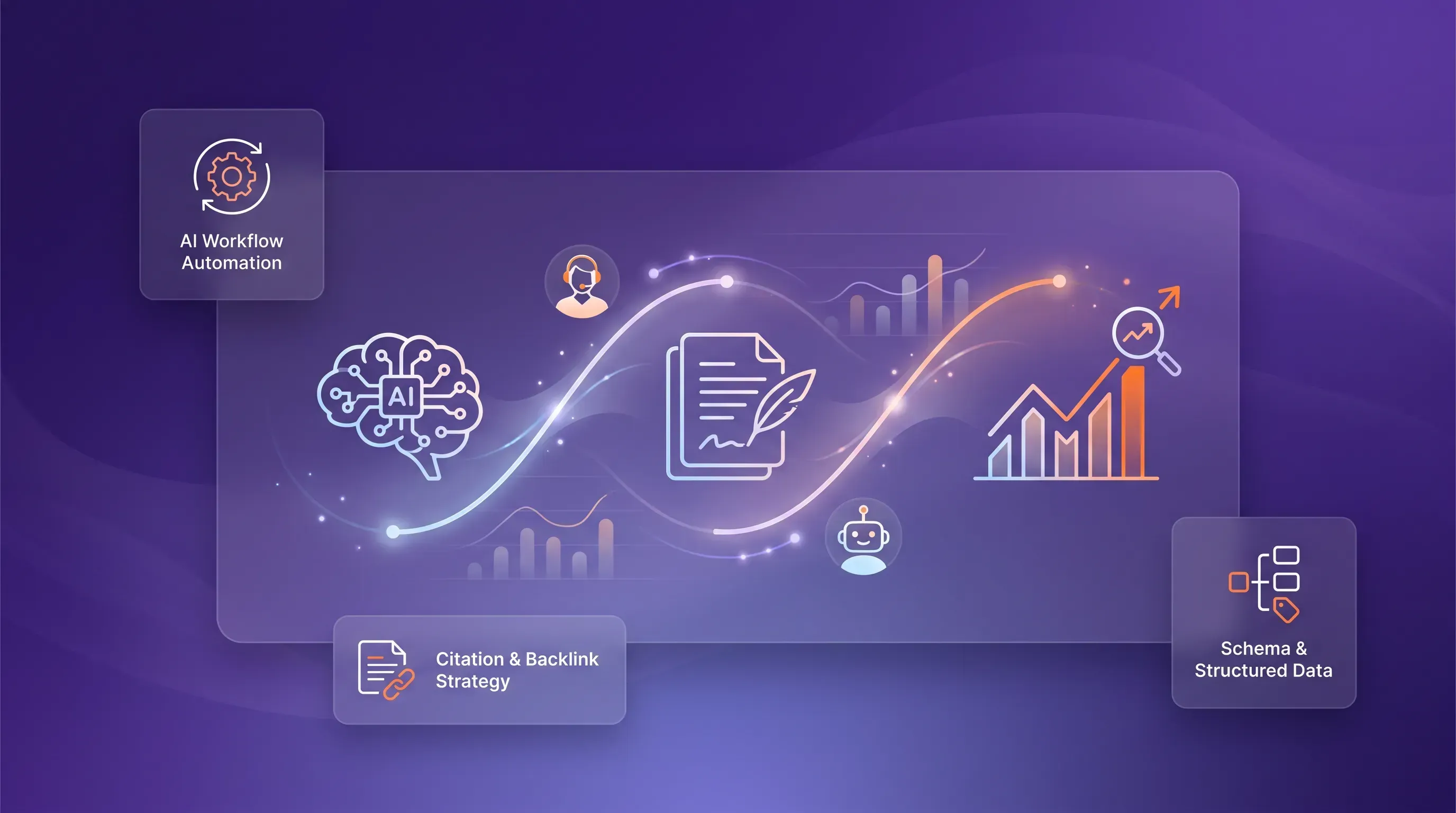
The two halves of this playbook are one loop. The disciplined, well-structured content that helps a reader is the same content an AI engine extracts and cites. When you write a clear answer and source it properly, with clean structure around the claim, you're serving the buyer and the model in a single move. That's the whole point of using AI for marketing the right way, where production feeds discovery instead of running separate from it.
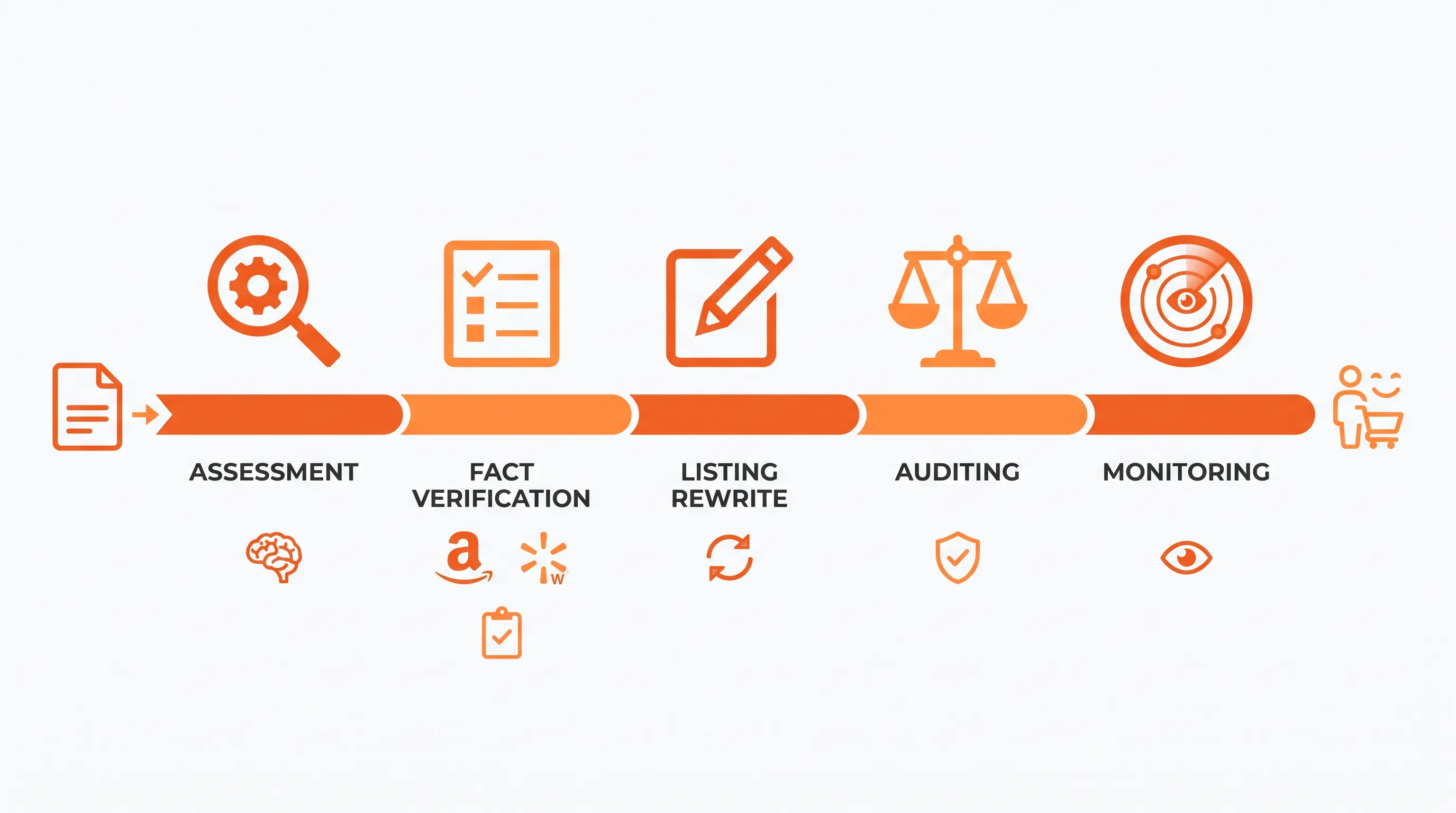
Your next step is an audit. Look at your workflows and ask which tasks AI should own when you're using AI for marketing and which need a human. Then look at your top content and ask whether it's structured to be quoted and sourced to be trusted, with enough depth to signal authority.
Snoika is built for exactly that second question. It tracks your presence across major AI engines, along with your citation frequency and the places where competitors get recommended instead of you. If you want to see how visible your brand is in AI answers today, book a call with Snoika and start using AI for marketing in a way that gets you found.