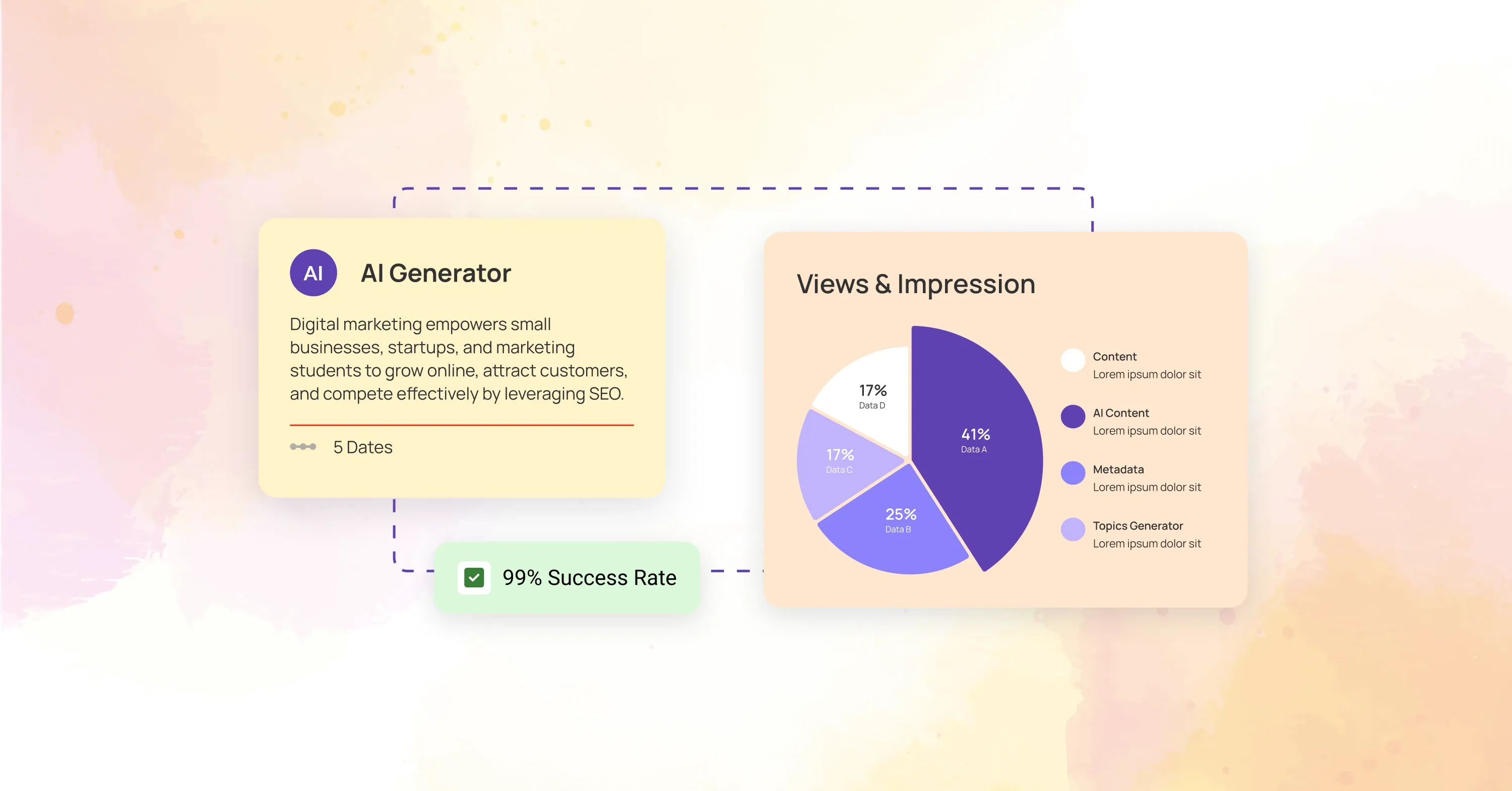
AI content generator dashboard showing success rate and views & impressions pie chart, illustrating how AI-powered marketing boosts SEO performance for startups and businesses.

AI Content Marketing: How to Use AI to Supercharge Your Strategy

AI is turning content marketing into a faster, data-driven growth engine, helping startups create SEO-optimized content at scale and stay ahead in search.

By Jevgenia Pogadajeva, MBA, MScAugust 12, 20251 min read

What Is AI Content Marketing?

AI content marketing is the practice of using artificial intelligence to plan, create, optimize, and distribute digital content. It leverages technologies like natural language processing (NLP), machine learning (ML), and large language models (LLMs) to generate articles, social posts, and other marketing assets faster and with more precision. According to the Content Marketing Institute (CMI), 72% of marketers who implemented AI content marketing tools reported higher efficiency in their content workflows. At Snoika, our AI-powered content marketing solutions integrate SEO optimization, performance tracking, and content auditing - allowing you to rank not only in Google but also in AI-powered search tools like ChatGPT and Perplexity.

Why Founders Should Embrace AI Content Marketing Now

For early-stage startups, AI content marketing offers a competitive advantage: speed, scalability, and data-backed decision-making. Gartner predicts that by 2026, 80% of marketing leaders will integrate AI into their content strategies (Gartner).

Key reasons to start now:

  • Faster go-to-market - AI cuts drafting time by up to 60% (McKinsey).
  • Better targeting - AI identifies relevant keywords and content topics with higher conversion potential.
  • Scalable growth - More content in less time without overloading your team.

To see how AI can fit into your business model, explore our branding and marketing solutions tailored for startups.

Best AI Content Tools for Startups and B2B Teams

AI content tools in 2025 are more powerful than ever, combining advanced generation, SEO optimization, and analytics.

Top picks in 2025:

  • GPT-5 (OpenAI) – the newest multimodal model with 256k token context, safer completions, and enhanced reasoning, ideal for creating long-form, SEO-optimized content at scale.
  • Surfer SEO – on-page scoring, keyword suggestions, and SERP analysis in real time.
  • HubSpot Content Hub – AI content creation fully integrated with SEO guidance, analytics, and CRM.

Instead of juggling separate tools, Snoika unifies AI-powered content generation, optimization, and performance tracking into one platform tailored for startups and B2B teams.

AI vs. Human Writers: Which Should You Rely On?

The AI vs human writers debate isn’t about replacement - it’s about collaboration.

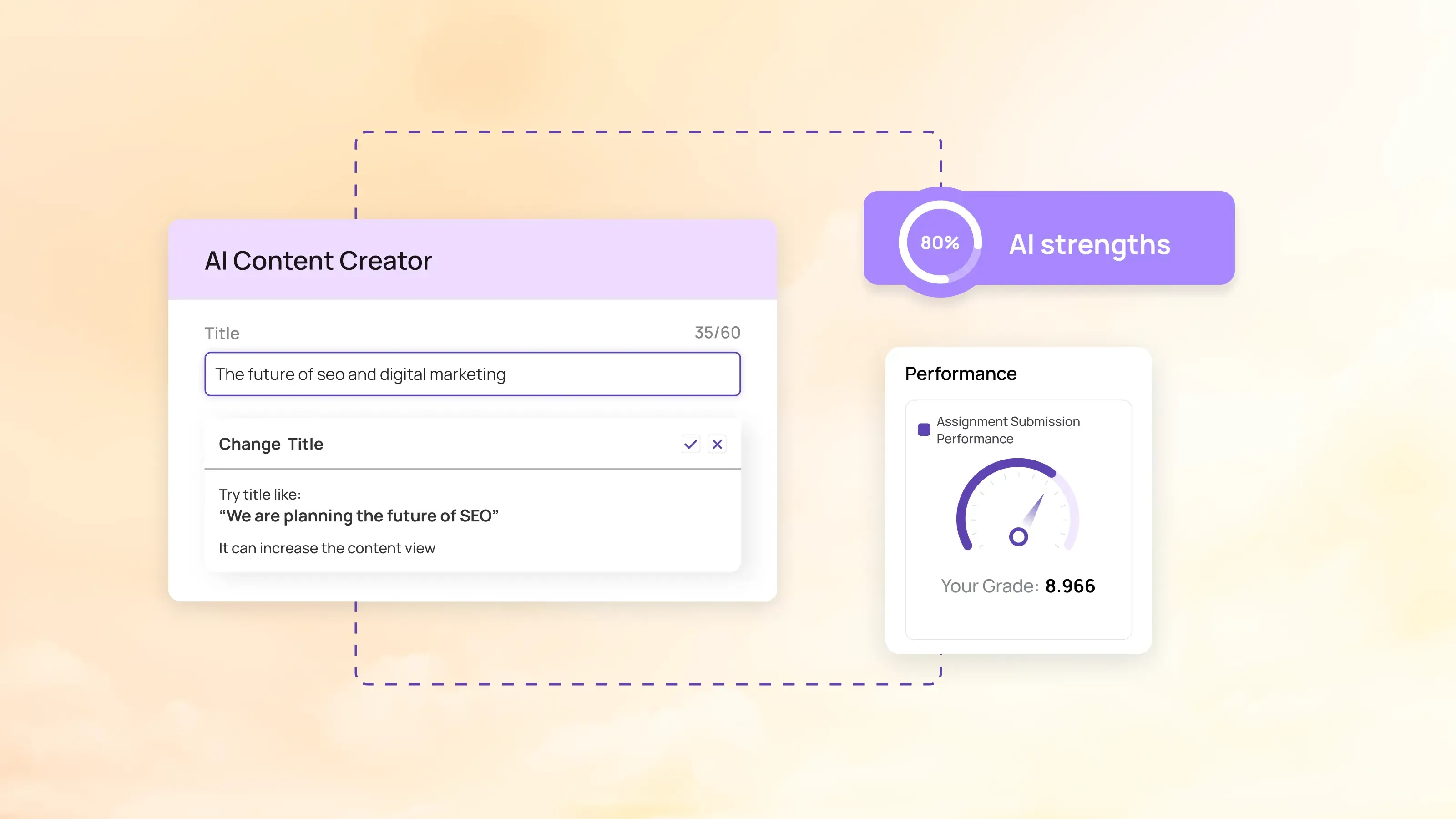
AI content creator interface with performance score, showing how AI strengths improve content quality, keyword optimization, and publishing speed in content marketing.

AI strengths:

Human strengths:

Best results come from combining both - as seen in Snoika’s clients achieving 3× more content by letting AI draft and humans refine.

Strategic Framework: Implementing AI Content Marketing

  • Set clear objectives - Define whether your AI content marketing focus is lead generation, SEO ranking, or brand awareness.
  • Audit your current library - Identify underperforming articles and update them with AI-assisted keyword optimization.
  • Select AI content tools - Prioritize integrated platforms for efficiency.
  • Develop AI-human workflows - Let AI handle first drafts, humans refine tone and accuracy.
  • Measure results - Track rankings, engagement, and AI search appearances.

For a full walkthrough, visit our AI content marketing strategy guide.

AI Content Marketing Challenges to Watch Out For

AI speeds up content creation and makes workflows more efficient, but it also introduces challenges that early-stage founders should be prepared for.

  • Generic outputs – AI text can feel repetitive or formulaic without human refinement, which may hurt brand perception.

  • Data privacy – when using AI tools, sensitive customer information must be handled carefully to avoid compliance risks.

  • Over-automation – relying only on machines can dilute your authentic brand voice and emotional connection with the audience.

  • A balanced approach - AI for scale, humans for creativity - is key to long-term success.

Future Trends in AI Content Marketing

AI is no longer just a tool for faster drafting - it’s shaping the future of how content is discovered, optimized, and consumed. Over the next few years, startups will see a major shift in how marketing teams work with AI.

Key trends to watch:

  • AI-powered search engines - ranking in ChatGPT, Perplexity, and Gemini will become as important as ranking in Google.

  • Multimodal content formats - AI will create not only blogs but also video scripts, podcast outlines, and visuals to reach audiences across platforms.

  • Real-time optimization - content will automatically adjust tone, keywords, and CTAs based on live engagement data.

  • Predictive analytics - smarter AI will anticipate customer needs and help marketers position content before demand peaks.

Hyper-Personalization at Scale

AI systems are getting better at predicting user behavior and tailoring messages to individual preferences. From blog articles and email sequences to videos and podcasts, hyper-personalized content will soon become the default. This trend doesn’t just improve engagement - it also strengthens conversion rates by aligning content with each stage of the customer journey.

Benefits You Can’t Ignore

AI content marketing delivers:

  • Faster publishing cycles - More frequent updates boost SEO and engagement.
  • Optimized reach - AI content tools ensure your work targets the right audiences.
  • Cost efficiency - Reduce agency fees and content backlog delays.
  • SEO dominance - Real-time keyword optimization drives rankings (Statista).

Our SEO for content marketers page covers practical examples and results.

Conclusion

The future isn’t AI or human - it’s AI + human. By using the best AI content tools in combination with skilled human writers, you create a workflow that is fast, scalable, and authentic. Ready to implement AI content marketing with measurable results? Start with our Snoika AI solutions today.

AI content marketing is the use of artificial intelligence to plan, create, and optimize digital content. It leverages technologies like GPT-5, machine learning, and SEO automation to deliver high-quality content faster and with greater precision than manual methods.

AI tools can analyze search trends, identify valuable keywords, and optimize structure in real time. This helps your content rank higher not just in Google but also in AI-powered search platforms like ChatGPT and Perplexity.

Not entirely - while AI excels at speed and scale, it lacks emotional depth and brand voice. The best results come from combining AI’s efficiency with human creativity and cultural understanding.

Leading options include GPT-5 (OpenAI) for advanced writing, Surfer SEO for optimization, and HubSpot Content Hub for all-in-one content and analytics. Platforms like Snoika integrate these features to simplify the entire workflow.

Yes - AI reduces drafting time, minimizes outsourcing costs, and increases publishing frequency without adding more staff. This allows startups to scale their marketing while keeping budgets lean.

Schedule a Meeting

Book a time that works best for you

You Might Also Like

Discover more insights and articles

Freelance SEO dashboard showing pricing model comparison, monthly recurring revenue growth, and an e-commerce case study with traffic and revenue impact

How Freelancers Can Master Website SEO Optimization

Freelancers who learn website optimization earn more predictable income, win longer retainers, and stay competitive as algorithms shift every few months. Yet, knowing where to start, what to offer, and how to charge can feel confusing.

This guide removes the guesswork. You will learn the core skills freelance SEO pros need, how to package services clients actually want, fair pricing models, and the SEO platforms that save you hours each week. Real case studies show how solo consultants moved from side-gig to six-figure businesses.

AI marketing dashboard showing keyword signal optimization, search traffic growth, and competitive benchmarking for brand visibility

How to Choose the Perfect Business Name for Your Real Estate Brand

AI search is changing how buyers, sellers, and investors discover companies. If your name is bland or confusing, those algorithms will rank you lower and prospects will skip right past you. Ready to give your real estate venture a name that pops both with humans and machine learning models? Let’s get started.

Short on time? Here’s the high-level plan: understand why naming matters, brainstorm fresh ideas, then test every finalist for legal, linguistic, and AI visibility issues. Each step below walks you through the process in plain English.

Featured snippet:A strong real estate business name is short, memorable, easy to spell, legally available, SEO-friendly, and instantly signals the type of properties or services you provide.

Marketing analytics dashboard showing video performance metrics, AI optimization impact, and a comparison of Google Ads versus Facebook Ads for real estate campaigns.

Real Estate Advertising Strategies That Work in 2025

Homebuyers now search with ChatGPT, browse listings on Instagram Reels, and expect instant answers. Agents who still rely on yard signs feel invisible. The core question: which channels, tactics, and tools actually generate showings and signed contracts in 2025?

In this guide you will learn which digital platforms deliver the lowest cost per lead, how Google Ads stack up against Facebook Ads, and why video plus real estate AI advertising have become non-negotiable. Real-world numbers, short lists, and agent case studies make every section quick to apply.

How to Pick and Use Keyword Analysis Tools for Sky-High SEO Rankings

Struggling to find the right words that bring buyers, not just browsers? Choosing the correct keyword analysis tools often draws the line between page-one glory and digital obscurity.