Turn signals into named gaps
Now translate the model's clustered output into three gap types you can act on with ai for digital marketing. This is where the role of ai in digital marketing shows up as synthesis: it turns scattered signals into decisions a human can own and defend.
-
Content gaps: themes competitors cover and you don't. Name them as work. "Write a comparison guide for the migration topic three rivals rank for" beats "competitors have more migration content."
-
Keyword gaps: specific terms with demand where rivals rank and you're absent. Pull these straight from your backbone export and tie each to a page you'd build or update.
-
Positioning gaps: the value proposition your ad-copy cluster showed nobody claiming. "Own the 'fastest setup' angle in paid copy, since all four rivals lead on price" is a gap you can hand to a buyer.
Each line should read as a to-do, and each should trace back to one of the focused questions you wrote at the start. If a finding doesn't map to a question, it's trivia, and trivia goes in a parking lot for later. The output of this section is a written list of specific gaps, nothing more and nothing less.
Mistakes that derail this work
A few errors quietly wreck this analysis, and you're confident enough to make them without noticing. Here's how to catch each one before it costs you a week.
Studying rivals who ignore search
If you analyze a competitor who barely invests in organic or paid search, every gap you find reflects a lack of search investment and fails to identify a real opportunity. You'll discover a hundred terms they don't rank for and commission content against them. Then you'll learn the hard way that nobody was competing there because there was nothing to win.
Sanity-check a competitor's actual search investment before you spend hours on them. A quick look at their organic traffic and keyword count in Ahrefs or SEMrush tells you whether they play the game at all. This ties straight back to the SERP-based selection from earlier: study the sites that appear when you search.
Asking a chatbot for live data
Never ask a general model like ChatGPT for live search metrics or traffic numbers. It will hand you a confident figure that's fabricated. This isn't a rare glitch. A 2023 study in Nature's Scientific Reports found that 55% of GPT-3.5 citations and 18% of GPT-4 citations were completely fabricated because the model generates plausible-looking text from unverified facts.
The division of labor clarifies the role of ai in digital marketing. Dedicated tools supply the data, and ai for digital marketing interprets it. The rule to hold: if a number would change your decision, a tool has to produce it, and the chatbot never retrieves it.
Vague prompts and unreviewed output
Two related failures live here. First, feeding the model vague prompts that return generic summaries, which the structured prompt above is designed to prevent. Second, shipping AI output without reading it critically yourself.
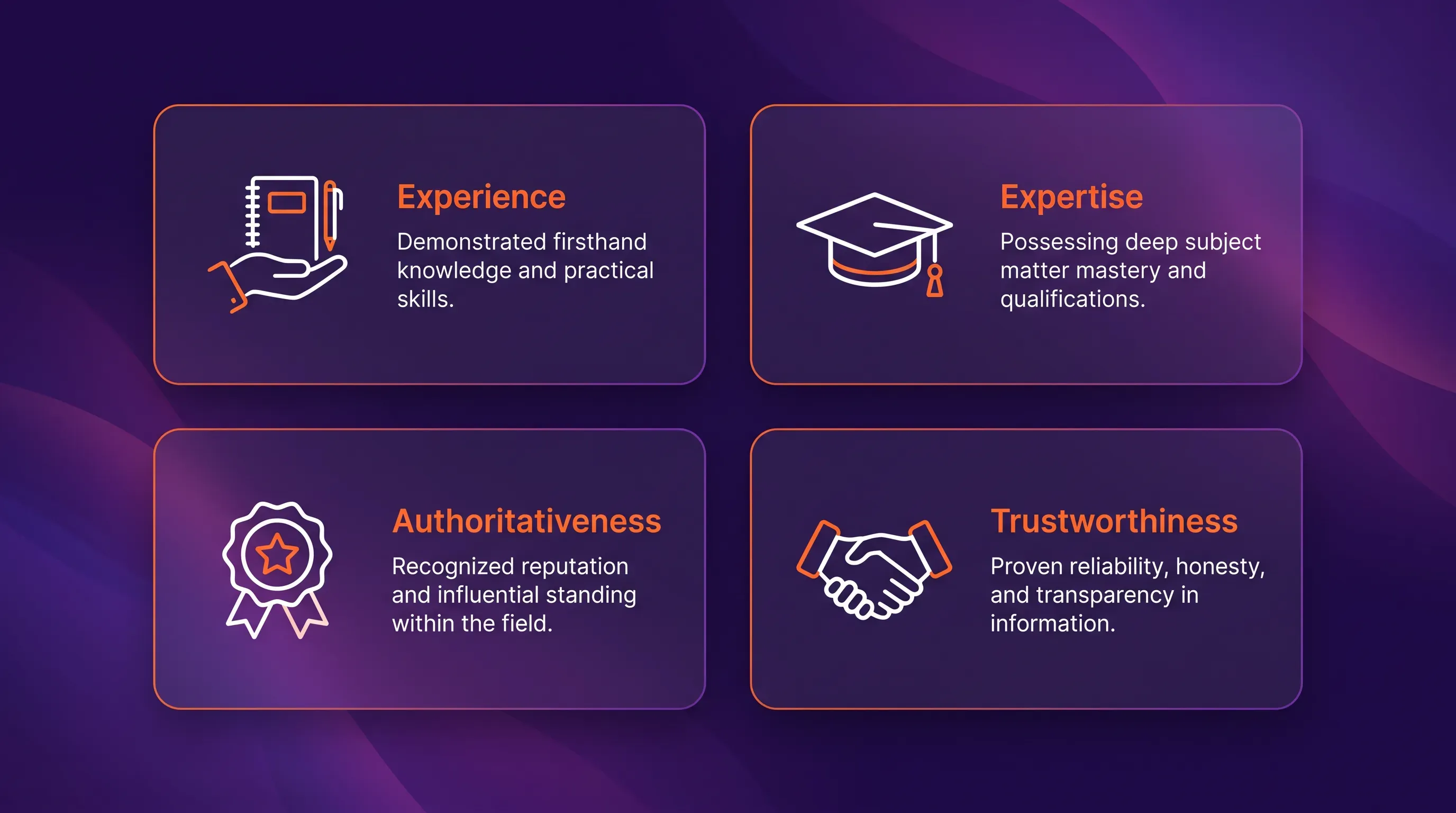
Before you act on or publish anything synthesized through the role of ai in digital marketing, review it against Google's quality signals. The Search Quality Evaluator Guidelines define E-E-A-T as Experience, Expertise, Authoritativeness, and Trustworthiness. Google has said trust is the most important of the four. The model accelerates your judgment in ai for digital marketing, while a human owns the final read.
Prioritize your shortlist of moves
A list of named gaps isn't a plan yet. Rank it, so you leave with next steps instead of a report. Score each gap with ai marketing analytics on two axes: the potential impact if you capture it, against the effort to capture it. Then add a third check, which is how directly it answers one of your original focused questions.
The high-impact, low-effort gaps that also answer a live question go to the top. Everything else waits. A keyword gap on a decision-stage term you could target with an existing page beats a broad content theme that needs ten new articles, even if the theme looks bigger. Effort is what quietly kills good ideas, so weigh it honestly.
Rerun this sequence on a schedule, because competitors move and last quarter's open position gets claimed. Snoika helps here because it tracks how your brand shows up against competitors across AI search engines like ChatGPT and Perplexity and provides a live read on visibility gaps instead of a one-time snapshot.
Run the full workflow on your own top target keywords this week, and if you want the collection and analysis handled in one place, try Snoika's AI visibility services to keep your ai for digital marketing work sharp as the competition shifts.