Overview
This article explores how artificial intelligence is reshaping the marketing landscape. We will examine the specific use cases driving better results, the role of automation in scaling efficiency, and the potential risks you need to manage. You will learn how to leverage these tools to lower costs and boost returns without losing the human strategy that makes your brand unique.
What is AI Performance Marketing?
AI performance marketing is the strategic use of artificial intelligence and machine learning technologies to automate, optimize, and analyze digital marketing campaigns. Unlike traditional methods that rely on manual adjustments and historical data analysis, AI performance marketing systems process real-time data to predict future outcomes, personalize ad delivery at scale, and allocate budgets dynamically. This approach drastically improves key metrics, enabling brands to acquire customers more efficiently and accurately.
The Shift to AI-Driven Performance
The definition of performance marketing is evolving rapidly. It is no longer just about buying ads and tracking clicks; it is about using machine learning to predict outcomes before spending a single dollar. AI performance marketing integrates intelligent algorithms into every stage of the campaign lifecycle, from audience discovery to final attribution. This integration allows teams to process vast amounts of data that would overwhelm human analysts.
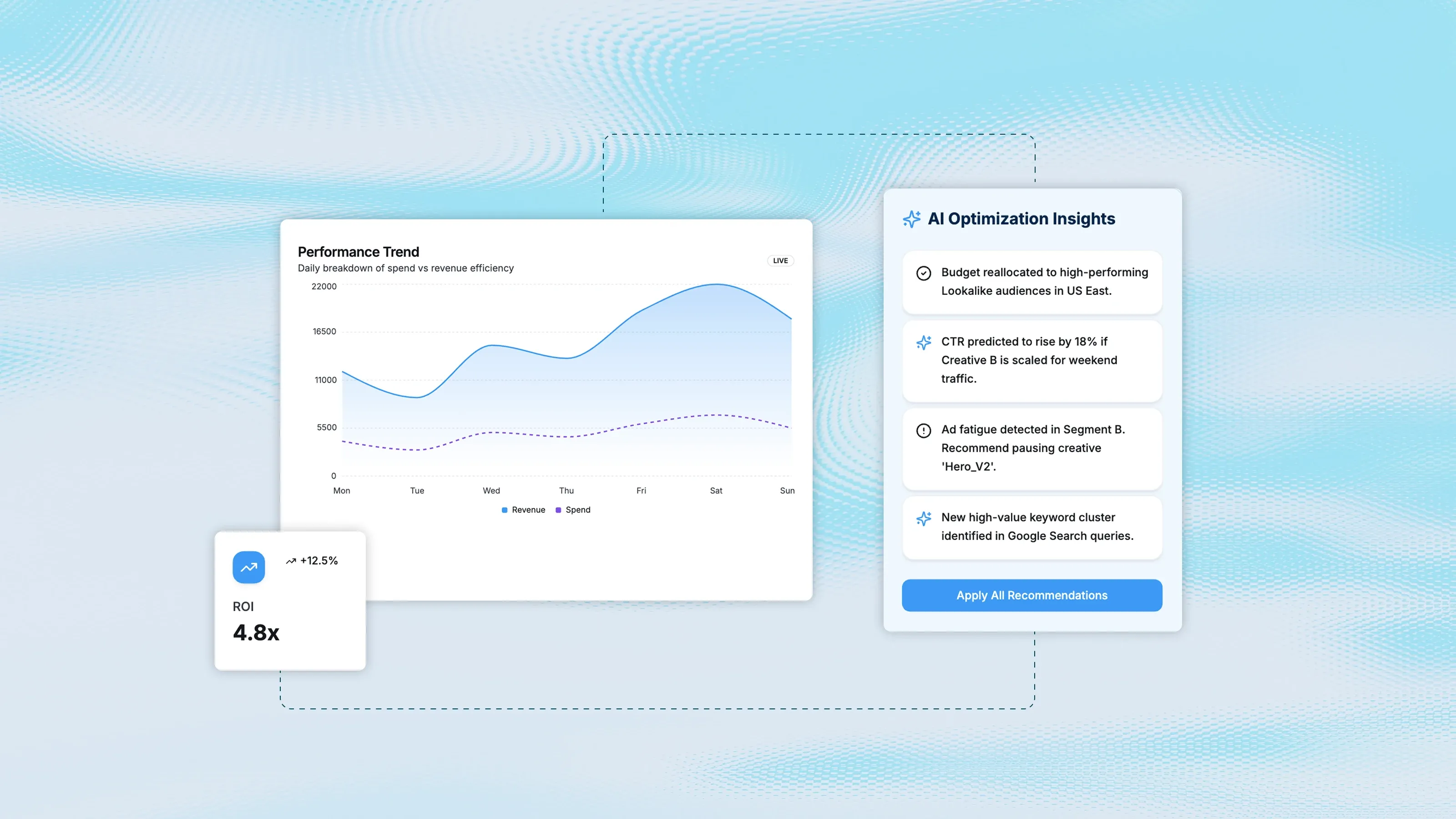
Data supports this massive shift in operations. A 2026 study shows, that companies using AI in marketing see a 22% higher ROI and 47% better click-through rates. Furthermore, these campaigns launch 75% faster than manual ones. This speed and accuracy create a compounding advantage. When you can iterate faster and target better, your budget works harder.
Here is how AI changes the foundational metrics of performance marketing:
-
Speed to Market: reducing the time from concept to launch allows brands to capitalize on trends instantly.
-
Cost Efficiency: algorithms cut wasted spend on underperforming segments.
-
Predictive Success: tools can forecast which ads will likely convert before they go live.
This transition does not remove the marketer from the equation. Instead, it elevates the marketer's role. By handing over the heavy lifting of data analysis to AI, professionals can focus on strategy, messaging, and creative direction.
For actionable frameworks on scaling with data and analytics, see How to Build a Performance Marketing Strategy That Scales.
Core Use Cases for AI in Campaigns

The application of AI goes far beyond simple automation; it fundamentally changes how we approach targeting and creative work. AI ad optimization serves as the engine behind this change, continuously learning from user interactions to refine who sees your ads and when. This dynamic capability ensures that campaigns adjust in real-time, far faster than any human team could manage.
One of the most powerful applications is in personalization and targeting. AI-driven personalization boosts click-through rates (CTR) by 25-30%. Rather than broad demographic buckets, AI analyzes behavioral signals to serve highly relevant content. Similarly, predictive analytics allows e-commerce brands to identify high-value users early, increasing customer lifetime value (CLV) by 14-20%.
Key areas where AI is making an immediate impact include:
-
Predictive Audiences: identifying users who are most likely to convert based on past behaviors and lookalike modeling.
-
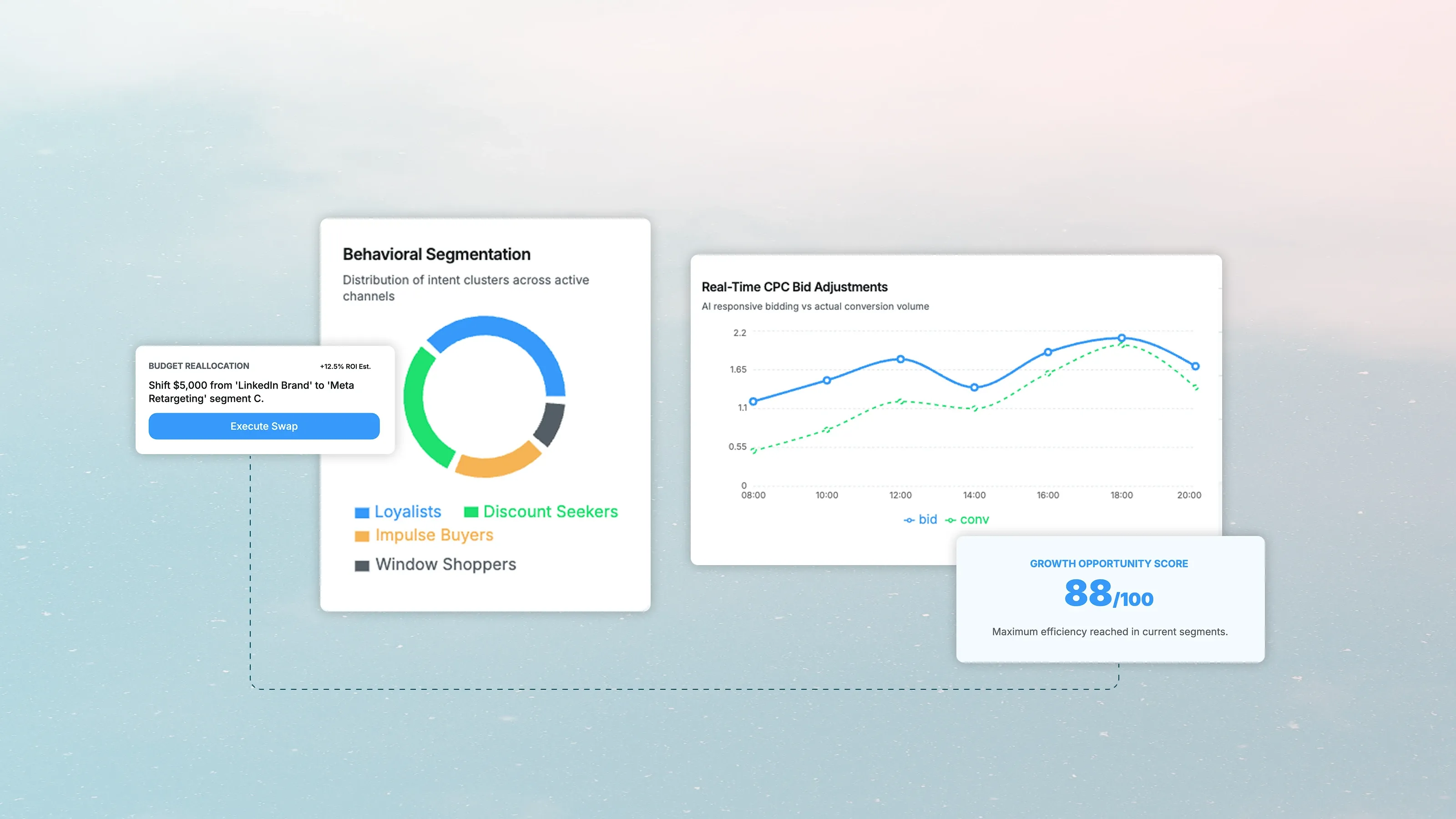
Dynamic Bidding: adjusting cost-per-click bids thousands of times per day to capture the best opportunities at the lowest price.
-
Churn Prevention: spotting patterns that indicate a customer is about to leave and triggering retention offers automatically.
These use cases demonstrate that AI is not just a tool for efficiency but a driver of growth. By predicting user needs and optimizing delivery, brands can achieve a level of relevance that manual campaigns simply cannot match. Discover more practical examples and step-by-step techniques in AI-Powered Marketing: How to Use Artificial Intelligence for Better Results.
Automation: Speed and Efficiency at Scale
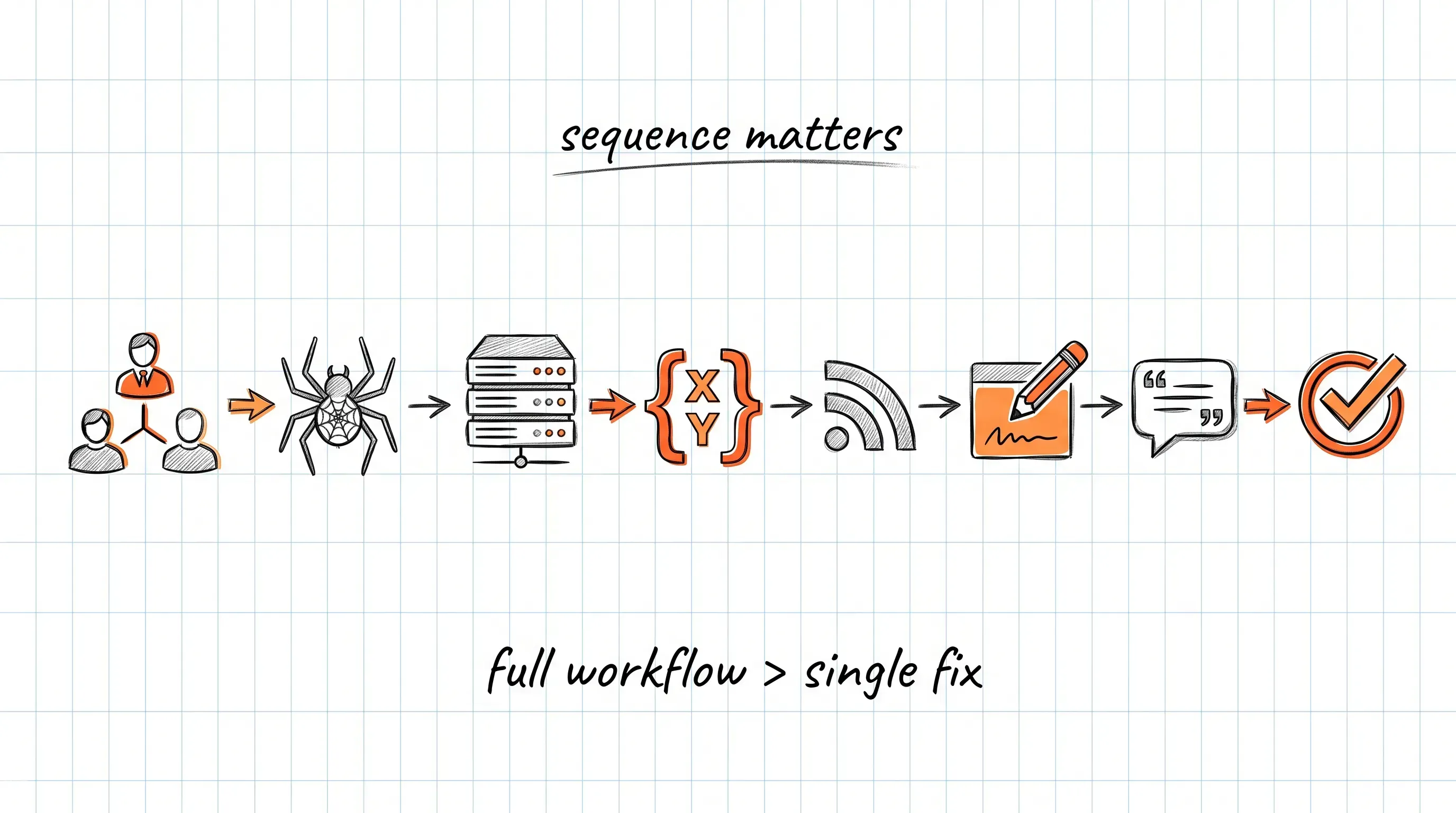
Speed is often the deciding factor in modern marketing wins. Marketing automation AI takes repetitive, time-consuming tasks and handles them instantly, freeing up teams to focus on high-value creative work. This creates a streamlined workflow where ideas can move from a whiteboard to a live campaign in a fraction of the time it used to take.
Creative testing is one area benefiting immensely from this speed. Traditionally, A/B testing was a slow process of elimination. Now, AI marketing campaign testing leads to a higher success rate in identifying top-performing ads. Tools can generate dozens of copy and design variations, test them simultaneously, and allocate budget to the winners automatically. This is crucial for maintaining performance as ad fatigue sets in faster than ever.
Automation streamlines several critical functions:
-
Creative Variation: generating multiple headlines, images, and descriptions to find the perfect combination.
-
Reporting and Insights: automatically gathering cross-channel data to present a unified view of performance.
-
Budget Allocation: shifting funds between channels like Google, Meta, and LinkedIn based on real-time ROI performance.
The result of this automation is a more agile marketing organization. Teams are no longer bogged down by administrative tasks or manual data entry. They are free to experiment, innovate, and drive strategy while the AI handles the execution and optimization.
Snoika: Winning Visibility in the Age of AI Search
Beyond paid ads, automation is also critical for organic visibility in the age of AI search. Platforms like Snoika help businesses become visible and cited in AI-driven search engines like ChatGPT and Perplexity. Snoika bridges the gap between traditional SEO and AI performance marketing by ensuring your brand appears in the answers generated by AI, not just in a list of blue links. This type of visibility requires a new approach to content optimization which automated tools can facilitate. For a practical blueprint on fast, AI-powered optimization, explore Google Search Engine Optimization That Works Like an AI Growth Team.
Navigating Risks and Limitations
While the benefits are clear, relying heavily on AI introduces specific risks that marketers must manage. Blind trust in algorithms can lead to wasted budget, brand safety issues, or messaging that feels robotic and disconnected. It is essential to view AI as a powerful assistant rather than an autonomous pilot that requires no supervision.
Data privacy remains a top concern. As AI systems require vast amounts of data to learn, ensuring this data is collected and used ethically is paramount. Additionally, there is the risk of "hallucination" or error, where an AI might generate incorrect information or make poor bidding decisions based on anomalies in the data. For example, a sudden spike in bot traffic could trick an algorithm into spending budget on low-quality clicks if not monitored.
Marketers should remain vigilant about these potential pitfalls:
-
Data Dependency: AI is only as good as the data it is fed; poor data hygiene leads to poor performance.
-
Brand Voice Dilution: over-automating content creation can result in generic messaging that lacks your brand's unique personality.
-
Compliance Issues: automated targeting must strictly adhere to privacy regulations like GDPR and CCPA to avoid legal penalties.
To learn how leading teams balance scale and human oversight, read The Future of AI in Content Marketing: What’s Next?.
Balancing automation with human oversight is the only way to mitigate these risks. Regular audits of AI decisions, strict brand safety controls, and a human-in-the-loop approach to content creation ensure that you reap the rewards of efficiency without sacrificing quality or compliance.
Conclusion
The integration of artificial intelligence into performance marketing is not a temporary trend; it is the new standard for operational excellence. From reducing campaign launch times to improving conversion rates, the data proves that AI tools offer a competitive edge that manual processes cannot match. By adopting AI performance marketing, brands can navigate complex digital landscapes with greater speed and precision.
Success in this new era requires a balanced approach. Marketers must leverage AI ad optimization and automation for efficiency while maintaining strict human oversight on strategy and brand integrity. Those who master this collaboration between human creativity and machine intelligence will define the future of the industry, securing better results and stronger customer relationships.