Introduction
Generative search has completely reshaped organic discovery and made traditional keyword-heavy production models ineffective. Today, users increasingly bypass standard search result pages because they prefer the direct answers that large language models synthesize. This structural shift leaves the vast majority of brands invisible in AI-driven search environments. Relying exclusively on legacy tactics no longer works when algorithms prioritize fact extraction over keyword density. Companies that adapt to Generative Engine Optimization maintain their presence in the modern buyer journey. A 2025 analysis found that organic CTR dropped 61% for AI Overview queries, highlighting the need for adaptation. To remain competitive, organizations develop a cohesive AI digital marketing strategy. Focusing on proprietary data, structured content, and contextual entity extraction helps businesses secure visibility across these channels.
Structural Transformation of Search
Businesses can secure visibility across relevant channels by understanding how generative engines have changed the way users consume information online. Platforms like ChatGPT, Perplexity, and Google AI Overviews provide direct answers, saving users from having to look through multiple web pages. A recent Bain & Company study found that 80% of consumers rely on zero-click results in many searches. This behavioral shift leaves nearly 96% of B2B companies invisible during the discovery phase. When enterprise buyers ask an AI agent about an industry problem, the language model pulls data from trusted external sources rather than from standard corporate blogs. Traditional content libraries fail to register in these advanced systems. Organizations develop a digital growth strategy to adapt to this transition. They structure proprietary knowledge so AI algorithms can extract factual claims easily. These platforms process machine-readable data instead of dense marketing copy. Brands that rely on legacy indexing methods often experience lower discovery rates than companies that optimize for direct answers. These organizations maintain visibility by adapting to generative platforms.
Generative Engine Optimization vs Traditional SEO in AI Digital Marketing Strategy
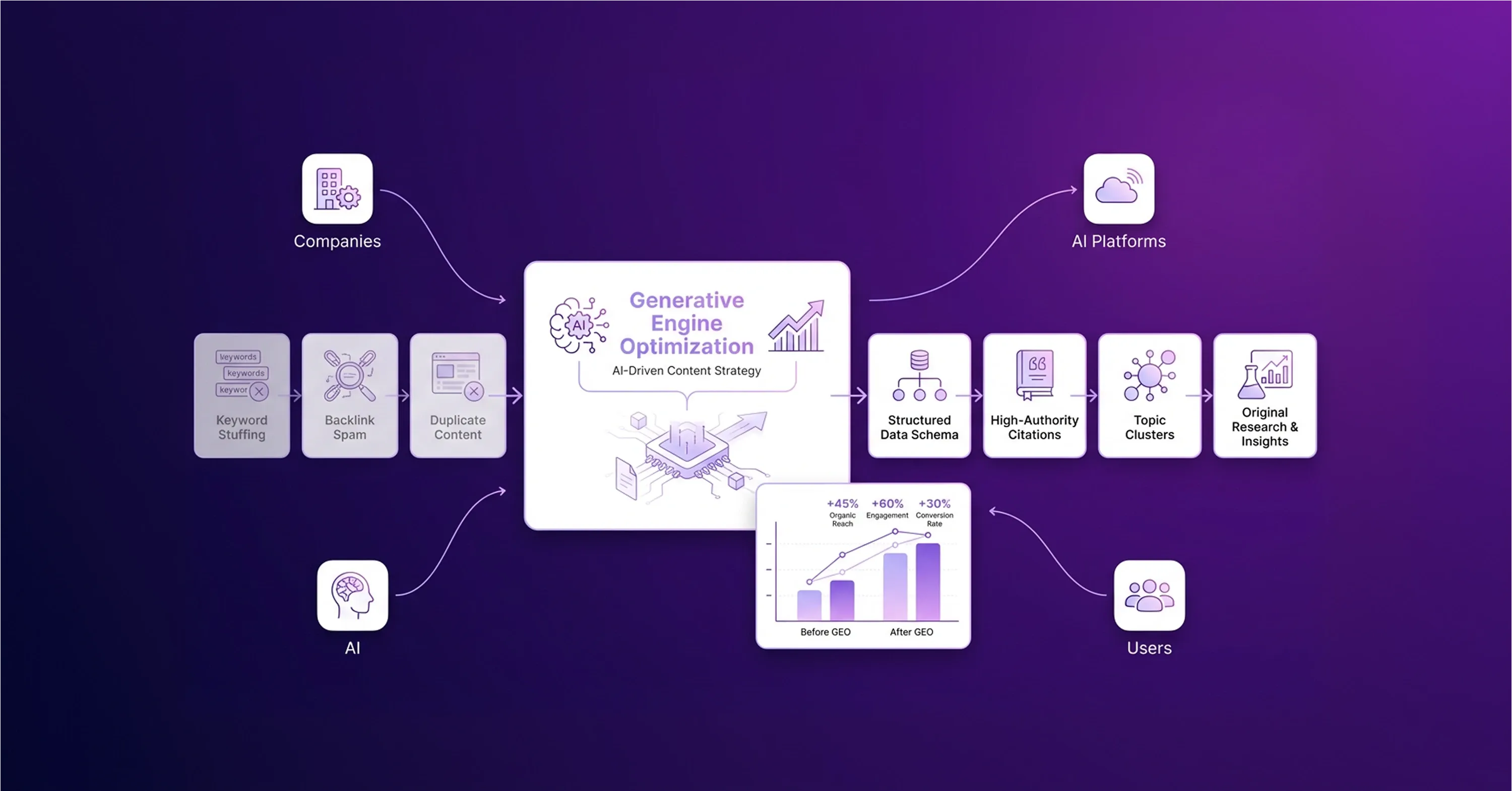
Organizations maintain visibility by adapting to generative platforms, and this requires a shift away from traditional search engine algorithms that evaluate keyword volume and backlinks, because generative engines prioritize contextual entity extraction. AI agents parse content differently from legacy web crawlers. A digital growth strategy requires brands to build machine-readable architecture that connects related concepts. Generative Engine Optimization (GEO) focuses on establishing factual relationships between business entities rather than securing a specific keyword rank. Brands no longer rely solely on keyword density. Danny Sullivan from Google emphasizes this behavioral shift and advises creators to write for humans to achieve longevity.
While old tactics fade, traditional visibility still influences generative outputs. Current data shows that ChatGPT cites 43.2% of top pages in its AI responses. Companies combine these disciplines to maintain a balanced approach to organic discovery. Marketing teams use specific content optimization tools to improve entity recognition. Teams focus on structural elements to strengthen entity optimization:
-
Structuring technical data with precise schema markup
-
Validating factual claims through trusted third-party citations
-
Publishing proprietary research that language models can reference
These practices help AI systems understand the brand’s market position. When language models connect a company to a solution, the brand appears more frequently in relevant queries. This transition helps establish market authority.
Quality-Over-Velocity Playbook

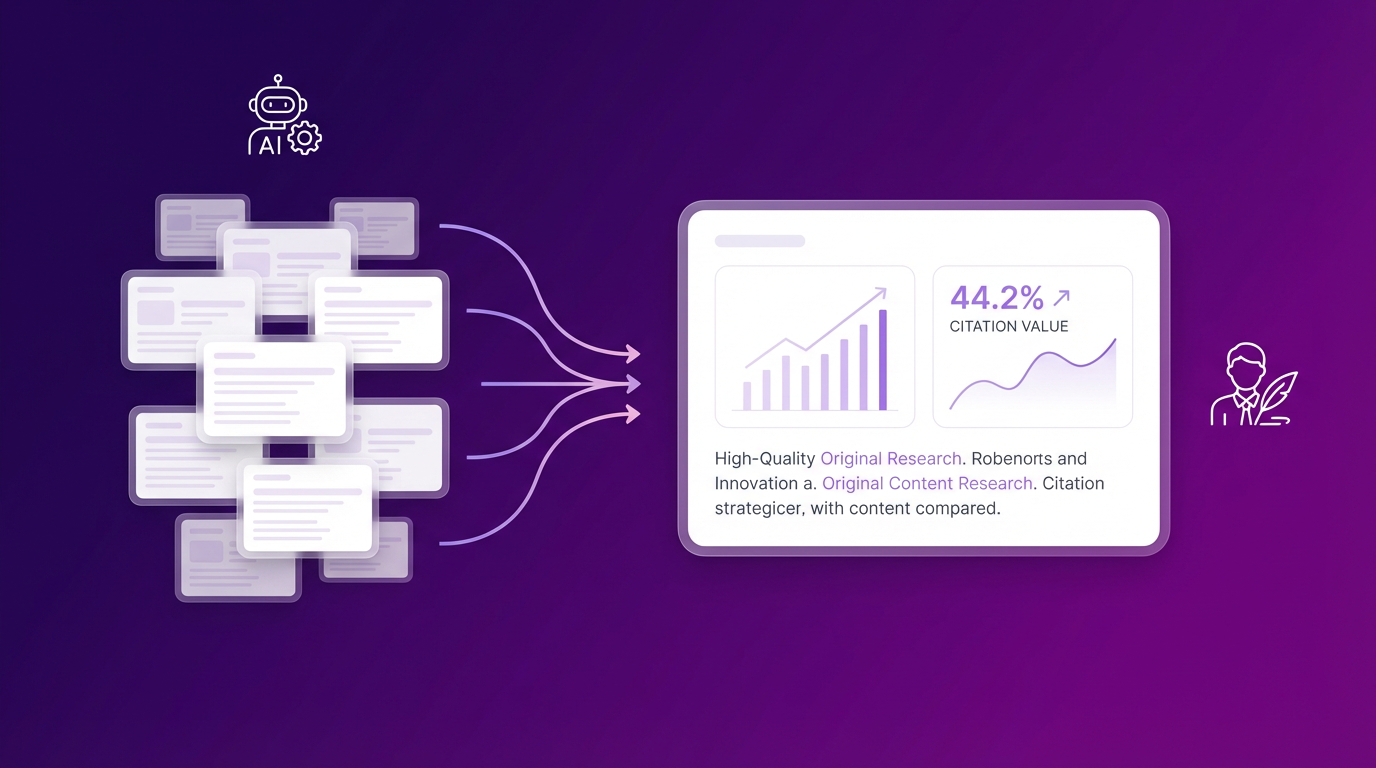
Companies try to establish market authority, but artificial intelligence creates immediate market saturation when companies use it to multiply content volume. When every competitor publishes thousands of automated articles, informational text loses its value. Language models do not need more industry concepts, so they ignore repetitive content. Marketing teams use AI to improve content quality instead of generating endless pages. This approach helps companies build authority through proprietary research and original data. Unique insights improve the AI marketing funnel because language models actively seek statistics to answer user queries. Structural placement determines whether an AI agent extracts the data. Kevin Indig's recent analysis reveals that 44.2% of ChatGPT citations originate from the first third of an article. Writers help AI agents extract this information by placing valuable findings in the introduction. A successful AI digital marketing strategy requires teams to distill complex data into clear answers. Brands become authoritative sources for generative engines when they reduce publication volume and focus on information density. This shift supports long-term organic growth.
New Authority Foundation
This long-term organic growth requires external validation because language models trust it more than corporate websites. When generative engines compile answers, they pull information from platforms where real people discuss experiences and review products. This structural preference means that an effective digital growth strategy must prioritize off-site authority. Companies have little power if they restrict their knowledge strictly to their owned domains. If marketing teams want their brands to appear in Artificial Intelligence (AI) responses, they need to establish a strong presence on third-party platforms like LinkedIn, YouTube, and G2.
AI agents scan these external sites to verify factual claims and gauge public sentiment. Because AI systems distrust isolated corporate messages, brands are cited 6.5 times more often through third-party sources than through their own websites. Discussion forums carry particular weight in this new ecosystem. A recent analysis shows that AI platforms cite Reddit in 23% of browsing sessions, a rate that surpasses traditional information repositories like Wikipedia and GitHub. Marketers must distribute their insights across these active communities. They use a web page optimization checker to ensure their core site aligns with what external sources say. Consistent external validation forces language models to recognize the brand as an authoritative entity. When language models see a brand mentioned positively across multiple external platforms, they categorize that company as a verified industry resource.
Technical GEO Infrastructure
Language models categorize companies as verified industry resources, but they also require structured data to understand complex business information. A progressive digital growth strategy requires a machine-readable architecture that removes ambiguity from corporate web pages. When companies use JavaScript Object Notation for Linked Data (JSON-LD) schema markup, they translate their text into a standardized format that AI agents can process easily. This change allows generative engines to retrieve factual brand information instantly. If marketing teams fail to structure their data, language models struggle to parse their content and simply move on to competitors. This architecture directly affects user engagement. Websites experience an 82% higher click-through rate on pages that display as rich results with structured data.
Marketing teams execute several essential tasks to build this technical infrastructure:
-
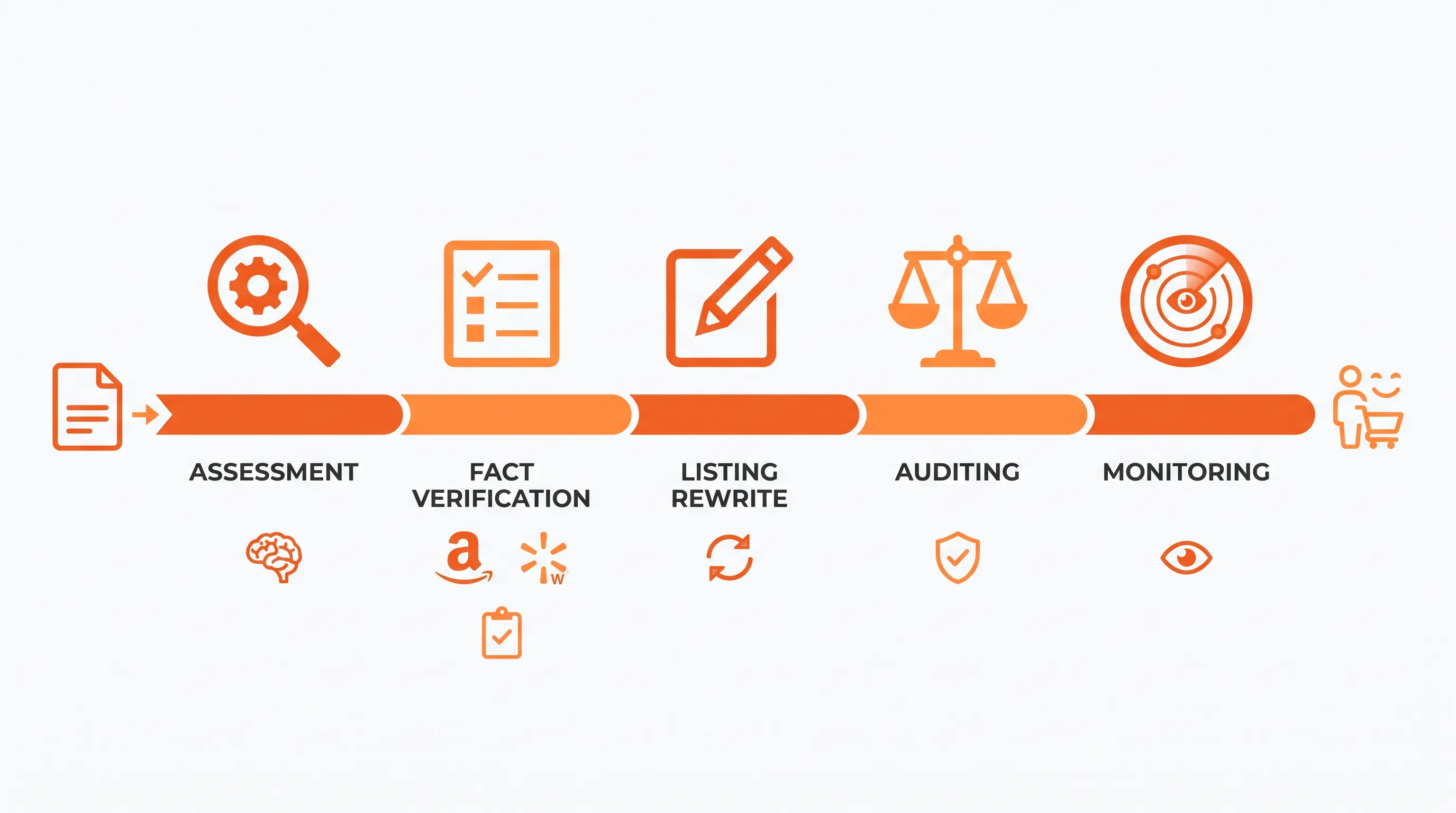
Audit existing web pages to identify missing entity definitions.
-
Generate JSON-LD schema markup for products, services, and organizational details.
-
Validate the implemented code on standardized testing platforms.
-
Monitor AI citation metrics to ensure search engines parse the information correctly.
Fact-Dense Content Structure
Search engines parse the information correctly when teams format text properly, and generative engines prioritize information density over narrative length. Marketing teams must format their content so advanced algorithms can extract facts without processing filler words. This formatting begins with answer capsules at the very top of the page. An answer capsule is a concise paragraph that directly addresses a specific question and uses dense, factual statements. Early placement of these capsules in the document strengthens the AI marketing funnel because language models scan the initial sections of a page first. Data shows that answer capsules placed at the top of pages yield a 40% higher citation rate than standard prose content. Writers build these capsules with clear subject-verb structures and precise data points. This direct approach eliminates ambiguity and forces AI systems to recognize the text as a definitive answer.
Schema Integration Into AI Marketing Funnel
After AI systems recognize the text as a definitive answer, deploying JSON-LD schema markup across the entire website establishes clear boundaries around business entities. This technical deployment forms the foundation of digital discovery. When companies define their products, executives, and research through schema, they guide language models directly to their most valuable assets. Schema markup acts as a translation layer that connects complex corporate concepts to the broader knowledge graph. This translation ensures that AI agents categorize the brand correctly during user queries. Properly defined entities improve performance across top search optimization strategies because search engines reward clarity. This architecture produces business outcomes. Websites see a 30% average organic traffic increase when they implement schema markup properly. The technical SEO connection to broader content initiatives ensures that AI systems recognize and recommend the company.
Interconnected Topic Clusters
AI systems recognize and recommend the company when language models evaluate website authority based on the depth of interconnected information. An effective AI digital marketing strategy requires companies to link related original content into cohesive topic clusters. When writers connect specific technical articles to a broader pillar page, they signal thorough expertise to generative engines. This internal linking structure proves that a brand understands an entire subject rather than just a single isolated keyword. AI systems naturally prefer sources that demonstrate deep topical knowledge. Current metrics indicate that 86% of AI citations originate from websites with five or more interconnected topic pages. Companies must group their insights logically so algorithms can crawl from one related concept to the next. This clustering process solidifies the brand’s position as a primary industry resource.
Attribution Crisis Resolution
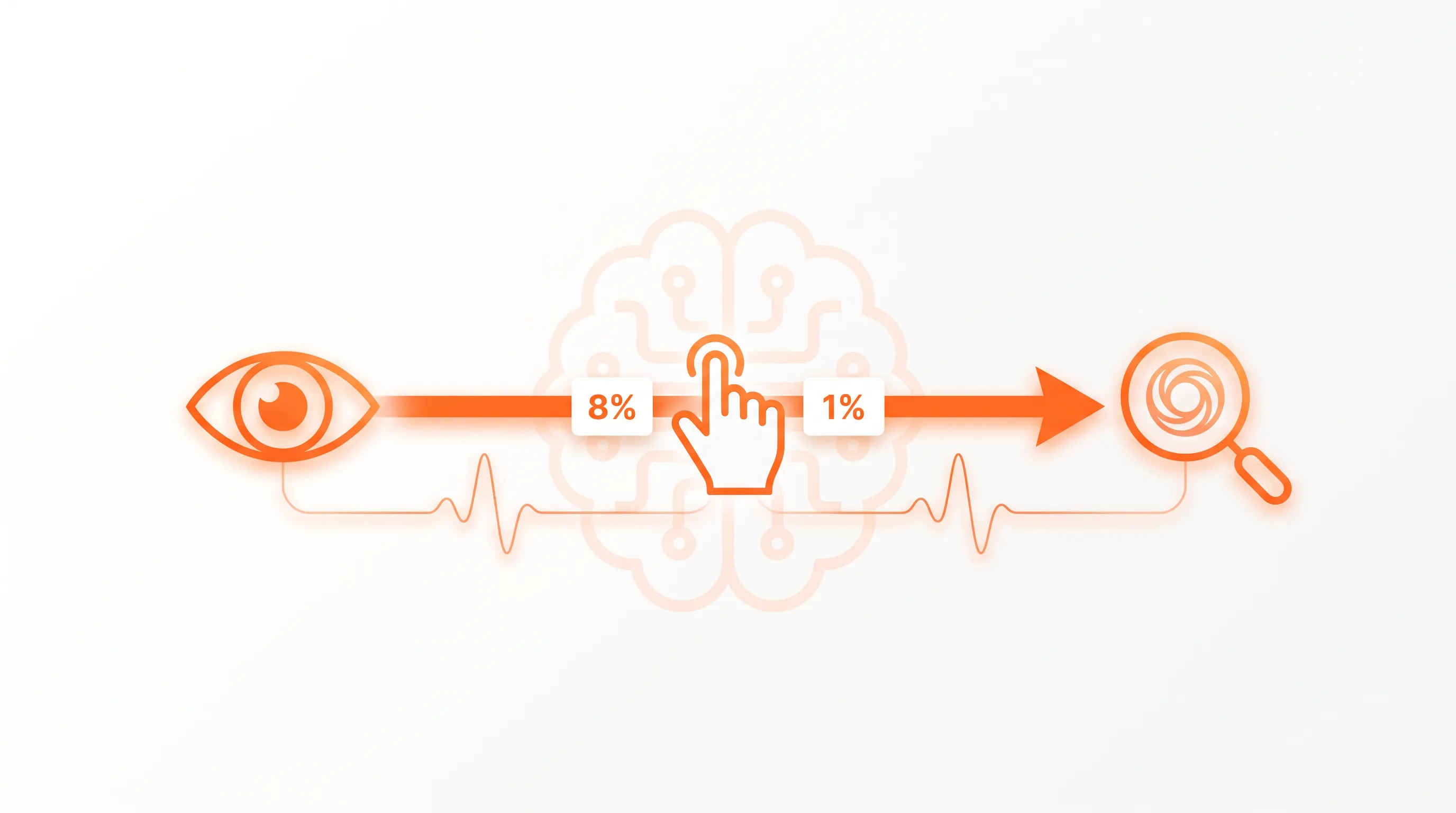
Even when a brand solidifies its position as a primary industry resource, the shift toward generative search creates significant measurement challenges for marketing departments. Traditional analytics platforms rely on last-click pixel tracking to measure conversions, but this system fails when users get their answers without visiting a website. Generative engines synthesize information directly on the results page, eliminating the traditional click pathway. Recent data reveals that 93% of AI Mode searches end without a single click, compared to 43% for standard AI Overviews. This zero-click environment breaks legacy attribution models and makes it difficult for leaders to prove the Return on Investment (ROI) of their content efforts.
Marketing teams must adopt a forward-looking approach to measurement to solve this attribution crisis. Teams prioritize brand mentions and share of voice within AI responses over direct website visits. This shift requires organizations to rethink how they evaluate their AI digital marketing strategy. Companies measure success by tracking how often language models recommend their products across specific industry prompts. They establish new performance marketing indicators that account for AI visibility and direct brand search volume. When the AI marketing funnel operates correctly, users read the AI-generated answer and then search for the brand by name. Monitoring brand search trends provides clear evidence that generative engine influence drives buyer behavior. Companies secure executive buy-in when they successfully map these visibility metrics to overall revenue growth.
Conclusion
To summarize, mapping these visibility metrics to overall revenue growth supports a successful organic growth strategy. This strategy depends on building genuine authority across trusted third-party platforms rather than publishing high volumes of AI-generated content on owned domains. It requires external validation because generative engines prioritize validated information from diverse sources. An adaptable AI digital marketing strategy also helps brands remain discoverable in zero-click environments as search algorithms evolve. The next step involves performing an AI visibility audit and deploying structured data so language models can extract proprietary insights accurately.