How to improve ai ranking in search results

Content authorAnton Vedeshin, Ph.D.Published onReading time12 min read
A robot climbs a multi-step staircase toward a glowing golden trophy labeled 'SERP', set against a deep violet background.

This article is a step-by-step guide to earning citations from AI answers like Google AI Overviews and ChatGPT. It also covers Perplexity when you already rank well in classic search. It walks through the work in the order you should do it, from auditing your baseline to tracking whether any of it moved the needle.

Why AI citations work differently

You rank on page one for the queries that matter, yet ai ranking remains out of reach. Your meta tags are clean, and your headings are sensible. Your Core Web Vitals pass. And yet when you ask ChatGPT or Perplexity the question your buyers ask, a competitor gets named and you don't. That gap between your ai ranking in classic search and your presence in AI answers is the whole problem this piece solves.

Getting cited by an AI model is called generative engine optimization, and it builds on solid SEO. The old goal was earning a click. The new goal is being the source a model reuses when it writes its answer. Those two goals overlap, but they are not the same, which is why strong rankings alone no longer guarantee you show up.

What follows is an ordered sequence. Do this, then that. Each step assumes you finished the one before it.

Audit your current AI ranking

Before you change a single line of code, find out where you actually stand. Write down the real questions your buyers ask, in their words, the way they would type them into a chat box. Use questions. Aim for ten to twenty that cover your core offering and the comparisons people make before they buy.

Then run each one through the three surfaces that matter and record what you see:

  • Google AI Overviews, which now appear in 18% of searches according to a November 2025 Originality.AI analysis

  • ChatGPT, which processes over 2.5 billion queries per day per DemandSage's July 2025 data

  • Perplexity, which handled 780 million queries in May 2025, a figure CEO Aravind Srinivas shared onstage at Bloomberg's Tech Summit

For each question, note three things. Where do you appear? Where are you absent? And which competitor gets cited in the space you wanted? That third column is the useful one. It turns a vague worry about ai ranking into a ranked to-do list, because the questions where a rival wins and you don't are the exact gaps to close first.

Save this as your baseline. When you rerun the same questions in a quarter, this is the record that tells you whether the work paid off. Skipping this ai search optimization step is how people spend three months optimizing and then can't prove anything changed. This ai search analytics baseline is the reference point for everything after it.

Let AI crawlers reach your content

Here is the ai ranking gate that silently locks out sites that otherwise deserve to be cited. If an AI bot can't fetch your page, none of the content work matters. So confirm access before you touch anything else.

Open your robots.txt and check that the named AI agents aren't disallowed. The ones that carry the most weight are GPTBot, which powers ChatGPT's browsing, and PerplexityBot, which fetches live results for every Perplexity query. The trap is the blanket rule.

A User-agent: * with Disallow: / that you set up to block scrapers also blocks legitimate AI crawlers unless you add explicit allow directives after it. As one Conbersa configuration guide puts it, "a misconfigured robots.txt is the single most common reason B2B SaaS content goes uncited by AI search engines."

Abstract illustration featuring a central robots.txt document with a glowing lock, AI bots halted by a barrier, and site owner icons observing.

The second check is newer. AI bots have tight timeouts and thin compute budgets, so they don't wait around for JavaScript to hydrate. If your page renders client side and returns a near-empty shell on first fetch, the crawler reads nothing. View the raw HTML your server sends and confirm the actual answer text is there on arrival. Target a Time To First Byte under 200ms and keep the HTML payload under 1MB, the thresholds Discovered Labs recommends for crawlers that abandon slow pages before indexing.

The ai search optimization crawlability logic is familiar from Google. What's new is how unforgiving these bots are about render speed and client-side content.

Need help with your AI visibility?

Book a free consultation with our experts we'll help you determine exactly which services your organization needs.

Fix speed and Core Web Vitals

Page performance is a carryover signal. You already do this ai search optimization work for Google, and the same levers apply. What changed is the payoff, because a fast page is easier for a model to fetch. It can then render and reuse it within its crawl budget.

Be honest about what speed does and doesn't do here. A January 2026 Search Engine Land analysis of over 107,000 pages found only a weak direct correlation between Core Web Vitals and AI Overview citations, with an LCP correlation as low as -0.12. Great vitals clear the floor for citations.

Slow pages get filtered out, and fast ones stay in the running. Keep LCP under 2.5 seconds. INP should remain under 200ms, while CLS stays under 0.1; these are the same targets you already track. The connection you need to internalize is that speed buys you eligibility for ai ranking citations.

Structure content for extraction

This is where AI citation diverges most sharply from writing a thorough, comprehensive page. A model lifts discrete passages and reassembles them into an answer. A CXL study of 100 AI Overview citations found that 55% of citations came from the top 30% of a page, which means where you place an answer matters as much as whether you wrote it. Your job in ai ranking is to make each idea easy to pull out clean. Three ai search optimization tactics do most of the work.

Lead with direct answers

Put a self-contained answer to the section's question in the first sentence or two, then follow with the supporting detail. Models extract crisp, quotable statements far more readily than a meandering wind-up.

Here's the difference. A weak opening reads: "There are a number of factors to weigh when thinking about how often you should refresh content, and it depends on your industry and goals." A liftable one reads: "Refresh cornerstone content every quarter. Pages in fast-moving categories like software need it more often than static reference pages." The second version answers the question in the first breath, and a model can quote it without stitching together three clauses.

Add headings and FAQs

Descriptive headings and dedicated FAQ sections map to the actual phrasing people type into AI tools, which makes your passages easy to match and pull. A heading like "How much does X cost" beats a clever keyword-stuffed line that reads well to a human but gives a model nothing to latch onto.

This is where your audit earns its keep a second time. Take the buyer questions you recorded at the start and turn them into headings and FAQ entries word for word. You already know these are the questions being asked, so you're mapping your page directly onto real demand instead of guessing.

Break up walls of text

Dense, unbroken paragraphs bury good information where a model can't isolate it. Even when the content is right, a 200-word block forces the parser to guess where one idea ends and the next begins. Short paragraphs, lists, and clear formatting turn each point into a discrete, liftable unit.

Keep paragraphs to two or four sentences. When you have parallel items, make them a list. The goal is that any single idea on the page can be picked up and quoted without dragging three unrelated sentences along with it.

Align schema and entity data

Schema markup gives a model machine-readable facts about your page, and the attribute-rich types outperform the generic ones. A 2026 Growth Marshal study found pages with populated Product or Review schema were cited at 61.7% versus 41.6% for generic Article or Organization markup. So fill in concrete fields instead of shipping bare declarations, with pricing and ratings alongside specifications.

The part that carries more weight than the markup itself is consistency across channels. This is the distinctly AI-era layer on top of familiar structured-data work. When your business facts differ between your site and your Google Business Profile, the model loses confidence in which version is true for ai ranking and hedges by citing someone cleaner. Third-party listings can create the same conflict. A trailing "Str." on one listing and "Street" on another is enough friction to matter.

Audit it directly. Compare your homepage with your schema. Then check your Google Business Profile against your top three or four directory listings, and read the facts against each other. Fix every mismatch to a single authoritative spelling, then use the sameAs schema property to link your site to those external profiles so the model recognizes them as one entity.

Need help with your AI visibility?

Book a free consultation with our experts we'll help you determine exactly which services your organization needs.

Build credibility AI trusts

Everything so far makes you readable. This step makes you trustworthy, which is what a model weighs before it puts your name in an answer. Google's Search Quality Rater Guidelines frame this as E-E-A-T, which covers experience and expertise alongside authoritativeness and trust. They state plainly that trust is the most important member of that family. The same instinct governs which sources a model is comfortable reusing.

On-page authority is the part you know. Cite reputable external sources in your own content and show real author expertise. Make verifiable claims. The off-site presence is the part that specifically moves AI citation, and it's where community platforms punch above their weight.

A June 2025 Semrush study of over 150,000 citations found that 40.1% of LLM references pointed to Reddit, ahead of Wikipedia at 26.3%. ChatGPT leans on it especially hard: Reddit appears in 141.2% of responses in business and professional services. That means roughly 1.4 citations per answer.

So the credibility work runs on two tracks:

  1. On your own pages, back claims with named sources and make expertise visible instead of implied

  2. Off your pages, earn genuine mentions on industry publications and in the community threads where your buyers actually talk

The off-site track can't be faked into place. Spam gets you removed. What works is showing up where the conversation is real and being useful enough that people mention you without being asked.

Track and refresh AI search analytics

Now close the loop, because none of this counts unless you can measure it. And traffic is the wrong metric to watch. ChatGPT will name your brand and never send a click, so a flat traffic line can hide a real gain in citations. What you want to track in ai search analytics is whether models actually reuse your content. Watch mention rate and share of voice against competitors for ai ranking. Track citation frequency across platforms.

Doing that by hand breaks down the moment you need hundreds of prompts run across four platforms every week, so this is a job for a tracker. The AI search analytics tools that handle this include SE Ranking's AI Visibility Tracker and the Semrush AI Visibility Toolkit.

Snoika runs weekly testing across leading models and provides a single view of mention, sentiment, and citation reporting. Pick one and let it run on a stable schedule so your numbers stay comparable over time.

Then set a quarterly refresh cycle. Platforms shift, and your competitors move. Reddit's citation share alone grew at least 73% from October 2025 to January 2026 across every category Tinuiti tracked. Rerun your baseline questions each quarter. Update content and entity data against what changed. Treat this ai search analytics layer as the new measurement sitting alongside your existing SEO reporting.

Mistakes that block AI ranking

A handful of errors keep sites out of AI answers more than anything else. Run down the list and self-diagnose.

  • Treating ai ranking like keyword stuffing. Models reward clear answers and entity clarity, so density tricks that once nudged rankings now read as noise. Fix it in the extraction section.

  • Publishing unstructured walls of text. Good information a model can't isolate is invisible information. Break it up as covered above.

  • Flooding the site with thin AI-generated pages. Volume without substance erodes the trust signals that E-E-A-T rewards and weakens you as a source. Build real credibility instead.

  • Keeping contradictory facts across channels. Mismatched names and claims make a model hedge away from you. Align your schema and entity data.

  • Measuring only traffic. If you watch clicks alone, you'll miss the citations that are the actual goal. Track mentions and share of voice instead.

None of these are exotic. They're the quiet defaults that keep decent sites off AI surfaces while they wonder why.

Your next quarter

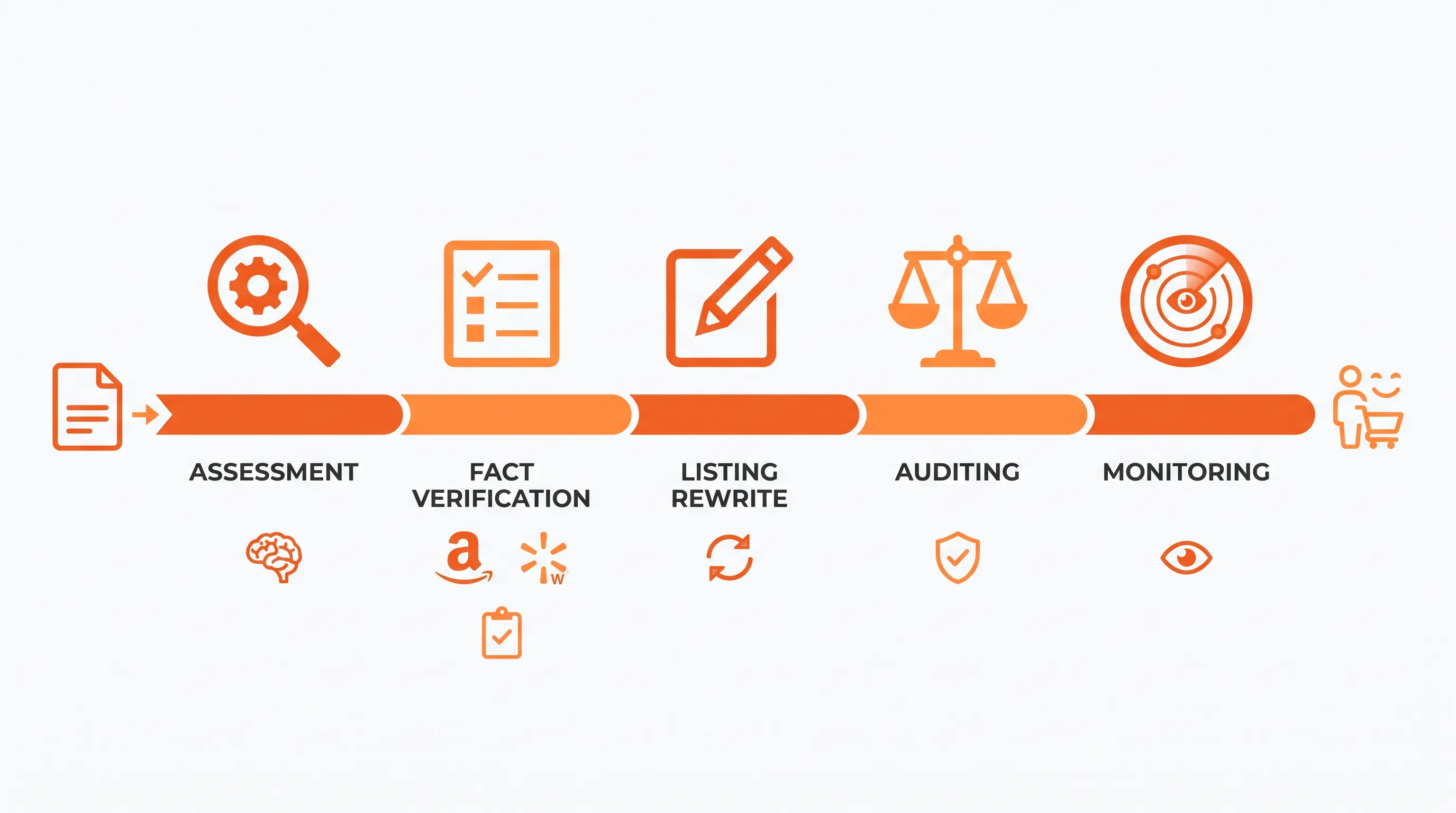
Here's the sequence, start to finish: audit your baseline against the three platforms. Then confirm crawler access in robots.txt. Hold your Core Web Vitals steady while you restructure content for extraction. After you align schema and entity facts, build off-site credibility. Track citations and refresh quarterly. Solid SEO plus this handful of ai search optimization moves is what earns citations, and the effort compounds with the work you already do. And it requires ongoing maintenance.

Start this week by running your top buyer questions through ChatGPT and Perplexity. Run them through Google AI Overviews as well, and record the gaps. If you want that audit and the tracking done for you, Snoika measures your ai ranking across AI answers and search, then executes the fixes that close the gaps it finds.

Need help with your AI visibility?

Book a free consultation with our experts we'll help you determine exactly which services your organization needs.

Yes, use the same wording, order, location settings, and account state each time. Record the date and model version when available. A stable prompt set makes citation changes easier to attribute to your content work rather than a different query formulation.

Use View Source or fetch the URL with a command-line HTTP request, then search the returned HTML for the page’s main answer. Browser inspection alone isn't enough because it can show text that JavaScript added after the first server response.

Record the cited URL, the competitor named, the answer’s wording, and whether your brand appears without a link. Also save a screenshot or exported result. These details show whether an ai ranking change reflects a citation, a mention, or a source substitution.

Add FAQ schema only when the questions and answers are visible on the page and match the markup exactly. Schema helps systems interpret the content, but it doesn't replace clear answers, accurate entity facts, or crawler access. Remove markup when the visible FAQ is removed.

Snoika tests prompts across leading AI models on a weekly schedule and reports mentions, sentiment, and citations in one view. You can try Snoika’s AI visibility services if you need recurring measurement rather than manual checks. Compare its reports against your fixed baseline and competitor list.

Schedule a Meeting

Book a time that works best for you

You Might Also Like

Discover more insights and articles

Title:
15 best AI tools for SEO ranked for content keywords and competitors

Meta description:
Compare the best AI tools for SEO so you can find keyword gaps and analyze competitors without extra tool

15 best AI tools for SEO ranked for content keywords and competitors

This article ranks 15 best AI tools for SEO based on two jobs: finding worthwhile content keywords and exposing competitor openings. Each entry names one differentiator and the team it suits. Its limitation fixes its place, so you can pick one primary platform and add a specialist only when the data demands it.

A vibrant SaaS marketing visual featuring a central AI hub with glowing icons for ChatGPT, Claude, and Google AI, surrounded by citation nodes and traditiona…

Why ai citations reshape search visibility in 2026

This article explains why a page that ranks well in Google can still go missing inside AI answers, and what that means for ai brand monitoring and how you measure visibility now. It walks through how the major answer engines diverge and why generative engine optimization sits on top of your existing SEO. It also identifies where to start once ranking stops being the finish line.

A blonde woman works on her laptop at a table in a vibrant data center, surrounded by glowing server racks and dynamic workflow icons.

How to use chat gpt seo for competitor analysis

This article gives you one repeatable sequence for running competitor analysis with ChatGPT as part of a chat gpt seo workflow, from building a competitor list to producing a strengths and weaknesses table. It shows exactly where the model helps and where it fabricates. It also shows how to pair it with real ranking data so nothing made-up reaches your client.

A man in a suit examines a glowing plasma screen with a magnifying glass, set against a deep violet background with dynamic accents.

6 best ai seo tools for smarter keyword research and content optimization

In this article, I'll compare six AI SEO tools by naming what each one is best at and where it falls short, including how it handles work from clustering and intent through SERP analysis and content decay. By the end, you'll know which fits your research and content optimization needs.