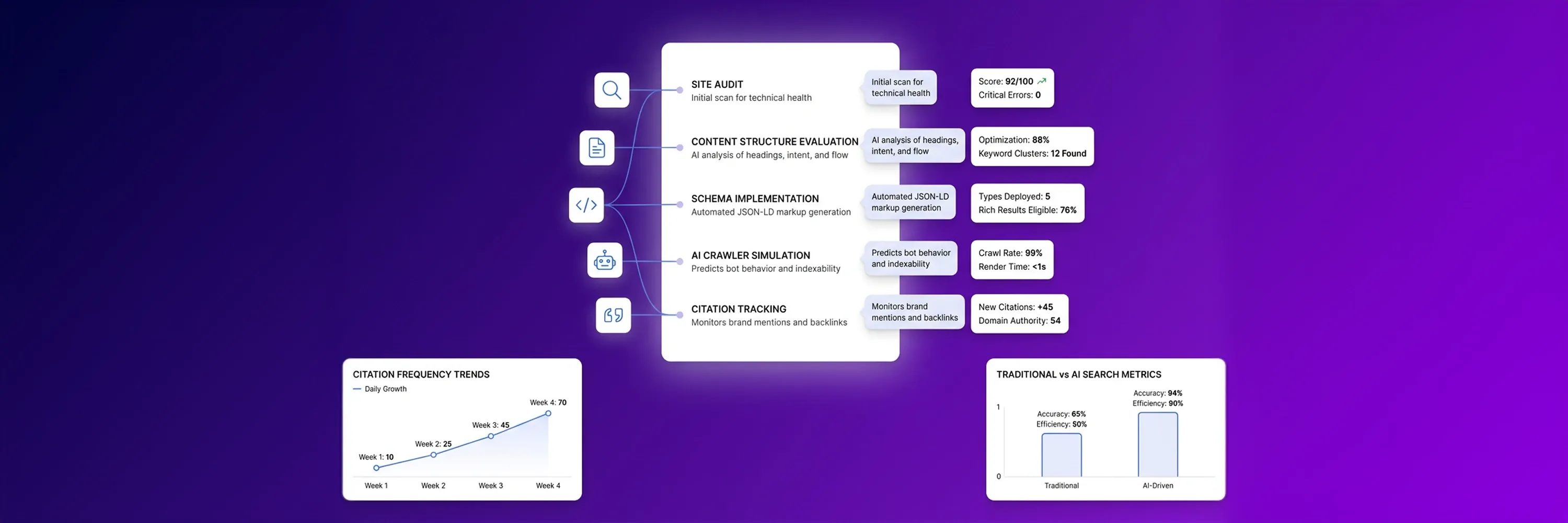
Dashboard illustrating AI-driven SEO workflow including site audit, content analysis, schema implementation, crawler simulation, and citation tracking with performance metrics

Analyzer SEO: Step-by-Step Guide to Measure AI Search Performance

In this article, we explain practical workflows to use an SEO analyzer to measure and improve visibility in AI search engines. Traditional measurement tools allow professionals to track citation frequency, assess schema readiness, and monitor bot accessibility effectively.

Content authorArtem Lozinsky, EMBA, MScPublished onReading time8 min read

Introduction

Professionals now adapt traditional SEO tactics to track citations within generative engine responses. They use standard auditing software to check websites for broken links and metadata errors. However, this traditional approach to Search Engine Optimization (SEO) presents challenges due to the rise of artificial intelligence. Professionals previously relied on keyword tracking to measure their digital footprint, but these legacy methods cannot predict discoverability in conversational interfaces. According to Digital Applied, 64.82% of Google searches end without a click in 2026.

Companies lose traffic when they rely solely on standard metrics because algorithms synthesize answers directly on the results page. They require highly specific workflows to measure actual AI performance. Professionals must track citation frequency and ensure AI bot accessibility to understand their true market share. They use a capable analyzer SEO configuration to gather the data necessary to maintain visibility. Professionals update existing tool settings and audit their infrastructure for generative engine optimization.

Limitations of Traditional Metrics

Traditional metric tracking obscures actual visibility within generative engines. Search industry forums like Reddit reflect skepticism about legacy indicators such as Domain Authority (DA) and Search Volume. These metrics measure historical link profiles and keyword popularity, but they fail to capture how algorithms synthesize answers. Because generative engines prioritize contextual relevance over link profiles, high DA scores do not guarantee inclusion in conversational responses.

A proper analyzer SEO strategy requires new measurement paradigms. Modern strategies abandon the false precision of old metrics and adopt systems that track direct citations. For example, recent data shows that only 17% of sources cited in AI overviews also rank in the organic top ten results. This disconnect demonstrates that standard Search Engine Results Page (SERP) positions cannot predict discoverability in conversational interfaces.

Modern campaigns require SEO audit tools that monitor how Large Language Models (LLMs) ingest and reference specific domains. A tailored SEO analyzer shifts focus from ranking metrics to citation tracking. Professionals move away from legacy metrics and configure technical crawlers to understand how artificial intelligence agents read website architecture.

AI Crawler Simulation in Analyzer SEO Configurations

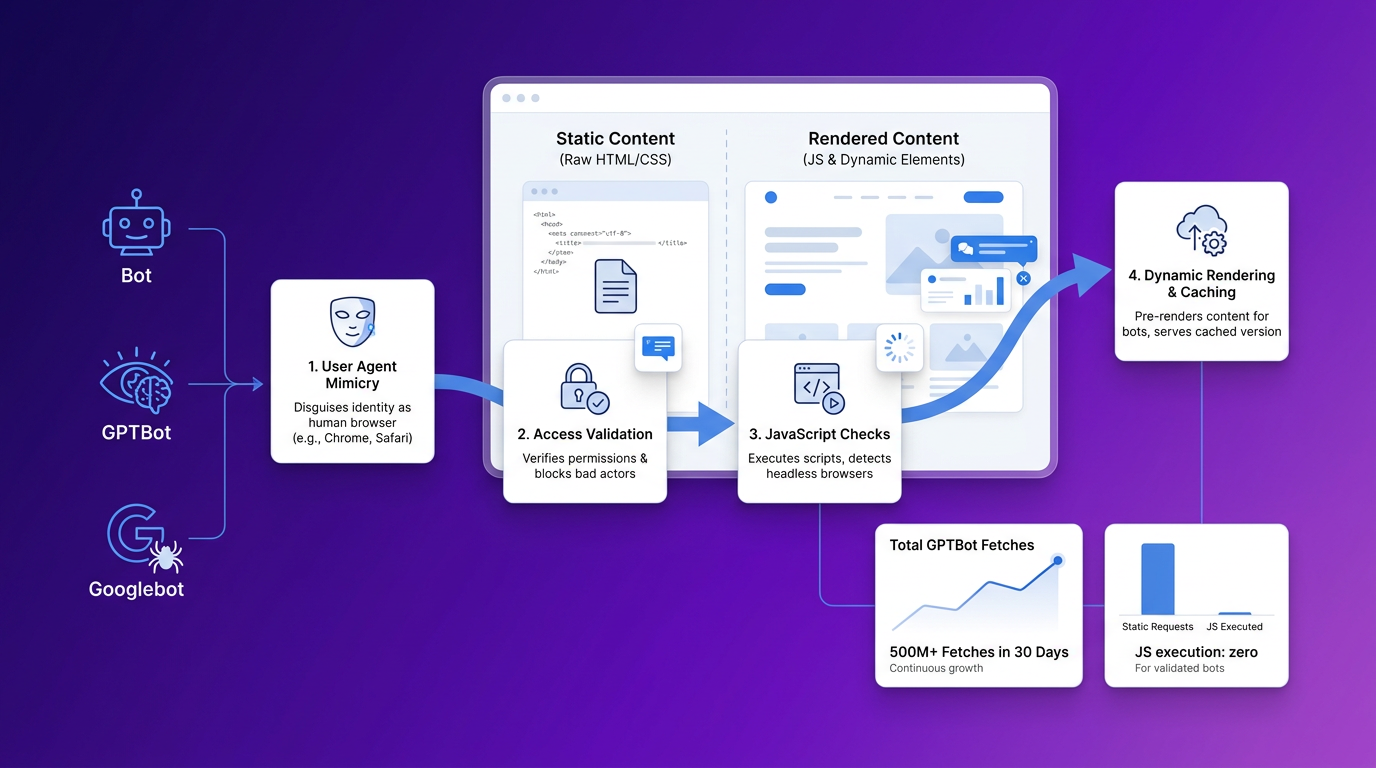
A sleek white UI panel on a rich purple-violet gradient background illustrates user agent interactions with simple blue icons and flow arrows.

Website configurations simulate artificial intelligence user agents and verify accessibility. Standard Googlebot configurations do not accurately represent how conversational algorithms view web pages. Crawler settings often mimic specific user agents such as PerplexityBot or ChatGPT-User. This precision helps identify rendering barriers that block LLM ingestion.

Bot validation checks whether these programs can access underlying content without executing complex scripts. For instance, researchers analyzed over 500 million GPTBot fetches and found zero evidence of JavaScript execution during the crawling process. If a website relies on client-side rendering to display core content, conversational agents may encounter a blank page and ignore the domain.

A capable site analyzer acts as a technical web page checker and identifies these ingestion blockages. Technical workflows adapt to ensure these new bots can extract information efficiently:

  • Permit specific LLM user agents

  • Serve static HTML files

  • Remove intrusive interface pop-ups

  • Validate server response times

The technical infrastructure must permit bot access before evaluation shifts to how content structure influences algorithmic citation decisions.

AI Search Readiness Assessment

Targeted audits assess the foundational elements required for generative engine visibility. A proper site analyzer evaluates whether a domain provides definitive answers that algorithms can easily extract. Conversational algorithms favor websites that present concrete data upfront and avoid lengthy introductions that obscure key facts. If a page structure forces a bot to parse thousands of words to find a simple definition, the algorithm will select a competitor’s domain instead.

Modern content strategies therefore prioritize an answer-first format across the entire web architecture. This inverted pyramid approach aligns with how language models process and retrieve information for user queries. According to recent industry analysis, an answer-first content structure increases citation rates by 67% compared to standard formatting. Auditing software scans existing pages and identifies opportunities to restructure the information hierarchy. These tools highlight paragraphs that delay the primary answer and flag them for revision. The software measures factual density and text formatting to implement these structural changes effectively.

Content Evaluation with SEO Audit Tools

Content evaluation ensures that answer-first structures place factual data at the beginning of content blocks. Software configurations verify that introductory paragraphs contain high-value information without descriptive filler. Language models scan documents for clear passages that directly address questions. If a passage contains concise definitions, the algorithm processes the text more efficiently and is more likely to cite the source.

Research indicates that the optimal passage length for citation spans between 134 and 167 words. Many systems use dedicated optimization software to measure paragraph density and enforce these length guidelines. These programs isolate rambling sections and divide them into digestible chunks. Beyond paragraph length, algorithms rely on semantic mapping to understand how different subjects relate to one another.

Deep Entity Recognition

Software tools map semantic relationships between specific subjects across domains. Artificial intelligence algorithms connect related concepts through complex entity graphs rather than matching exact keyword phrases. An audit tool measures entity completeness and evaluates how many related subtopics a page covers. Thorough topic coverage signals authority to parsing algorithms.

For example, data shows that content with a score of 8.5/10 for semantic completeness receives citations more than four times as often as less comprehensive pages. Semantic audits identify missing entities in existing articles, close information gaps, and improve overall topical authority. Semantic relevance also requires precise code elements that communicate contextual structure.

FAQ Schema Implementation

Technical audits review structured data markup to ensure verifiable information reaches conversational algorithms efficiently. Search bots rely heavily on structured data to understand page context and extract direct answers. An analyzer SEO program scans domains specifically for Frequently Asked Questions (FAQ) schema errors that might confuse parsing scripts.

Properly formatted schema code wraps questions and answers in a standardized structure that algorithms process instantly. This technical clarity directly influences visibility, as studies show an 89% correlation between valid schema and Perplexity citations across hundreds of analyzed sites. Development cycles fix broken markup tags and validate code formats to remove extraction barriers. Valid schema ensures that conversational engines can read, process, and cite the underlying content.

Tool Data Cross-Reference for Accuracy

Analysts combine lightweight desktop crawlers with enterprise platforms to build a systematic workflow that verifies data. They use an effective analyzer SEO configuration to bridge the gap between technical site architecture and generative engine discoverability. Lightweight crawlers extract server response codes and identify broken code on specific pages, while enterprise platforms track brand mentions across conversational interfaces. This dual approach helps analysts correlate technical health with actual citation frequency.

A rigorous methodology is required to track citations consistently. Because algorithms stabilize their reference sources over time, analysts can link structural changes to performance outcomes with greater confidence. For instance, recent industry tracking reveals that 96.8% of cited domains show zero week-over-week citation changes in AI engines. This baseline stability allows analysts to isolate variables and measure how technical adjustments impact visibility.

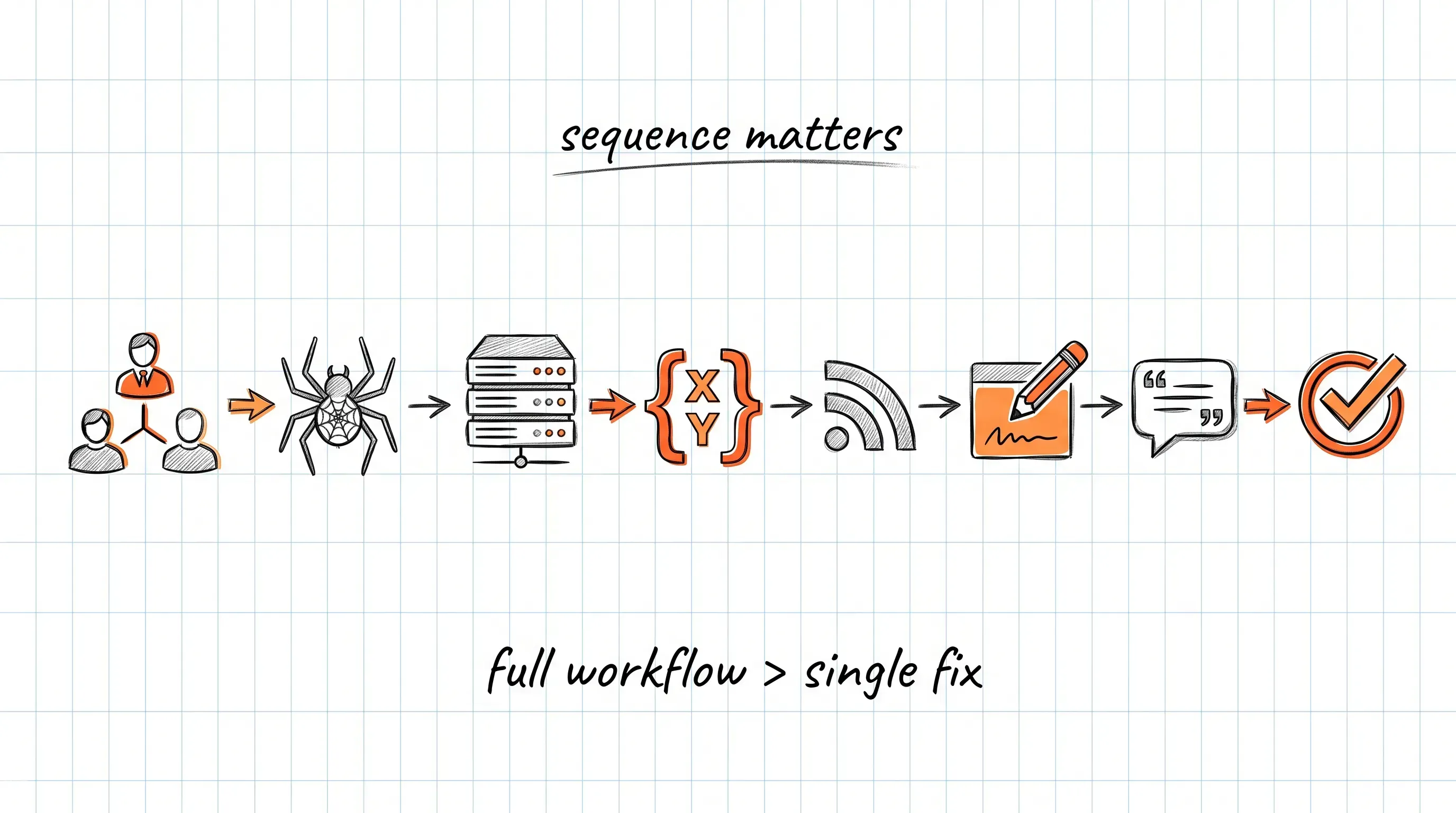
Analysts use modern SEO audit tools to support this cross-referencing process through a chronological extraction method:

  1. Analysts run a desktop crawler to extract server response codes and identify broken code.

  2. They export the technical health report into a centralized spreadsheet.

  3. They extract brand mention metrics from enterprise platforms.

  4. They merge both datasets to discover correlations between technical blockages and missing citations.

This process provides clear evidence of how technical barriers prevent algorithms from synthesizing content. Analysts resolve the identified issues and monitor subsequent citation changes to validate the effectiveness of their structural improvements.

Connect Analyzer Insights to Dark Traffic

Analysts must combine structural crawler data with behavioral analytics to measure the return on investment from artificial intelligence visibility. Conversational engines often strip referral tags when users click through to a source domain, causing analytics platforms to categorize these visits as direct traffic. When visits are categorized incorrectly, analysts struggle to attribute conversions to optimization efforts. Without clear attribution, leadership cannot justify budgets for further technical improvements.

Data analysts estimate that 30–50% of AI-driven pipeline is hidden within direct traffic in GA4 analytics. Analysts must establish reliable patterns to reclaim this hidden data and calculate accurate conversion values. They use SEO audit tools to monitor exact dates when specific pages receive new algorithm citations, then check GA4 properties for corresponding spikes in direct traffic to those pages.

An effective analyzer SEO strategy integrates structural citation alerts with GA4 behavioral metrics. Analysts filter the direct traffic segment by landing page and apply secondary dimensions such as browser type and geographic location. This filtering isolates visitors arriving from conversational interfaces. Analysts then measure conversion rates for these cohorts, enabling organizations to calculate the financial value of their technical optimization efforts.

Conclusion

Auditing site infrastructure for AI search readiness helps maintain digital visibility. Companies track citation frequency and bot accessibility to measure AI performance.

Monitoring these specialized metrics protects brands from zero-click traffic losses as generative models evolve. Updating crawler settings and auditing structured data helps large language models extract and cite content. Analyzing these changes requires implementing appropriate SEO optimization frameworks. Adapting to new retrieval logic patterns involves updating the analyzer SEO setup.

You should audit your website monthly to maintain visibility in generative engines. Frequent checks help you identify broken schema or rendering issues before they impact your citation rates. This schedule ensures your content structure aligns with how language models update their training data.

Yes, you can monitor your presence across these platforms using specialized software. Snoika helps businesses become visible and trusted in AI-driven search engines. The platform combines content optimization and visibility analytics to ensure your brand appears in AI-generated answers instead of traditional search results.

Your new content structure won't harm your traditional search rankings. You improve the user experience for human readers when you place clear answers at the top of your pages. Standard search engines reward this clarity, so your optimizations will support your broader marketing goals.

You don't need custom software because most popular website builders allow you to implement the necessary structural changes. You can configure an analyzer SEO program to scan platforms like WordPress for integration opportunities. You just need to install specific plugins to manage your structured data.

You can expect to see citation improvements within four to six weeks after you fix technical blockages. Language models need time to crawl your updated pages and process the new structured data. You must monitor your analytics consistently during this period to verify bot access.

Schedule a Meeting

Book a time that works best for you

You Might Also Like

Discover more insights and articles

Workflow showing AI transforming unstructured product catalog data into structured, machine-readable formats to improve visibility, chatbot interactions, and omnichannel retail integration

AI Marketing In Retail Stores: Evolution From Foot Traffic To AI Discovery

In this article, we examine how generative engines changed the consumer discovery process and what this means for physical storefronts. We outline the steps necessary to optimize digital catalogs so that large language models can hand off shoppers to local physical stores.

AI marketing toolkit dashboard showing citation tracking, sentiment analysis, semantic gap analysis, and performance metrics

AI marketing toolkit: Complete guide to generative engine visibility stack

In this article, we explain how to build a software stack to measure and improve brand citations across generative search platforms. We discuss the differences between content generation and visibility monitoring, and we highlight tools that track AI mentions effectively.

illustration of AI-driven content optimization showing structured data, schema markup, topic clusters, and performance metrics

Content Generation With AI: Scale SEO and AI Visibility Faster

In this article, we explain the shift from traditional algorithmic search rankings to AI-generated citations. We detail how optimizing website structures for machine extraction improves digital visibility across modern generative platforms.

Image representing the content card

10 SEO Best Practices for 2026: How to Rank Higher on Google

Search is no longer just about keywords - it's about structure, trust, and AI visibility. Tools like ChatGPT, Perplexity, and Gemini are changing how people find content, while Google's latest updates now prioritize originality and real expertise. At the same time, over 65% of searches result in no clicks. This guide breaks down 10 SEO strategies backed by data from Google, Ahrefs, and SparkToro - built to help founders and B2B teams grow with content that ranks, engages, and shows up in AI results.