Why your AI tool stack feels broken
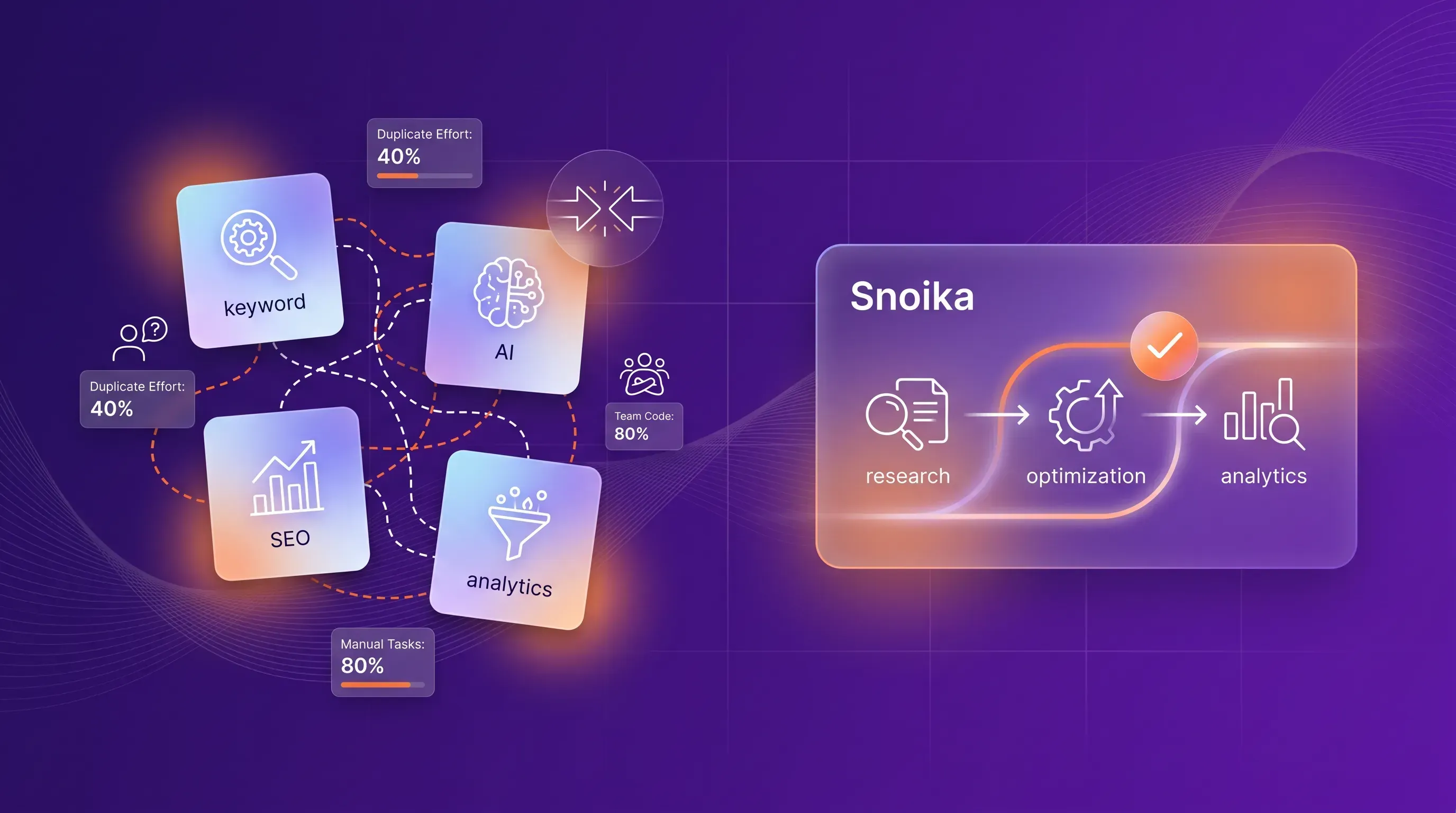
You went looking for the top AI digital marketing tools to make the work lighter, and somewhere along the way the work got heavier. You're paying for a keyword tool and an AI writer, plus separate optimization and rank tracking with whatever automation glue holds them together. Each one does its job. The problem is the seams between them.
Think about how a single article actually moves through your week. You pull keywords in one tab and paste them into a brief; after the brief feeds a writer, the draft moves through an optimizer before rankings get checked somewhere else entirely. That average digital worker toggles between apps nearly 1,200 times a day, and a 2022 Harvard Business Review study found those switches cost about four hours a week just reorienting. Your stack added to that tax.
And then there's the question you dread in the monthly review: what's actually working? You can't answer it cleanly, because the data lives in five places and none of it lines up. So the real question this article wants to settle is simple. Is your problem the top AI digital marketing tools themselves, or the fact that they don't talk to each other?
The core categories of AI marketing tools
Before arguing about consolidation, it helps to see the whole board. An AI-driven SEO and content operation has a handful of jobs to get done, and most marketing tools list themselves under one of them. Here's the clean mental model so you can locate everything you already pay for.
Keyword and topic research
Keyword research used to mean pulling search volume and difficulty from a single source. AI changed what the output looks like. The newer AI SaaS tools turn queries into intent-based topic clusters and reveal the subjects your competitors rank for that you've missed entirely. Instead of a flat spreadsheet of 800 keywords, you get a map of topic clusters with a sense of how they connect.
That's a real upgrade if you've been doing this by hand. But notice where the output has to go next. The clusters and target queries need to travel into a brief, which means the first handoff in your workflow happens right here. You export the file and paste it into the next tool after a reformat. This is where the data starts to drift, because the trip strips away the research context.
AI content generation
AI writing tools and other AI SaaS tools turn briefs into first drafts at a volume no human team can match. For scaling production, that speed is the whole point. You can take a topic cluster and turn it into ten outlines in an afternoon, then push those into drafts your editors refine.
Be honest about the ceiling, though. Google's March 2024 core update hit sites publishing thin AI content hard, with some losing nearly all indexed pages, while sites that paired AI drafting with human editing kept gaining. The draft is only as good as the brief feeding it. And disconnected writing tools rarely inherit the research you did in the previous step, so the model writes without knowing which intent it's supposed to serve. That's how you get generic output that reads fine and ranks for nothing.
SEO optimization and scoring
On-page optimization tools grade a draft against the target query and tell you what to fix. You already understand the score. What AI adds is the reasoning behind it: semantic coverage of subtopics and entity-gap analysis against what's currently ranking rather than a fixed keyword-density rule.
These top AI digital marketing tools guide revisions well. The friction is structural. When the optimizer is a separate product from the writer, every revision pass is another round of copy-paste. The draft gets scored, then the writer or your doc becomes the place where changes happen before a re-score. The signal is good. The plumbing between tools is what wears you down.
AI search visibility tracking
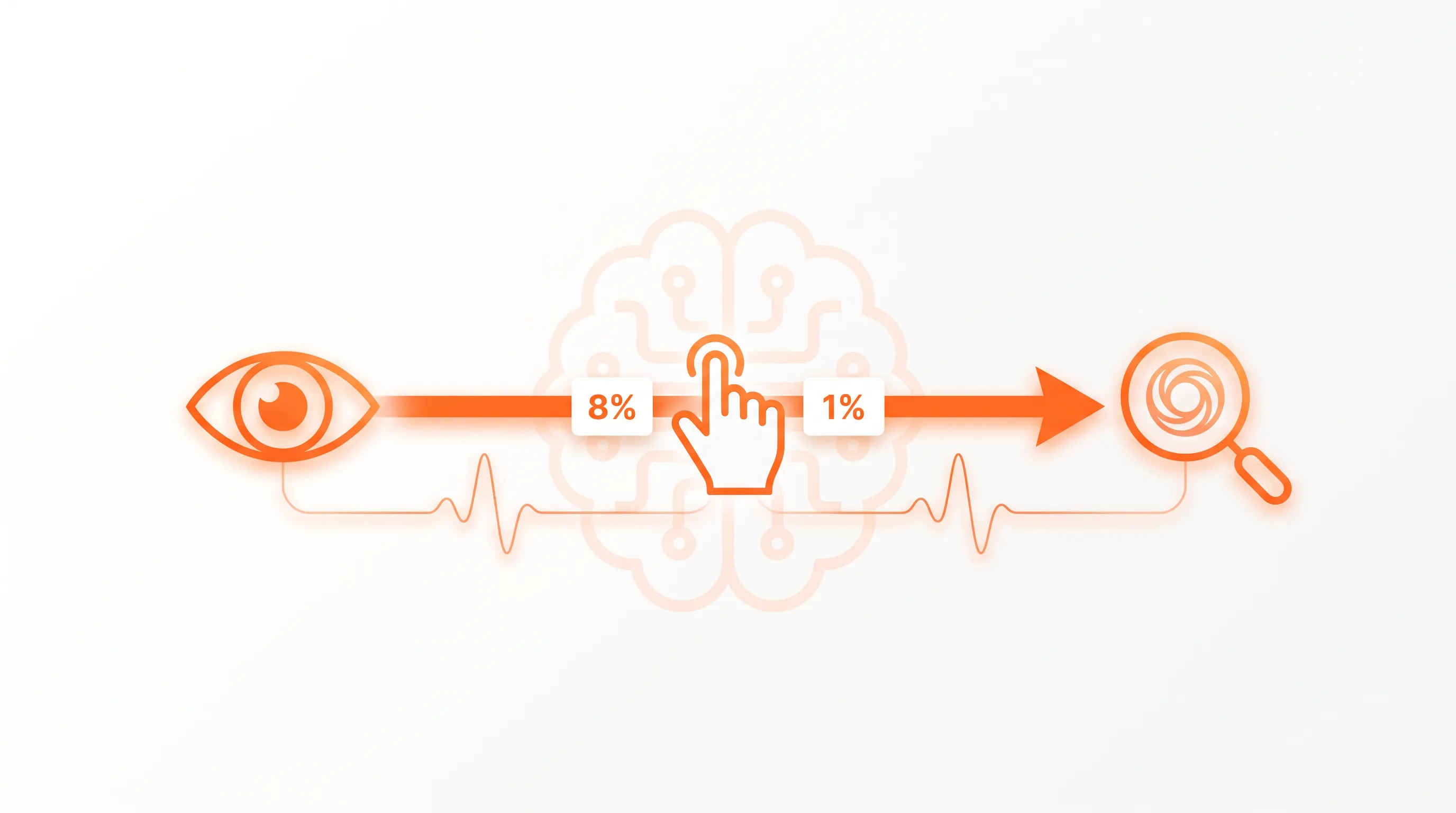
Here's the category most stacks haven't filled at all. Classic rank trackers tell you where you sit on a Google results page. They say nothing about whether your brand appears inside an AI answer. And that blind spot is widening fast, because nearly 60% of Google searches ended without a click in 2024 as AI Overviews absorbed the answer.
AI visibility tools measure something a rank tracker can't: how often ChatGPT or Perplexity name you, plus how your share of voice compares to competitors and whether the sentiment around your brand in those answers is positive. With the report on ChatGPT reaching 900 million weekly active users by early 2026, absence from those responses means absence from the decision. If your stack of top AI digital marketing tools has no coverage here, this is the gap to close first.
Workflow automation tools
Automation tools wire the other categories together. They trigger a publish when a draft is approved and move data between apps, which covers the repetitive steps you'd otherwise do by hand. If you've ever built a chain of connectors to pass a keyword list into a brief template, you know the appeal.
Automation removes real drudgery. It also adds fragility. Every connector is a point of failure, and when one tool changes its export format or its interface, the chain breaks quietly and you find out when something doesn't publish. Wiring disconnected top AI digital marketing tools together patches the gap between them while the gap still shapes the workflow.
The hidden cost of too many tools
Now the argument you came for. A long, disconnected stack costs you money and clarity in ways that don't show up on any single invoice. The first cost is reconciliation. Your keyword tool and optimizer each pull their own data from the top AI digital marketing tools in your stack, while the rank tracker adds another version, and the numbers don't match. Search volume reads one way here and another way there, so you spend the start of every reporting cycle deciding which source to trust instead of acting on what it says.
The second cost is repeated work. The same article gets set up three or four times across different interfaces, because the research context never carries forward. One study found employees lose about 3.6 hours a week to switching between ten or more apps. For a content team, that's a full article's worth of production time burned on logistics every week.
The third cost hurts during review. You can't trace return on investment from research to published result, because the thread snaps at every handoff. When your manager or client asks which keyword turned into which ranking and which piece of revenue, you're stitching the story together from screenshots. And the gaps make the spend itself harder to defend. The CMO Survey found that marketing leaders report Martech payoffs running 34% below their hopes, with integration named as their weakest area. The disconnection between the AI SaaS tools is the leak.
Why a unified system beats a longer list
So the fix isn't a better marketing tools list. Adding a sixth product to solve the problems created by five is how stacks grow in the first place. What actually resolves the tension is one workflow where content production and measurement share the same data underneath.
When those stages sit on one foundation, the differences are concrete:
-
Handoffs disappear, because the topic cluster you research becomes the brief that feeds the draft without an export in between.
-
ROI is traceable, since each article's keyword and performance live in one record instead of five disconnected ones.
-
You get a single source of truth, which means the monthly review starts with action instead of reconciliation.
The payoff appears when AI search visibility data feeds content decisions automatically. If your visibility tracker sees a competitor pulling ahead in AI answers for a topic cluster, that signal can point your production straight at the gap, rather than sitting in a dashboard nobody connects to the editorial calendar. Disconnected, that insight is trivia. Connected, it's a brief. Marketers who use more than half their stack are less likely to be asked to cut budget, and a unified system for top AI digital marketing tools makes utilization easier to sustain.
Top AI digital marketing tools in one platform
This is where Snoika fits the problem you recognized at the top. It's built as the unified workflow this article has been arguing for, with the top AI digital marketing tools categories above in one connected flow instead of five products you reconcile by hand. If you're weighing whether to keep patching or consolidate, here's how the pieces map back to the jobs you already do.
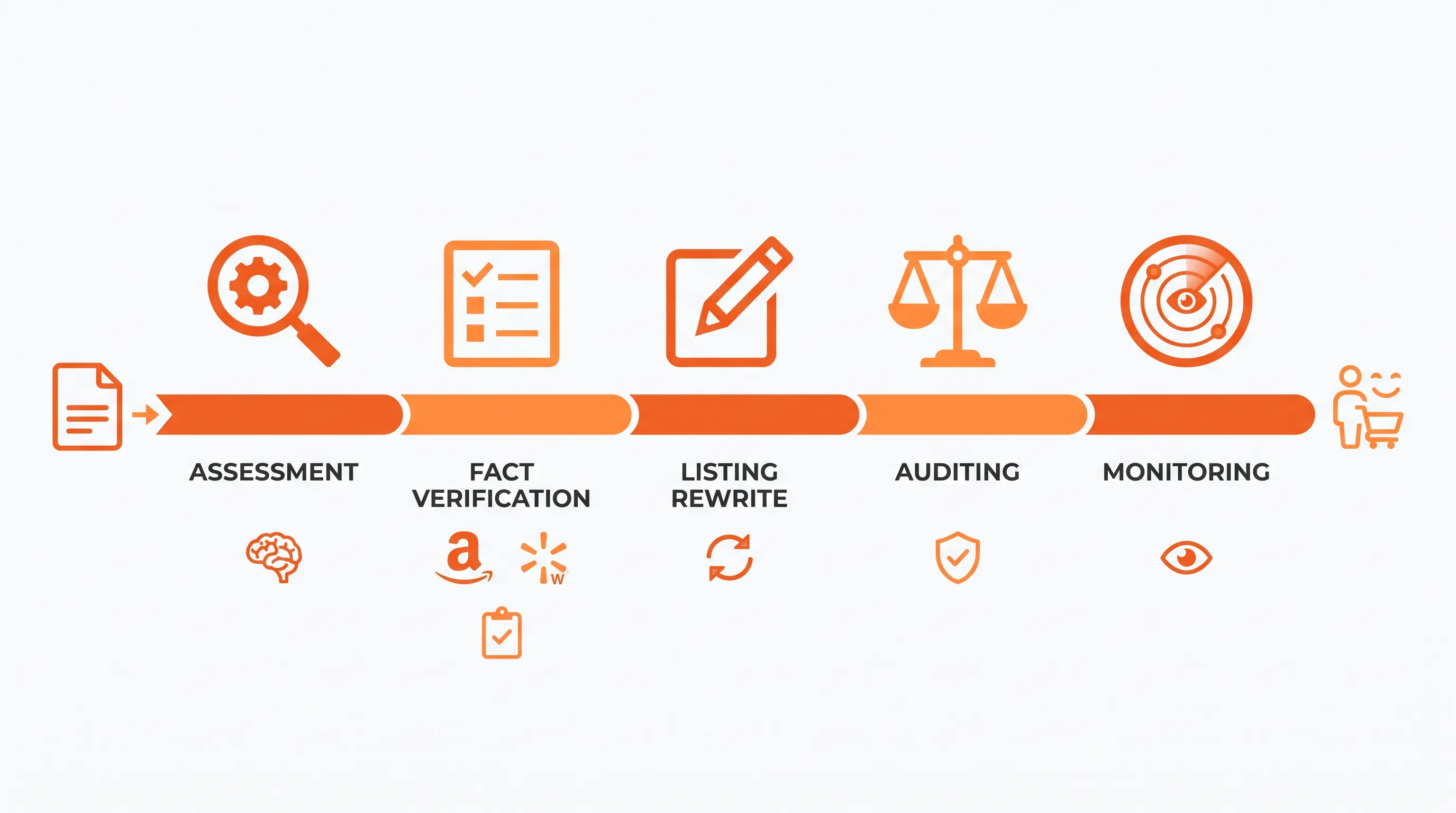
Snoika puts AI visibility monitoring alongside SEO content production and keeps performance tracking in the same platform. Each capability lines up with a category you've been buying separately:
-
AI search visibility tracking, with weekly testing across leading models, share-of-voice against competitors, and sentiment on whether you're cited or ignored.
-
Topic clustering and keyword mapping that flow directly into structured content planning, so the research becomes the brief without an export.
-
SEO optimization built into production, with pages tested against 500+ AI prompts rather than scored in a separate tool.
-
Human-reviewed content, with editors checking 2 to 3 articles a week before they publish, which is the human oversight Google's quality signals reward.
What consolidating removes from your day is the part you feel most: the exports and the reconciliation. "Snoika shows whether your brand is the answer, and gives you the playbook to secure it," said Jevgenia Pogadajeva, CEO and founder of Snoika, when the platform launched at Viva Technology in June 2025. The point isn't more features. That means research and measurement, including optimization, stop living in separate tabs.
Choosing the right setup for your team
The honest answer is that not every team needs to consolidate today. If you run one or two AI SaaS tools and you're not yet feeling the friction, the cost of switching outweighs the gain, and you should keep what works. Consolidation earns its keep when the fragmentation starts taxing you, so judge it against three signals.
Use your marketing tools list to look at stack size first. Once you're juggling four or more separate logins for a single article's journey, the handoffs are already costing you the hours described earlier. Look at reporting demands next. If you regularly have to justify spend to a manager or client and you can't trace a clean line from keyword to published result, your data is too scattered to defend itself. Then look at your AI search visibility gap, because AI Overviews now appear on a fast-growing share of queries and most fragmented stacks have no coverage there at all.
If you recognized your own week in this article, the fragmentation is already the bottleneck, and your next move is a connected workflow. The way to know is to put one against your current setup. See how Snoika ranks among the top AI digital marketing tools by testing it against the stack you run now, starting with an AI visibility report on your own brand.