Tier 3: Authority and Influence Signals
Brand authority convinces machines to trust content even after technical optimization helps them understand it. In an AI-driven environment, authority acts as the most durable asset a marketing team can build. Algorithms prioritize sources that demonstrate expertise and reliability, and they often bypass generic content farms in favor of recognized industry leaders. This shift explains why platforms like Reddit, Quora, and LinkedIn frequently appear in AI-generated answers; they represent externally validated authority where real users confirm the value of the information.
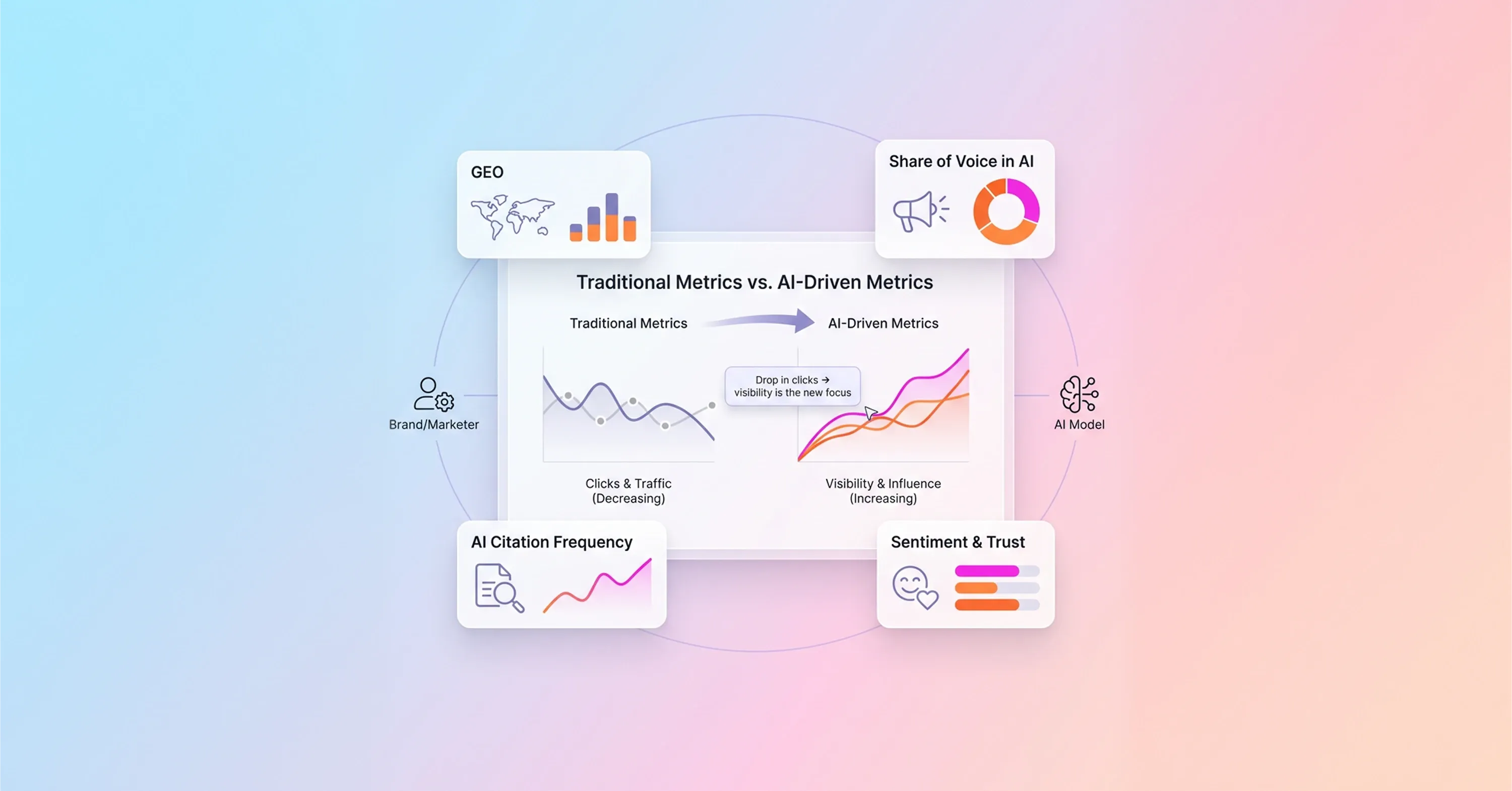
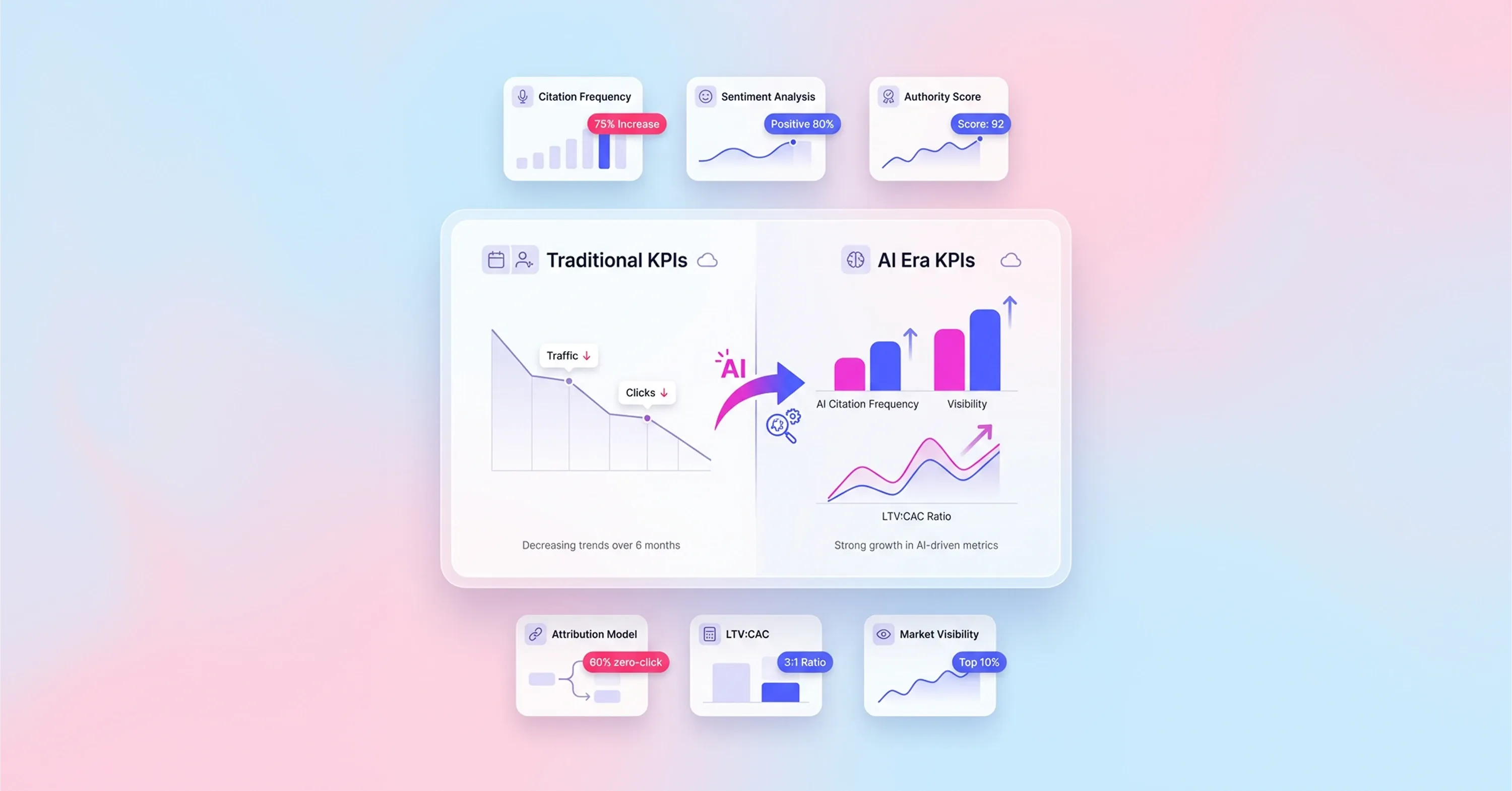
Marketing leaders must adapt their marketing metrics to capture this intangible but critical quality. Traditional keyword rankings fluctuate daily, but credible expertise drives AI citations over the long term because authority is the asset that travels across different large language models. To measure this, teams should track Brand Search Volume and Entity Authority Scores. Brand Search Volume indicates how many users bypass the discovery phase to seek a company directly, which signals strong market positioning. Entity Authority Scores measure how well search engines understand the relationship between a brand and specific topics. A thorough building brand authority strategy focuses on increasing these authoritative signals to ensure that when an AI answers a relevant question, it cites the brand as the definitive source. Yet, proving the value of that citation is difficult because the buying journey has changed.
Attribution Puzzle
The linear path from search to click to sale rarely exists now. Most buyers gather information without ever triggering a tracking pixel, which makes last-click attribution models ineffective. An accurate view of performance requires accepting that 80% of consumers rely on zero-click results for at least 40% of their searches. Users consume the answer directly on the search results page or within an AI interface, and then they make a purchase decision later through a direct visit. Reliance solely on click-based data often leads to pausing high-performing campaigns that generate awareness but few immediate site visits.
This measurement gap widens in the B2B sector. Research shows that 69% of conversations among buyers occur in the "dark funnel" before they ever contact a vendor. These internal discussions happen offline, in private Slack communities, or over email, and they leave no digital trace for marketing software to record. To solve this, KPI tracking must evolve to include assisted conversions and revenue lift analysis. Instead of asking "which ad caused the click," marketers should measure how brand exposure correlates with overall revenue lift in specific regions or verticals. A thorough approach triangulates data from self-reported attribution ("How did you hear about us?") and correlation studies to reveal the true impact of zero-click influence. This abundance of data requires teams to make difficult choices about what to track.
Prioritization Framework
Teams lose clarity when they monitor every metric simultaneously. Marketing leaders must select a strategic set of indicators that match their company's growth stage and resource availability. Startups and mature enterprises operate with different constraints, so their performance marketing KPIs should reflect those realities. For example, data shows that 90% of companies in the B2B tech sector with $100M in revenue operate with marketing budgets exceeding $1 million, which allows them to invest heavily in broad brand authority. Smaller companies rarely have this luxury and must choose their battles carefully.
The prioritization framework suggests that (a) early-stage startups focus on efficiency metrics like CAC and payback period to ensure survival, (b) growth-stage companies balance efficiency with volume metrics like marketing-sourced pipeline, and (c) mature enterprises prioritize market dominance metrics like AI share of voice and brand sentiment. Leaders prevent data overload by categorizing marketing metrics into "Vital Few" and "Useful Many." This approach ensures that the team directs its energy toward the specific KPI tracking activities that improve results for their specific business phase, and it prevents them from chasing generic benchmarks that do not apply to their situation. A focused approach to metrics ultimately clarifies the path forward.
Conclusion
Financial metrics like ROI and CAC remain the bedrock of a strategy, but they are no longer enough. The leading indicators of future success are now authority and AI visibility. As search evolves, authority is the asset that travels. Success depends on performance marketing KPIs that capture this influence. Auditing dashboards and swapping out at least two vanity traffic metrics for revenue or citation metrics immediately strengthens the reporting process. Our guide on building a modern marketing dashboard helps structure these reports effectively.