What you will learn
In the next few minutes you will:
-
Map a clean account structure that simplifies reporting
-
Choose bidding strategies that match goals and budgets
-
Craft ads that snag clicks and conversions
-
Track, test, and iterate without drowning in data
Real-world mini case studies illustrate each step, and the entire article doubles as a PPC checklist you can revisit whenever performance dips.
Account structure basics: build on solid ground
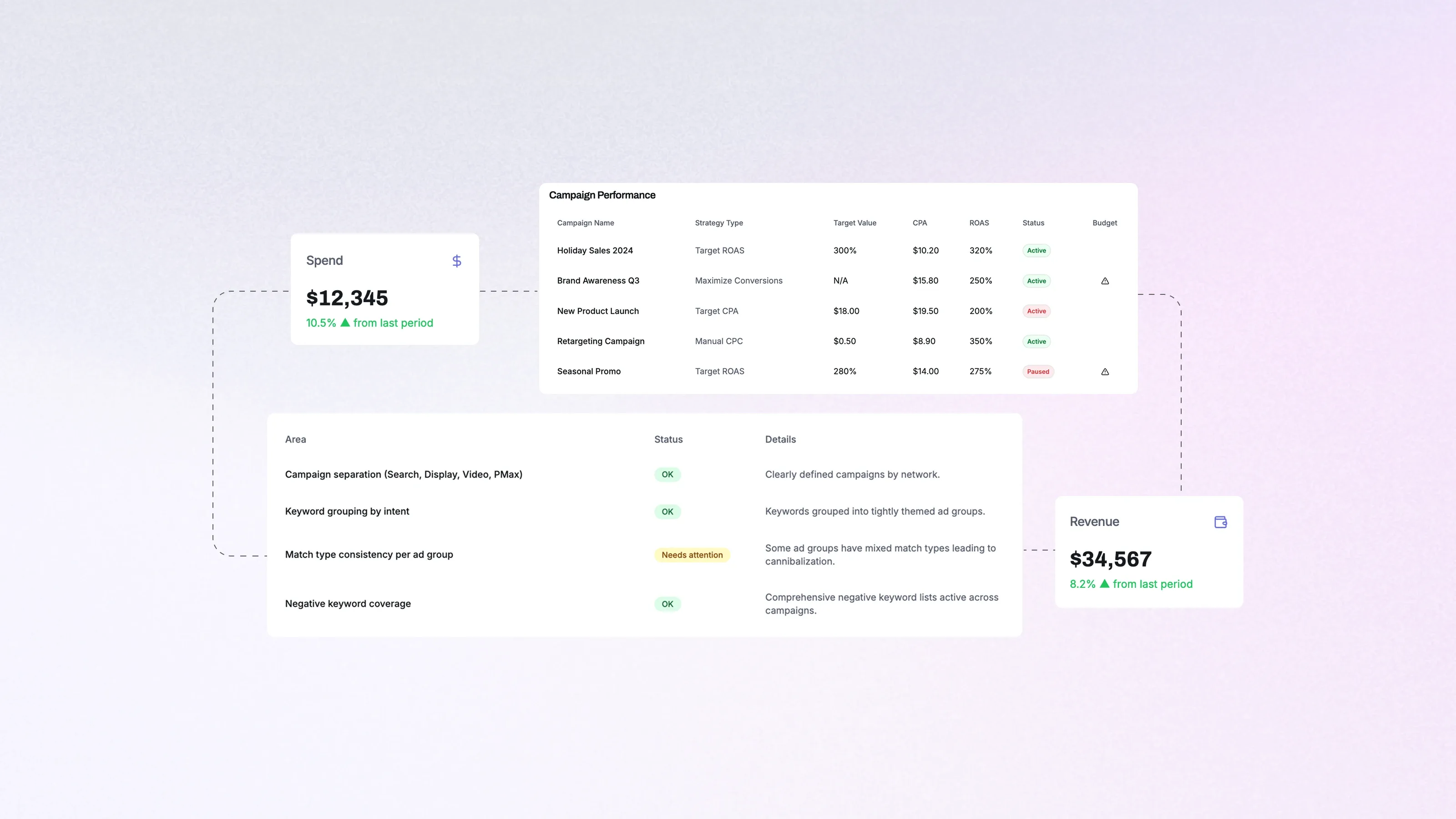
A tidy layout lets you spot issues fast and feed Google’s machine learning with consistent signals. Begin with one clear business goal, then translate it into campaigns and ad groups.
Why structure matters
Google’s network touches 90 % of global internet users. Poor structure spreads budget thin across that massive reach, making it hard to learn what works.
To avoid that, focus on the following structural fundamentals:
-
Group keywords by intent, not by broad themes
-
Separate search, display, video, and Performance Max to control spend
-
Use one match type per ad group to keep search queries predictable
-
Apply shared negative keyword lists at the account or MCC level
A mid-size SaaS firm selling project-management software split one messy catch-all campaign into product-, competitor-, and feature-focused ad groups. Click-through rate (CTR) jumped 22 % in two weeks, and cost per acquisition (CPA) fell 18 %.
Keep refining. As new queries surface, add them to the correct ad group or create a fresh one. End each month by archiving anything that is no longer aligned with the main goal.
To build your structure for scalable, data-driven results, see How to Build a Performance Marketing Strategy That Scales.
With your house in order, you can now let bidding algorithms do their job without mixed signals. Let us pick the right one.
Bidding strategies to protect and grow Google Ads ROI

The platform’s Smart Bidding now powers 82 % of campaigns. Picking the wrong one can stall performance or push spend into low-quality traffic. Match the strategy to your account maturity, data quality, and business model:
-
Target CPA: Ideal for lead gen when your conversion data is solid
-
Target ROAS: Best for e-commerce with clear revenue tracking
-
Maximize Conversions: Good for new accounts collecting baseline data
-
Manual CPC: Use only for niche tests or when conversion volume is tiny
Start with conservative targets. A B2C retailer moved from manual CPC to Target ROAS set at 300 %. Within six weeks, revenue grew 31 % while spend stayed flat.
To stretch your budget further and unlock ROI, learn more in AI-Powered Marketing: How to Use Artificial Intelligence for Better Results.
Tweak and monitor
Bid strategies aren’t set-and-forget. Ongoing adjustments help Google’s algorithm respond to performance shifts without resetting learning.
Focus on levers that preserve momentum while improving efficiency:
-
Set portfolio bid strategies to share learnings across campaigns
-
Use seasonality adjustments ahead of major sales to prevent overbidding
-
Monitor impression share lost to budget to identify underfunded winners
A note on budgets: avoid capping daily spend below your highest single conversion value, or the algorithm will throttle high-intent days.
Once bidding hums along, the ad has to earn the click. Copy and creative come next.
Ad copy optimization: write ads people want to click
Responsive Search Ads (RSAs) deliver 5–15 % higher CTRs than static formats. Still, automation needs strong ingredients.
Crafting the assets
Ad assets shape both click-through rate and how Google assembles responsive ads. Strong inputs give the system more combinations to test while keeping messaging on-brand.
Focus on clarity, relevance, and controlled variation:
-
Include the main keyword, a benefit, and a call-to-action in at least two headlines
-
Pin versions when legal or brand guidelines demand it, but leave most headlines unpinned for variety
-
Use emotional triggers lightly: “Save time” often beats “Revolutionize workflows”
-
Capitalize the first letter of each word to improve readability
For descriptions, two short sentences outperform one long block. Example: “Plan projects in minutes. Try free for 14 days.”
See how to supercharge your creative and content testing in How to Master AI content creation in 7 Simple Steps.
Leverage ad extensions
Ad extensions expand your message and increase real estate on the results page, often lifting click-through rate without raising bids.
Use them to answer common questions and surface value before the click:
-
Sitelinks: Highlight pricing, case studies, or calculators
-
Callouts: Add quick proof points like “24/7 Support”
-
Structured snippets: Clarify product ranges or service lists
-
Images: Boost mobile visibility, particularly for retail
A nonprofit, guided by Snoika’s AI SEO insights, tested fresh sitelinks labeled “Volunteer Stories” and “Impact Report.” Donation form completions climbed 12 % within a month.
Copy grabs attention, but conversions require tight targeting and clean tracking. Let us lock those pieces in.
Audience and keyword targeting: reach the right people, exclude the wrong ones
Even the best ad fails if shown to the wrong audience. Combine keyword signals with audience layers.
Layering tactics
Audience layers help refine intent without restricting reach. Used correctly, they guide bids toward higher-quality users while still allowing Google to explore and learn.
Apply them selectively and adjust bids as performance becomes clear:
-
Add remarketing lists to search campaigns, then bid up returning visitors by 20–40 %
-
Use in-market audiences for emerging segments and lower bids until data rolls in
-
Exclude job seekers, students, or bargain hunters when they hurt lead quality
-
For search, test phrase match plus broad match with Smart Bidding to uncover hidden gems
A modern, intent-based approach will help. For actionable tips, see Top Search Optimization Strategies for Small Businesses.
A B2B cybersecurity vendor excluded “free” queries and set a 30 % bid adjustment for C-level job titles. Qualified leads rose 17 % and sales calls doubled.
Geographic and device filters
Performance often varies more by where and how users convert than by keyword alone. Separating and adjusting on these dimensions lets you protect efficiency without limiting scale.
Focus on segments with meaningful performance gaps:
-
Split campaigns by region when CPA differs more than 25 %
-
Lower bids on mobile if the checkout is not mobile-friendly or fix the site
-
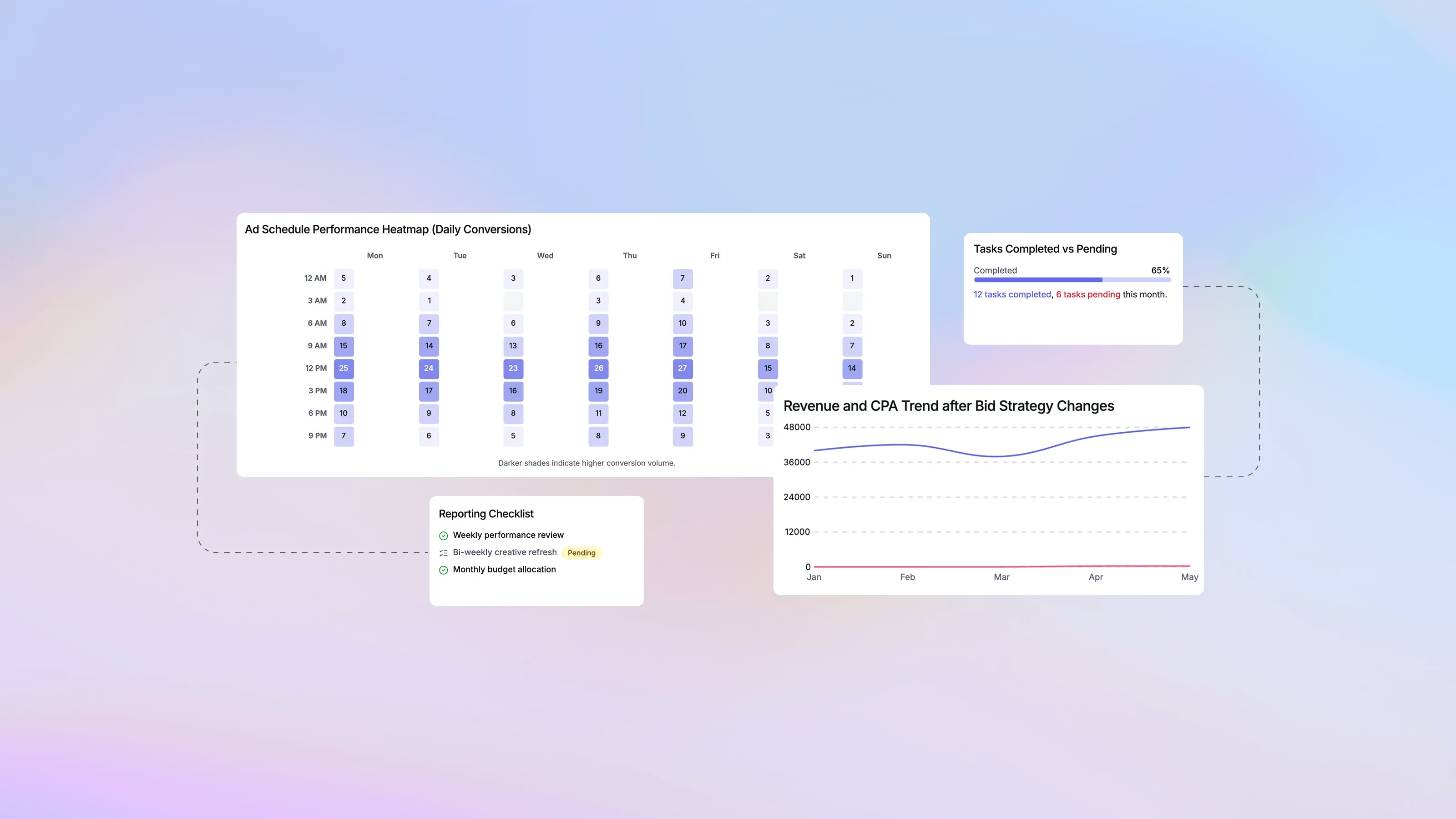
Run ad schedules to pause low-performing hours after two weeks of data
Now ensure that every click is measured so the algorithm can learn what success looks like.
Conversion tracking and measurement: trust the numbers
Without conversion data, Smart Bidding is flying blind.
Must-have tracking elements
Smart bidding only works when conversion data is complete and reliable. Missing or delayed signals force the algorithm to optimize toward the wrong outcomes.
Before scaling spend, confirm these foundations are in place:
-
Google Ads conversion tags on thank-you pages or via enhanced conversions
-
Google Analytics 4 linked for deeper funnel insight
-
Offline conversion imports for sales closed by phone or CRM
-
Attribution model set to data-driven when conversion volume allows
Advertisers who raised their Optimization Score by just ten points saw a 14 % lift in conversions. Much of that gain comes from fixing tracking gaps.
If you want to reinforce platforms with better data, explore Marketing Agencies: Scale Your SEO Strategy with Snoika.
Ongoing QA
Even well-built accounts drift over time. Regular quality checks catch tracking gaps, misattribution, and silent performance leaks before they compound.
Keep validation simple and repeatable:
-
Compare Google Ads conversions with back-end numbers weekly
-
Use Tag Assistant or GA4 DebugView after every site update
-
Maintain a clear separation between “primary” goals and an “all conversions” column
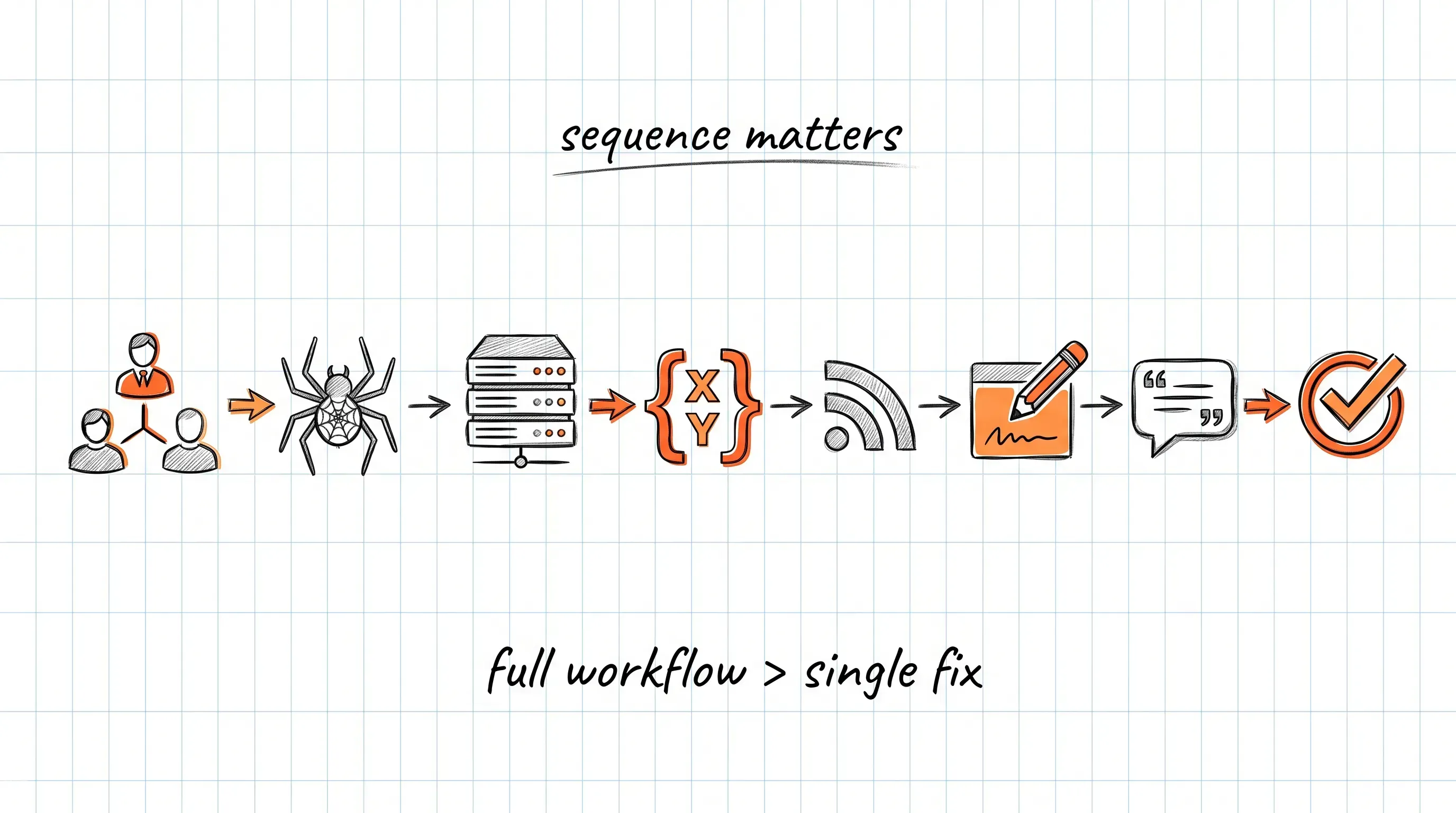
You now have structure, bids, copy, targeting, and tracking in place. The final step is to keep the loop tight through disciplined reporting and iteration.
Reporting rhythm: iterate with a PPC checklist mindset
A repeatable process beats sporadic heroics. Consistent review cycles keep performance moving in the right direction without overreacting to noise.
Anchor your optimization around a simple cadence:
-
Weekly review: Search terms, budget pacing, asset performance
-
Bi-weekly: Add negatives and refresh the worst-performing headlines
-
Monthly: Pull a cross-channel report and compare Google Ads ROI with other platforms
To build content-driven compound growth, see How to Build a Content Marketing Strategy That Drives Traffic and Sales.
Tools like Snoika help identify where your brand appears in AI-generated answers, giving you visibility into how paid and organic efforts intersect. Use these insights to guide optimization, then capture the work in a living PPC checklist, marking each task as it’s completed. Repeated consistently, this process compounds over time, turning discipline into sustained performance gains.
One-minute checklist
Effective Google Ads optimization isn’t about endless tinkering or chasing every new feature—it’s about consistently repeating a small set of high-impact habits. The accounts that win over time aren’t the most complex; they’re the most disciplined.
Keep these six principles front and center:
-
Maintain tight campaign and ad group themes so keywords, ads, and landing pages reinforce the same intent.
-
Align bid strategies with clearly defined business goals, whether that’s efficiency, volume, or downstream revenue.
-
Feed Responsive Search Ads with diverse, benefit-driven headlines and descriptions to give Google room to optimize while preserving message quality.
-
Layer audiences and negative keywords to sharpen reach, reduce waste, and prioritize high-value users.
-
Track every meaningful action with verified, reliable tags so optimization is driven by truth, not assumptions.
-
Review performance, make adjustments, and document changes on a fixed schedule to avoid reactive decision-making.
Follow these principles consistently and your account won’t just improve, it will compound. Over time, performance stabilizes, efficiency rises, and returns trend upward with far less volatility.
Conclusion
Google Ads rewards marketers who treat optimization as an ongoing discipline rather than a one-time project. Success starts with a clean, scalable account structure, supported by bidding strategies that align tightly with real business goals. From there, high-performing ads that speak directly to user intent, focused targeting that eliminates waste, and airtight tracking that turns data into decisions form the backbone of sustainable ROI.
The process is simple but not passive: follow a clear optimization checklist, watch performance metrics closely, and refine each lever methodically. Small improvements compound over time, steadily reducing inefficiencies and unlocking incremental gains. When executed consistently, this approach transforms paid search from an unpredictable expense into a reliable, repeatable growth engine.