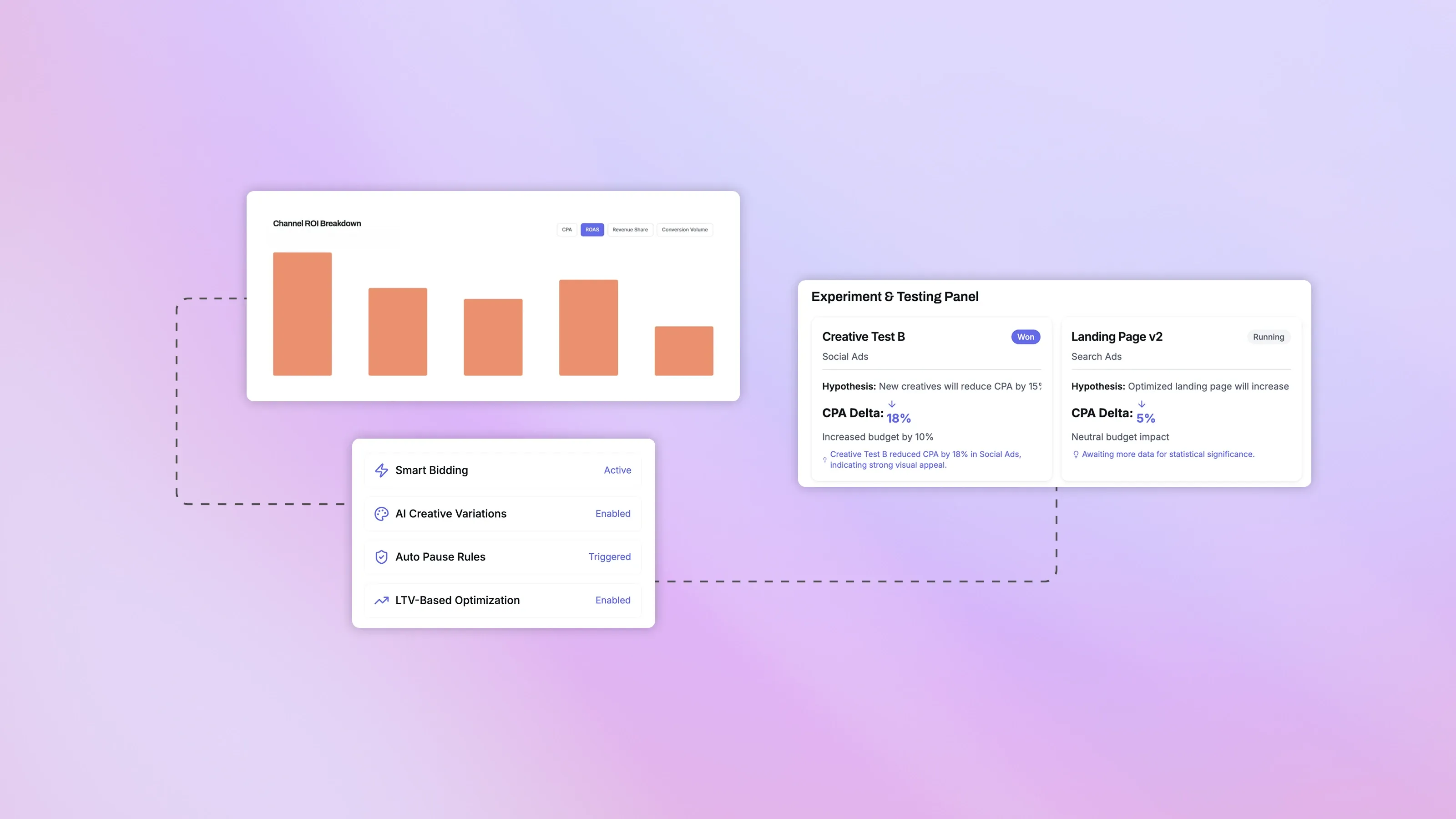
Performance marketing dashboard showing channel ROI comparison, A/B testing results, smart bidding automation, and AI-driven campaign optimization

How to Build a Performance Marketing Strategy That Scales

Performance marketing promises measurable growth, yet many teams still guess which ads, channels, or creatives actually work. Ready to stop guessing and start seeing the numbers you need?

Content authorArtem Lozinsky, EMBA, MScPublished onReading time9 min read

What You Will Learn

A modern performance marketing strategy lets you spend every dollar where it matters, adjust quickly, and keep climbing. This guide shows you how.

In the next few minutes, you will discover:

  • A clear definition of performance marketing and how it differs from brand campaigns

  • The most effective ROI-driven channels and when to use each one

  • Proven budget allocation methods that stretch every dollar

  • Practical ways to use data, automation, and AI for truly scalable marketing

  • Real stories from brands that made performance marketing work

By the end, you can map out a strategy that grows with your goals and resources.

Understand the Core of Performance Marketing

Before picking channels or budgets, get the concept straight. Performance marketing is any paid effort where spend is tied to a specific action, clicks, leads, sales, or subscriptions. The advertiser pays only when that action occurs.

A 2025 survey shows that 57 % of marketing budgets now flow to performance channels. Why? Because leaders want proof that spend creates returns, not impressions. Yet 72 % of companies rarely review ad campaigns. That gap between spending and oversight is your opening. With careful planning and constant tracking, you can pull ahead.

Want to dive deeper into how performance marketing compares to branding and why blending both approaches outperforms either one alone? Check out Brand Marketing vs. Performance Marketing: Which One is Right for You?.

Set one primary conversion event per campaign to keep optimization focused and signals clean. Track the full customer journey, from first click through revenue, in your CRM or analytics platform, not just the ad interface. Then evaluate performance against customer lifetime value rather than first-purchase return alone.

With this foundation in place, every optimization decision that follows becomes faster, clearer, and more effective.

Choose ROI-Driven Channels That Fit Your Funnel

Different channels excel at different stages of the buyer journey. Start with one or two, prove them, then expand.

Each channel plays a distinct role:

  • Search ads: Capture high-intent demand from users actively looking to buy, making them one of the most reliable drivers of bottom-funnel conversions and predictable revenue.

  • Social ads: Enable rapid reach and creative experimentation at scale, ideal for shaping demand, testing messaging, and moving prospects through the mid-funnel.

  • Affiliate partnerships: A pure performance channel where spend is tied directly to confirmed sales, offering low risk and strong ROI for budget-conscious or efficiency-driven teams.

  • Programmatic display: Drives broad, scalable awareness with precise audience targeting, and becomes significantly more effective when layered with retargeting to reinforce intent.

  • Influencer and creator collaborations: Combine authentic, trust-based content with measurable performance through code- or link-tracked sales, blending brand impact with accountability.

No single channel carries a performance strategy on its own. Sustainable growth comes from sequencing channels based on intent, using each where it performs best, then layering them together as tracking and confidence improve. Start narrow, prove efficiency, and expand deliberately. When channels reinforce one another across the funnel, performance becomes more predictable, scalable, and resilient over time.

Case-Study: The 41% CPA Reset

A pet-care DTC brand shifted 30 % of its budget from print to Facebook and Google. Within three months, cost per acquisition fell by 41 % while revenue doubled. The team used dynamic product ads and weekly creative swaps to stay fresh.

Finish each channel test with a post-mortem. Keep what hits your target cost per conversion, pause the rest, then scale winning playbooks.

Allocate Budget Like an Investor

An AI content optimization dashboard showing real-time performance feedback, engagement trends, and a multimodal workflow that turns a single prompt into a blog post, social visuals, and a podcast outline

Money fuels performance marketing, but undisciplined spend burns fast. Treat your media budget like an investment portfolio, balancing reliability with upside.

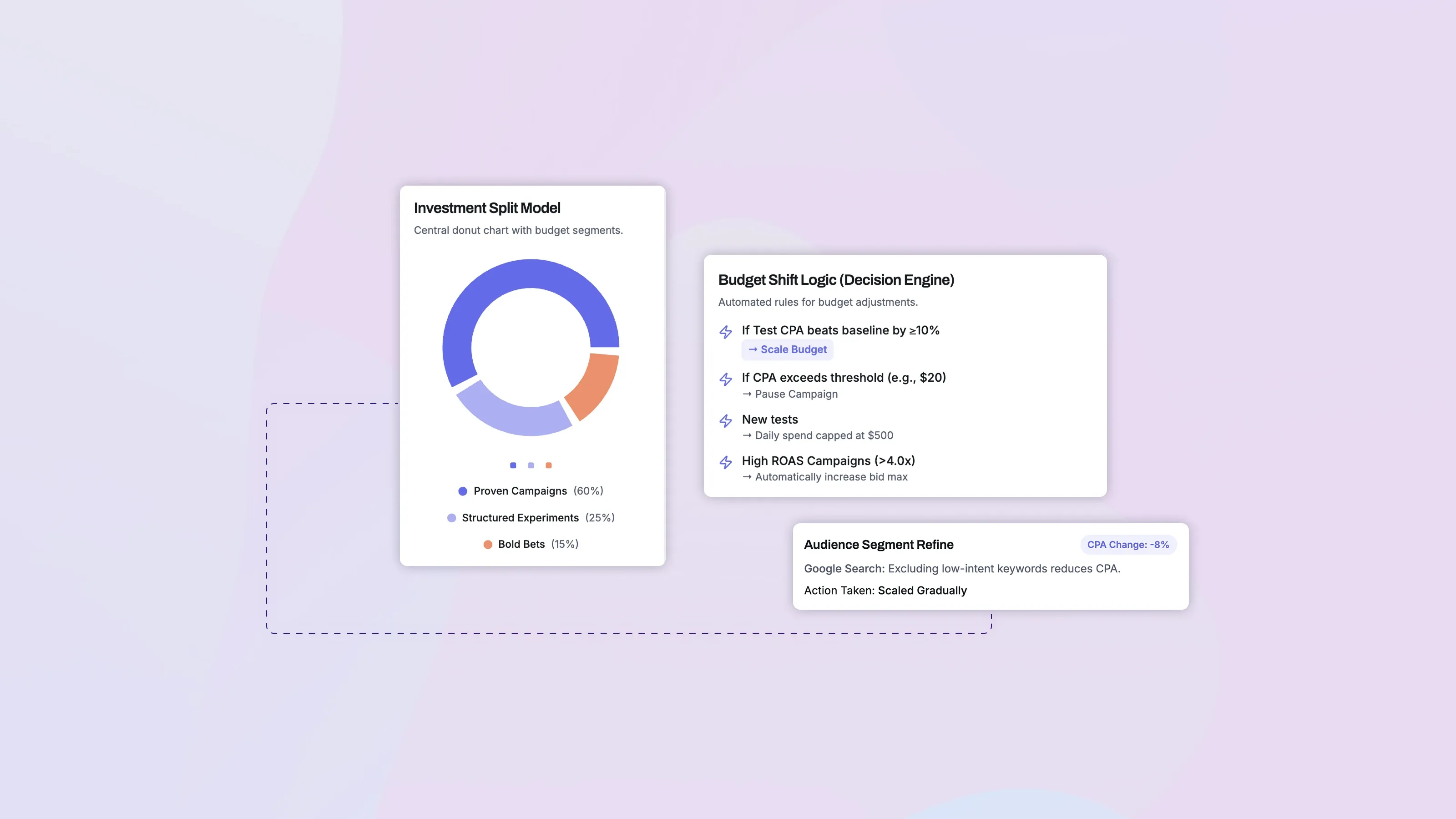
Start with a split test model

Allocate your media budget intentionally, not reactively. A split test model balances stability with growth by ensuring most spend goes toward what already works, while reserving room to discover what works next. This approach limits downside, creates consistent learning, and prevents teams from overcommitting to unproven ideas too early.

Apply this model by allocating spend across three tiers:

  • 60% to proven, always-on campaigns that reliably hit target cost per conversion and provide predictable revenue.

  • 25% to structured experiments across new creatives, audiences, formats, or offers, each with clear success criteria and timelines.

  • 15% to bold bets such as emerging platforms or influencer pilots, where risk is higher but upside can reshape your growth curve.

This model turns budgeting into a disciplined growth system. Winners earn more budget, losers are cut quickly, and learning compounds over time. Instead of guessing where to spend next, your allocation evolves based on evidence, keeping performance efficient while continuously unlocking new scale.

Adjust weekly or bi-weekly. If a test beats your main campaigns by 10 % or more, shift extra funds that way. Shashi Kiran of Fortanix reminds marketers to “focus on channels that are driving conversion faster,” and this budget method does just that.

Ways to stretch your spend further

Efficient performance marketing isn’t about spending less, it’s about getting more from every dollar. Small structural choices in how you buy media and manage risk can materially extend runway and improve returns, especially during testing and early scale.

To stretch your budget further, focus on the following levers:

  • Negotiate CPA or revenue-share models with affiliates and creators to align cost directly with outcomes.

  • Leverage Google’s value-based bidding to prioritize higher-margin products and customers, not just volume.

  • Cap daily spend on new ad sets until early performance signals justify scaling.

The result is a living budget that prioritizes returns, not rigid line items. For more on predictive analytics and budget optimization using AI, see AI-Powered Marketing: How to Use Artificial Intelligence for Better Results.

Build a Data Loop for Truly Scalable Marketing

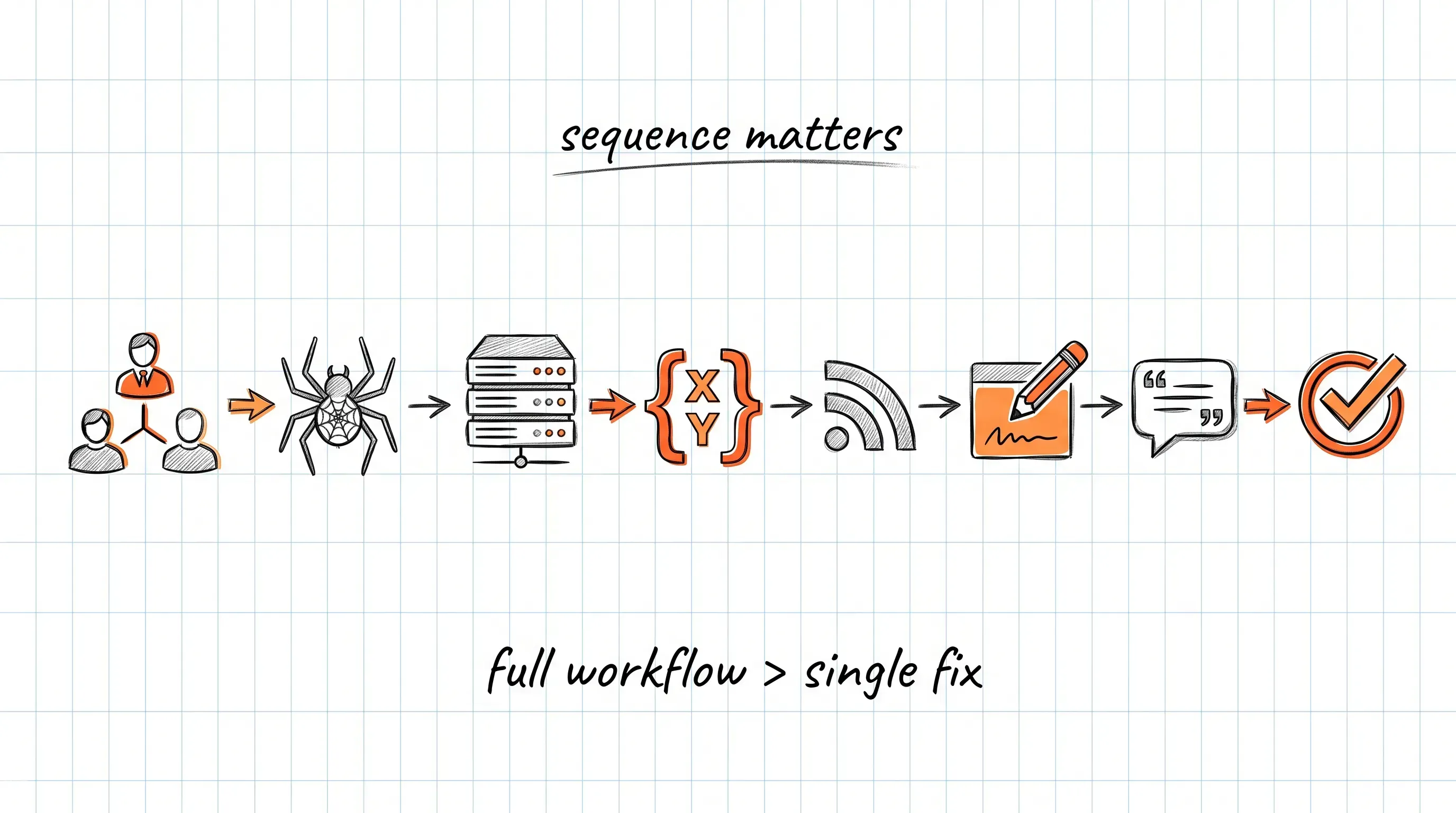
Scalable marketing depends on tight feedback loops. Performance improves when data moves cleanly from ad platforms to analytics, and back into targeting.

That requires a system built around four core practices:

Instrument the full funnel

  • Deploy pixels or tags on every site page

  • Upload offline conversions from your CRM to capture true revenue impact

Establish a single source of truth

  • Centralize ad, sales, and product data in one unified dashboard

  • Align teams on one set of performance metrics

Automate decision signals

  • Trigger alerts when cost per purchase exceeds predefined thresholds

  • Automatically pause ads after 500 clicks without a conversion

Reinforce platforms with better data

  • Push high-LTV customer segments into lookalike audiences

  • Use server-side conversion tracking to maintain signal quality as cookies decline

Expert Sherry Jhawar notes that performance success comes from “testing and tracking all elements”. A tight data loop makes that testing fast and low risk.

Real-world example: A B2B SaaS firm integrated Snoika, an AI Search Optimization platform, with its ad data. By identifying which content pieces appeared in ChatGPT answers, then promoting those winners via search and LinkedIn ads, the company lifted qualified demo requests by 28 % in one quarter.

For agencies or teams looking for truly scalable, data-driven results, Marketing Agencies: Scale Your SEO Strategy with Snoika shows how AI-driven analytics and automation empower better outcomes.

Scale Creatives and Campaigns Without Losing Control

Once the data loop is running smoothly, you can expand reach with confidence; scaling aggressively where performance holds, while protecting ROI where it doesn’t. Growth at this stage is less about bold leaps and more about disciplined execution.

Start each scaling phase with a clear checklist:

  • Increase daily budget caps in controlled 20% increments, avoiding sudden jumps that can destabilize delivery and reset learning phases.

  • Systematically repurpose top-performing creative into adjacent formats, video, carousel, and static, to unlock incremental reach without reinventing messaging.

  • Broaden targeting in deliberate steps, beginning with 1% lookalike audiences, expanding to 5%, and only then layering in interest-based segments.

As spend and reach increase, creative speed becomes the limiting factor.

Build agility into creative production:

  • Develop modular templates so copy, visuals, and formats can be swapped quickly as performance signals change.

  • Leverage AI tools to generate headline and hook variations, and to forecast click-through or engagement potential before launch.

  • Run bi-weekly creative reviews to identify fatigue early, retire underperforming ads, and continuously refresh the pipeline.

Scaling is as much about process as spend. With these guardrails, you maintain healthy cost per acquisition even as volume climbs.

To supercharge your content output and creative variety, learn the workflow in How to Master AI content creation in 7 Simple Steps.

Never Stop Testing and Learning

Performance marketing is dynamic. What works this month may stall next quarter.

Maintain a simple, repeatable optimization rhythm:

  • Weekly: Review core KPIs, diagnose anomalies, and pause clear underperformers before they erode blended results.

  • Monthly: Re-forecast budget against updated targets, reallocating spend toward channels and campaigns that continue to prove efficiency.

  • Quarterly: Refresh audience research, challenge outdated assumptions, and test at least one new channel or format to prevent stagnation.

Looking forward, 88 % of marketers expect to use AI in daily tasks by 2026. Early adoption of AI for bidding, creative, and analytics will keep your strategy ahead of the pack. End each cycle with a knowledge share. Document what worked, what failed, and why. Update playbooks, codify best practices, and onboard new team members faster by turning experimentation into institutional learning.

If you’d like a content-driven approach to complement your testing, see How to Build a Content Marketing Strategy That Drives Traffic and Sales for actionable steps to attract and convert.

Performance marketing means paying only for measurable actions, tracking every signal, and continuously reinvesting in the ads and audiences that prove ROI.

Conclusion

A strong performance marketing strategy is simple at its core; but disciplined in execution. It starts with clear, measurable goals, continues with channels chosen for their specific strengths, and is sustained by rigorous measurement at every step of the funnel. What works is scaled methodically. What doesn’t is cut quickly.

Teams that win treat performance marketing as a system, not a series of campaigns. They use data to replace guesswork, feedback loops to guide decisions, and experimentation to uncover new growth levers. Increasingly, they also leverage AI and modern tools such as Snoika to accelerate testing, optimize bidding and creative, and surface insights faster than manual processes allow.

The goal is to pay for measurable actions such as clicks, leads, or sales, then use that data to drive predictable revenue growth.

Search and paid social usually win for quick wins, while affiliate, programmatic, and influencer channels add scale once tracking and offers are solid.

Allocate what you can afford to lose while learning. Many brands begin with $5 000–$10 000, split between a core campaign and smaller tests.

Scale only when cost per conversion is stable or improving over at least 50 conversions, and when creative fatigue is low.

Look beyond initial CPA and track metrics like customer lifetime value, repeat purchase rate, and payback period. Campaigns that look expensive upfront often outperform over time when downstream revenue is included.

Schedule a Meeting

Book a time that works best for you

You Might Also Like

Discover more insights and articles

Dashboard comparing performance marketing and growth marketing channels with a decision scorecard and real-world retail DTC case insights

Performance Marketing vs. Growth Marketing: Key Differences

Performance marketing vs growth marketing confuses even seasoned CMOs. Which model moves the revenue needle faster, and which builds durable momentum? Let’s break down the essentials so you can choose the right approach without second-guessing every campaign.

An AI content marketing trends dashboard highlighting AI search visibility, emerging content creation trends, ethical governance guardrails, and higher ROI reported by businesses using AI for content and SEO

The Future of AI in Content Marketing: What’s Next?

Artificial intelligence is no longer a futuristic concept, it is the beating heart of modern content programs. Marketers who ignore the shift risk fading from search results, social feeds, and customer conversations.

In this article, you will see how AI already fuels content, where the technology is heading, and the guardrails every brand needs. Real case studies, crisp stats, and practical tips keep things grounded and easy to apply.

An AI content marketing dashboard showing top-performing content by questions answered, organic traffic growth, and improved local SEO visibility through a case study

Top Search Optimization Strategies for Small Businesses

Small businesses fight for the same digital shelf space as national brands, yet they rarely have the same budgets. The good news: precise search optimization levels the playing field and helps local firms reach people who are ready to buy.

Below is a clear, field-tested roadmap that shows how to boost visibility, win local customers, and grow authority without wasting a cent.

Freelance SEO dashboard showing LinkedIn lead engine and Upwork SEO performance with profile optimization, proposal alignment, and client acquisition metrics

SEO Optimization for Freelancers: How to Get More Clients

Freelance work is booming, yet standing out in search can feel impossible. Clients scroll quickly, and75 %of them never go past page one. Effective small business SEO tactics let solo pros rise above the noise, win clicks, and turn visits into signed contracts.