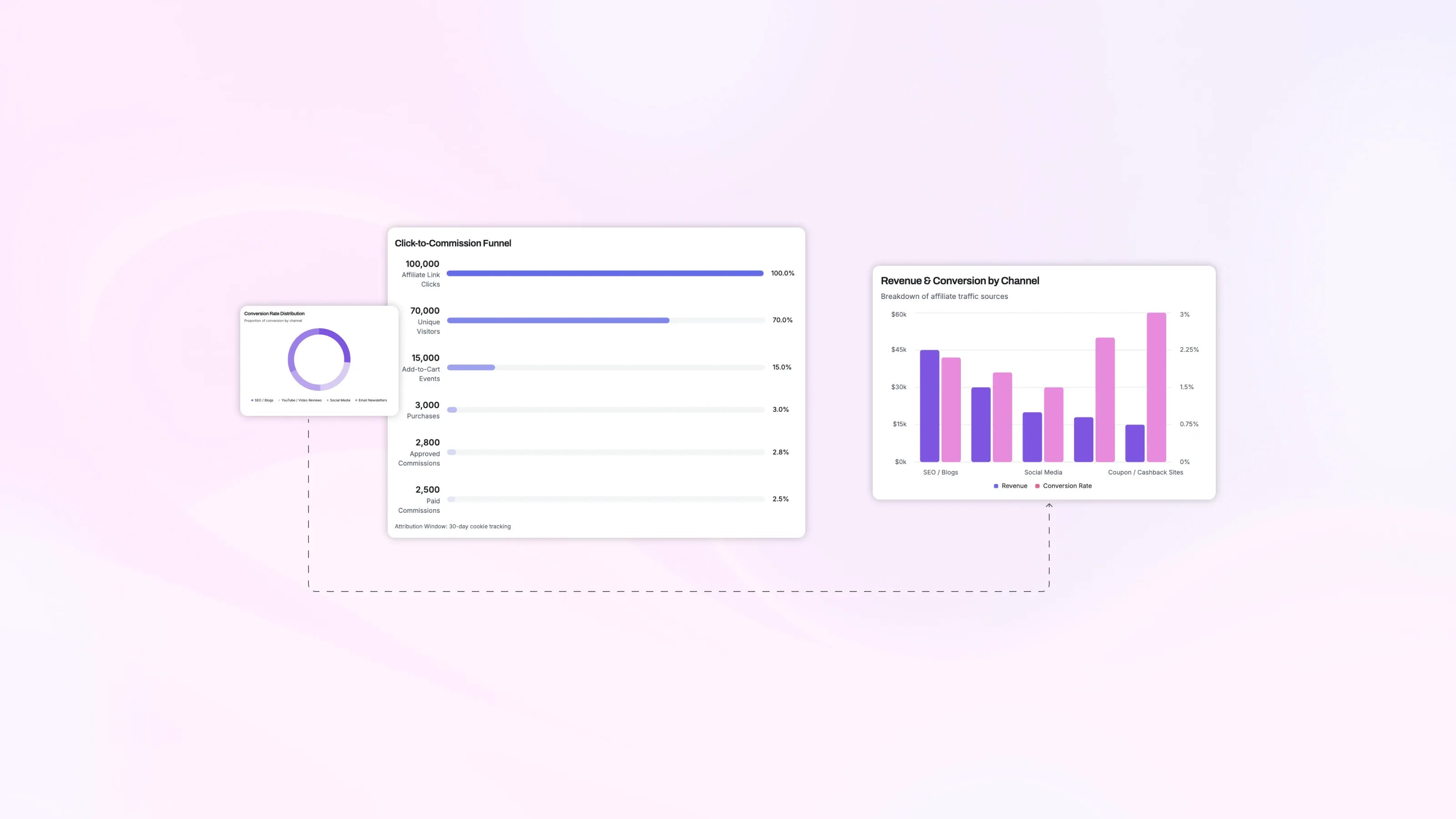
An affiliate marketing analytics dashboard displays a click-to-commission funnel, conversion distribution, and revenue by channel charts

Affiliate Marketing Explained: A Performance Channel Breakdown

Affiliate marketing keeps growing, yet many teams still wonder how it really fits into a modern performance mix. How does the money flow, who gets paid, and when is the channel worth the effort? That is exactly what we will unpack here.

Content authorArtem Lozinsky, EMBA, MScPublished onReading time9 min read

Overview

Affiliate programs generated 16 % of all online orders in the United States and Canada last year, and global spend is on track to hit $37.3 B by 2025. Understanding the mechanics can help you decide whether this pay-for-results model belongs in your own growth stack. This guide breaks down affiliate marketing in plain language.

You will learn:

  • The core process from click to commission

  • Typical performance channels affiliates use

  • The upside and downside of running a program

  • Practical cues for when the model matches your goals

Real-world case notes and current statistics back every point so you can form an evidence-based affiliate strategy.

What is Affiliate Marketing

Affiliate marketing is a pay-per-performance channel where a business rewards independent partners (affiliates) for driving a specific action, usually a sale or lead, through tracked referral links. Companies set the commission, affiliates promote the offer on their websites, social feeds, or email lists, and software records each conversion so payments happen only when results appear.

How Affiliate Marketing Works

Affiliate marketing links three parties: the merchant, the affiliate, and the customer. Technology keeps everyone honest by tracking clicks and conversions.

Key Players and Their Roles

Before the first click ever happens, affiliate marketing relies on a small ecosystem of players working together behind the scenes. Each one has a distinct role in making sure promotions, tracking, and payouts run smoothly.

At a high level, these are the key actors involved:

  • Merchant: the brand that owns the product or service

  • Affiliate: a blogger, influencer, or coupon site that promotes the offer

  • Affiliate network: a third-party platform such as ShareASale or Amazon Associates that hosts tracking links and handles payments

  • Customer: the person who ultimately buys or signs up

  • Affiliate manager: an in-house or outsourced specialist who recruits partners and monitors program health

Over 80% of brands with affiliate programs rely on third-party networks to manage tracking and payments, rather than building systems in-house.

These roles remain consistent across industries, from SaaS to e-commerce. For a deeper view on integrated marketing roles and why blending both brand and performance matters, see Brand Marketing vs. Performance Marketing: Which One is Right for You?.

The Click-to-Commission Flow

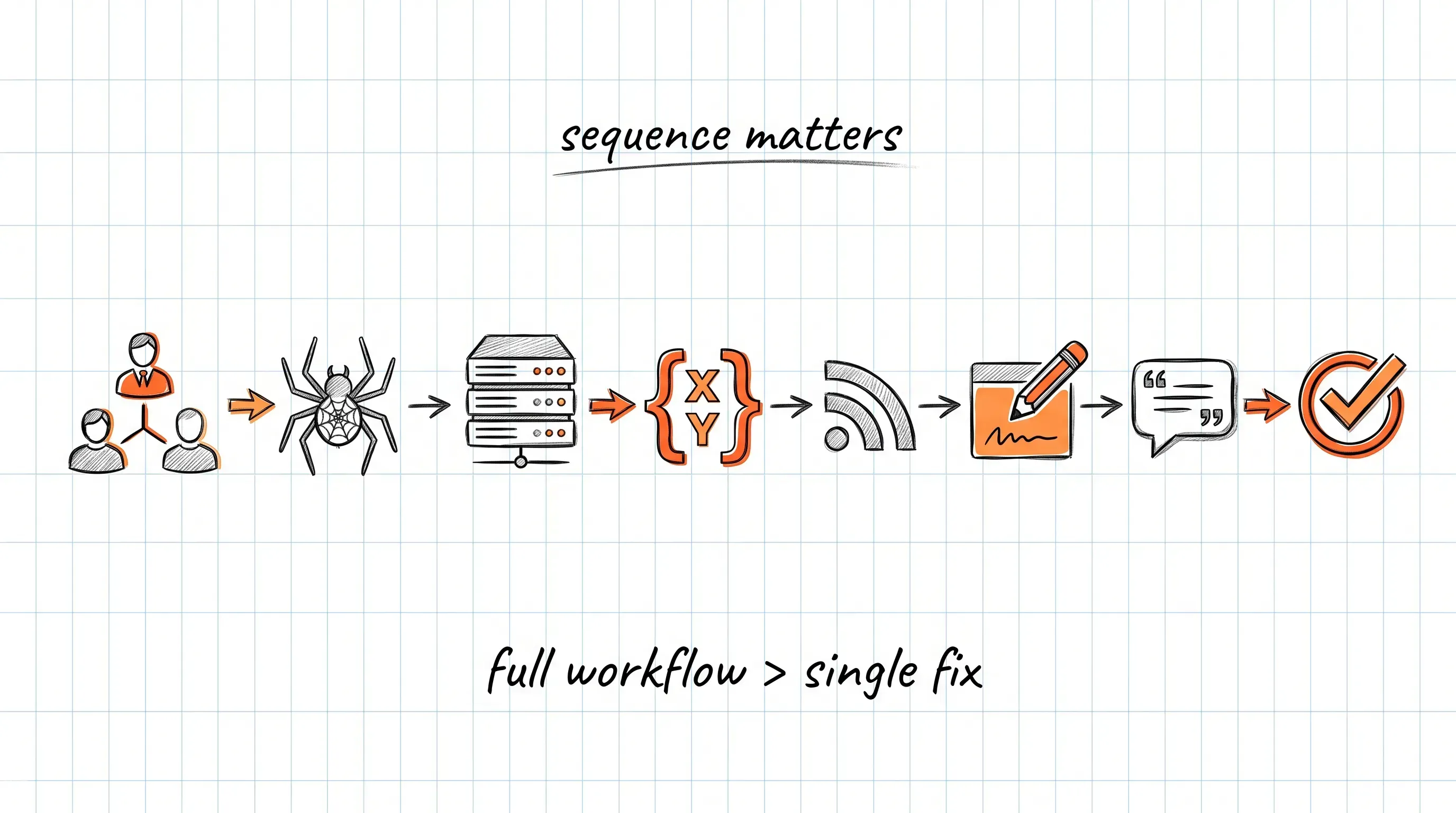
Once those roles are in place, the actual affiliate process follows a predictable sequence.

From the moment a link is published to the final payout, each step builds on the one before it:

  • The affiliate places a unique tracking link in content or ads.

  • A prospect clicks the link, and a cookie stores the referral ID.

  • The prospect completes a purchase within the attribution window, often 30 days.

  • The network logs the sale, calculates the commission, and notifies both the merchant and the affiliate.

  • After the return window closes, the merchant approves the payout, and the network distributes the funds to the affiliate.

Conversion reporting is typically near real time, while payouts follow a monthly or bi-monthly cadence.

Common Performance Channels Affiliates Use

Affiliates are not limited to a single promotional tactic. Instead, they select channels based on where their audiences already spend time and how those audiences prefer to discover and evaluate products. The most effective affiliates align their distribution strategy with user intent, platform norms, and the stage of the buying journey.

Common channels include:

  • Content blogs and SEO articles (used by roughly 65% of affiliates)

  • YouTube and TikTok product reviews, often combining demonstrations with personal recommendations

  • Email newsletters featuring curated deals or product roundups

  • Social media posts and Stories designed for quick discovery and impulse clicks

  • Coupon and cashback sites that attract highly price-sensitive shoppers at the point of purchase

SEO-driven content remains the dominant affiliate channel, used by roughly 64–65% of affiliates as their primary traffic source, followed by email and social platforms.

Because affiliates own their distribution, they can test what drives the highest earnings quickly. How to Build a Performance Marketing Strategy That Scales details how to approach performance channels and mix them for measurable growth.

Affiliate software, such as Impact or PartnerStack, handles deep-link generation, fraud checks, and attribution. Newer tools like Snoika also help brands show up in AI-generated answers, ensuring affiliate landing pages remain discoverable even when users rely on ChatGPT for product research.

Clear tracking plus varied performance channels make the model transparent for both sides. Now that you know how it works, let us weigh the benefits and drawbacks.

Pros and Cons of Affiliate Marketing

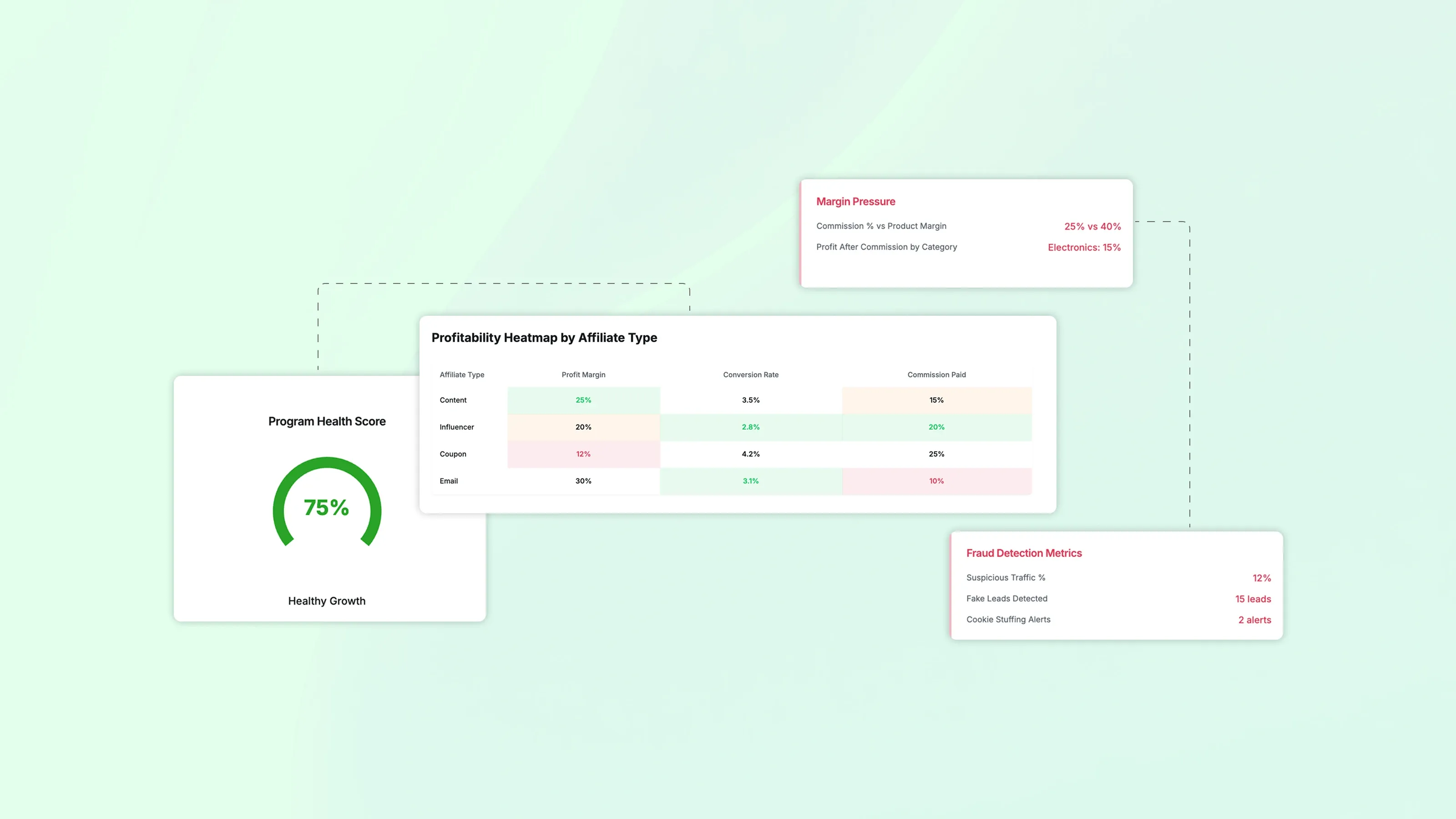
An affiliate marketing dashboard shows a profitability heatmap by affiliate type, program health score, margin pressure insights, and fraud detection metrics.

Affiliate marketing is not magic money, yet when structured well it can deliver an enviable return: brands report earning $12 for every $1 spent.

Why Companies Love It

From a merchant’s perspective, affiliate marketing stands out as a low-risk, high-leverage growth channel. Because costs are directly tied to results, it appeals to teams that want predictable acquisition economics without committing large upfront budgets.

When implemented well, the model delivers several structural advantages:

  • Performance based: You pay only after a defined action is completed.

  • Scalable reach: Hundreds of partners can promote your brand without adding internal headcount.

  • Built-in social proof: Reviews, comparisons, and tutorials often feel more credible than traditional ads.

  • Data rich: Tracking software reveals channel, creative, and partner ROI down to the penny.

  • Fast market entry: Launching through an established network can take days rather than months.

Affiliate-driven traffic converts at an average rate of around 2.5–2.6%, often matching or exceeding display and paid social benchmarks.

Taken together, these benefits make affiliate marketing especially attractive for brands seeking efficient growth, rapid testing, and measurable returns. To understand how data-driven decisions amplify return and minimize wasted spend, review The Role of Data in Modern Performance Marketing.

Potential Drawbacks

Despite its advantages, affiliate marketing introduces a distinct set of trade-offs that require active oversight. Without clear rules, robust tracking, and ongoing governance, these challenges can offset the efficiency gains that make the model attractive in the first place.

The most common risks to account for include:

  • Margin pressure: High commissions can erode profit if not carefully monitored.

  • Brand control: Affiliates may use messaging, visuals, or placement you would not otherwise approve.

  • Fraud risk: Tactics such as cookie stuffing or fake leads can slip through weak filters. Industry estimates suggest affiliate fraud can account for 5–10% of total program spend without active monitoring.

  • Operational load: Vetting, onboarding, and supporting partners require sustained effort.

  • Attribution overlap: Affiliates may claim credit for conversions already driven by paid search or email.

Industry studies estimate that affiliate fraud can account for 5–10% of program spend without active monitoring. Balancing these points is central to any sound affiliate strategy. Next, let us pinpoint when activating or expanding a program makes the most sense.

When to Use Affiliate Marketing in Your Growth Mix

Affiliate marketing excels under certain conditions. Recognizing these triggers prevents wasted effort and aligns spend with outcomes.

Signals That Affiliate Is a Good Fit

Affiliate marketing is not a universal fit; it works best under specific business conditions. Before launching or scaling a program, merchants should evaluate whether their economics, demand profile, and measurement capabilities support a performance-based partner model.

In practice, affiliate programs tend to succeed when the following criteria are in place:

  • You have healthy margins that can absorb a 5–30% commission.

  • Your product has clear demand but limited mainstream awareness.

  • Free trials, discounts, or unique bundles help convert first-time visitors quickly.

  • You already see organic referral traffic, suggesting customers are inclined to recommend you.

  • Your internal analytics can clearly separate affiliate-driven conversions from other channels.

For software vendors, especially SaaS, a generous trial plus recurring commissions can tempt content creators who crave predictable income. Hardware brands often tie payouts to volume tiers to guard margins.

A disciplined approach to channel selection and measurement can boost long-term results. Learn more in How to Build a Performance Marketing Strategy That Scales.

Situations to Hold Off or Limit Exposure

Just as important as knowing when affiliate marketing works is recognizing when it may introduce unnecessary risk or complexity. Certain business models, organizational constraints, or regulatory environments can undermine performance before a program has a chance to mature. In those cases, restraint is often the more strategic choice.

Affiliate marketing is usually a poor fit when the following conditions apply:

  • Subscriptions with thin margins, where clawbacks materially hurt profitability.

  • Strict brand guidelines that leave little room for partner-led creative expression.

  • Early-stage startups without reliable attribution or fraud-detection tools.

  • Geographies with complex tax or data rules that cannot yet be supported operationally.

Affiliate marketing is powerful, but it is not a default growth lever. When margins are tight, controls are limited, or compliance requirements are heavy, launching a program too early can create more drag than lift. In these situations, waiting until the fundamentals are in place protects both brand and budget. A well-timed affiliate strategy beats a rushed one every time.

Developing a Sustainable Affiliate Strategy

A structured affiliate program reduces uncertainty and prevents costly surprises as it scales. By establishing clear expectations, guardrails, and measurement from the outset, merchants can align partner behavior with broader business goals instead of reacting to issues after they arise.

In practice, this means putting a few foundational controls in place:

  • Define the ideal partner persona and recruit with intention rather than volume.

  • Set clear commission tiers, paying more for new-customer acquisitions and less for repeat buyers.

  • Publish creative guidelines and approve assets through a centralized process.

  • Audit affiliate sites quarterly to ensure ongoing compliance.

  • Integrate tracking with your CRM so sales and marketing operate from a single source of truth.

Over 50% of affiliate managers say improved attribution and analytics are the primary drivers of program expansion. Some brands deploy AI tools like Snoika to monitor how they appear in AI search answers, ensuring affiliates and the brand message stay aligned across emerging discovery surfaces. For practical implementation, Marketing Agencies: Scale Your SEO Strategy with Snoika demonstrates how AI-driven analytics empowers better oversight and rapid partner optimization.

Consistent oversight transforms affiliate marketing from a gamble into a predictable performance channel.

Conclusion

Affiliate marketing is a straightforward, pay-for-results channel that taps external partners to expand your reach. When margins allow and analytics are in place, it delivers measurable growth with controllable risk. By understanding the process, weighing the pros and cons, and choosing the right performance channels, you can add a reliable revenue stream that only costs money when it makes money.

Networks charge merchants a setup fee plus a percentage of each commission paid to affiliates. This slice covers tracking technology, fraud prevention, and payment processing.

Most physical product programs pay 5–10 % per sale, while digital products and SaaS can offer 20–40 % because their marginal costs are lower. Rates vary by niche competitiveness and lifetime value.

Yes. Plug-and-play platforms such as Tapfiliate or Rewardful let a small business create tracking links and handle payouts directly. Going solo saves network fees but requires more hands-on management.

Thirty days is standard, giving shoppers time to research and decide. High-ticket or B2B products sometimes extend the window to 60–90 days to reflect longer sales cycles.

Merchants rely on a mix of automated detection and manual oversight, including anomaly monitoring, IP filtering, conversion audits, and regular partner reviews. Clear terms, capped commissions, and prompt enforcement further reduce the risk of abuse.

Schedule a Meeting

Book a time that works best for you

You Might Also Like

Discover more insights and articles

A customer acquisition dashboard visualizing CAC to LTV ratio, retention trends, spend versus customers, and budget control rules for data-driven growth optimization

How to Reduce CAC with Smarter Performance Marketing

Customer acquisition costs are climbing fast. If you do nothing, every new customer will eat a larger slice of your budget. The good news: thoughtful performance marketing can rein that spending in and keep growth on track.

In this guide, you will learn exactly what CAC is, why it often spirals, and the practical moves that bring it back down.

An AI-powered marketing dashboard visualizes campaign structure, conversion performance, and account health score to optimize digital advertising efficiency

Facebook & Instagram Ads: Best Practices for 2026

Social media advertising keeps getting pricier and more crowded, yet the brands that refine structure, creative, and targeting continue to scale profitably. What will separate winners and also-ran campaigns in 2025?

A marketing analytics dashboard showing ad schedule performance heatmap, revenue and CPA trends, task completion status, and reporting checklist insights

Google Ads Optimization Checklist for Better ROI

Google Ads can be a revenue machine or a money pit. The difference lies in how you tune each lever, from campaign structure to copy. Use this checklist to cut waste, raise conversion rates, and prove that every dollar spent pulls its weight.

A2025 survey showsbusinesses already earn$2 for every $1invested in Google Ads. With tight optimization, that return can be much higher for you.

An AI-driven marketing analytics dashboard showing automated KPI alerts and channel performance metrics across paid search, social, email, and SEO

The Role of Data in Modern Performance Marketing

Data is now the fuel of performance campaigns. Marketers who ignore it waste budget, while those who embrace it watch revenue climb. So how do you turn raw numbers into smarter ads, higher conversion rates, and happier customers?

Below is a clear, practical road map.