What you will learn
This guide removes the guesswork from freelance SEO. Instead of scattered tips, you’ll learn the core skills successful SEO freelancers actually use, how to package services clients are already searching for, and how to price your work fairly without racing to the bottom. It also walks through the SEO platforms and workflows that save you hours each week, so you can focus on high-impact work instead of busywork.
Along the way, you’ll see real case studies from solo consultants who turned side projects into sustainable, six-figure businesses by building visibility, authority, and repeatable systems.
Let’s get started.
What is freelance SEO?
Freelance SEO is the practice of providing search engine optimization services as an independent contractor rather than as an in-house employee or agency. It combines technical audits, keyword research, on-page tweaks, content creation, link building, and reporting so client websites rank higher, earn more traffic, and drive measurable revenue.
Essential SEO skills every freelancer needs
Even creative writers need a basic grasp of how websites work.
1. Technical foundations
Search engines have to be able to find your pages, users need them to load smoothly, and the right version of each page has to be surfaced in search results. When those pieces aren’t in place, strong writing can go unseen.
That foundation comes down to a few core areas:
-
Crawlability: XML sitemaps, robots.txt, and proper status codes
-
Core Web Vitals: site speed, mobile rendering, and visual stability
-
Indexation control: canonical tags, pagination, and noindex logic
Master these and you can fix the hidden issues that hold rankings back. For a hands-on approach and platform guides tailored for solo consultants, see Search Optimization Freelancers Trust to Get Clients—Not Just Clicks.
2. Keyword and search intent research
Algorithms reward pages that satisfy intent. That means understanding why someone is searching before deciding what to write or how to structure a page. When keywords are grouped by intent, it becomes much easier to match content to expectations and avoid ranking a page that solves the wrong problem.
Use Google Search Console, Ahrefs, or free tools like AnswerThePublic to group keywords into:
-
Informational (blog posts)
-
Navigational (brand queries)
-
Transactional (product pages)
Translate intent into an editorial calendar clients can understand at a glance.
3. On-page optimization
Focus on elements you can control. You may not be able to influence algorithm updates, but you can shape how your pages are presented and understood.
Start by tightening the fundamentals:
-
Compelling title tags under 60 characters
-
One H1 per page that mirrors search intent
-
Descriptive meta descriptions that increase click-through rate
-
Logical H2 and H3 subheadings for scannability
-
Internal links that spread authority across important URLs
Regularly A/B test calls to action to push dwell time higher. For up-to-date advice on technical skills, on-page SEO, and which strategies matter most, check 10 SEO Best Practices for 2025: How to Rank Higher on Google.
4. Content creation and refreshes
Google rewards freshness and depth, which means you have to give search engines and readers a reason to come back. Updating what you already have and creating content that genuinely adds value signals that your site is active, relevant, and worth ranking.
In practice, that looks like:
-
New articles that fill keyword gaps
-
Content upgrades: adding statistics, expert quotes, and multimedia
-
Historical optimization: rewriting outdated posts while keeping URL histories intact
Pair content plans with the client’s funnel stages to prove revenue impact.
5. Off-page authority building
Links remain a ranking factor. Not all links are equal, though, and chasing volume without context can do more harm than good.
Focus on tactics that build authority without putting your site at risk:
-
Publish guest posts on niche sites
-
Earn mentions in round-up posts and podcasts
-
Secure industry directory listings
A single authoritative link can move the needle as much as 50 mediocre ones.
6. Reporting and analytics
Clients stay when they see progress. That progress needs to be visible, easy to understand, and tied back to the work you’re doing; not buried in spreadsheets or jargon-heavy reports.
The goal is to show momentum and direction at a glance:
-
Track clicks, impressions, and conversions in one dashboard
-
Use Data Studio or Looker Studio for automated monthly reports
-
Highlight quick wins and next steps in plain language
Next, package it, so clients instantly see the value.
How to offer SEO services to clients

You have the skills. Now structure them into sellable products that feel tangible.
Start with a brief discovery chat. Uncover the client’s goals, budget, and timeline.
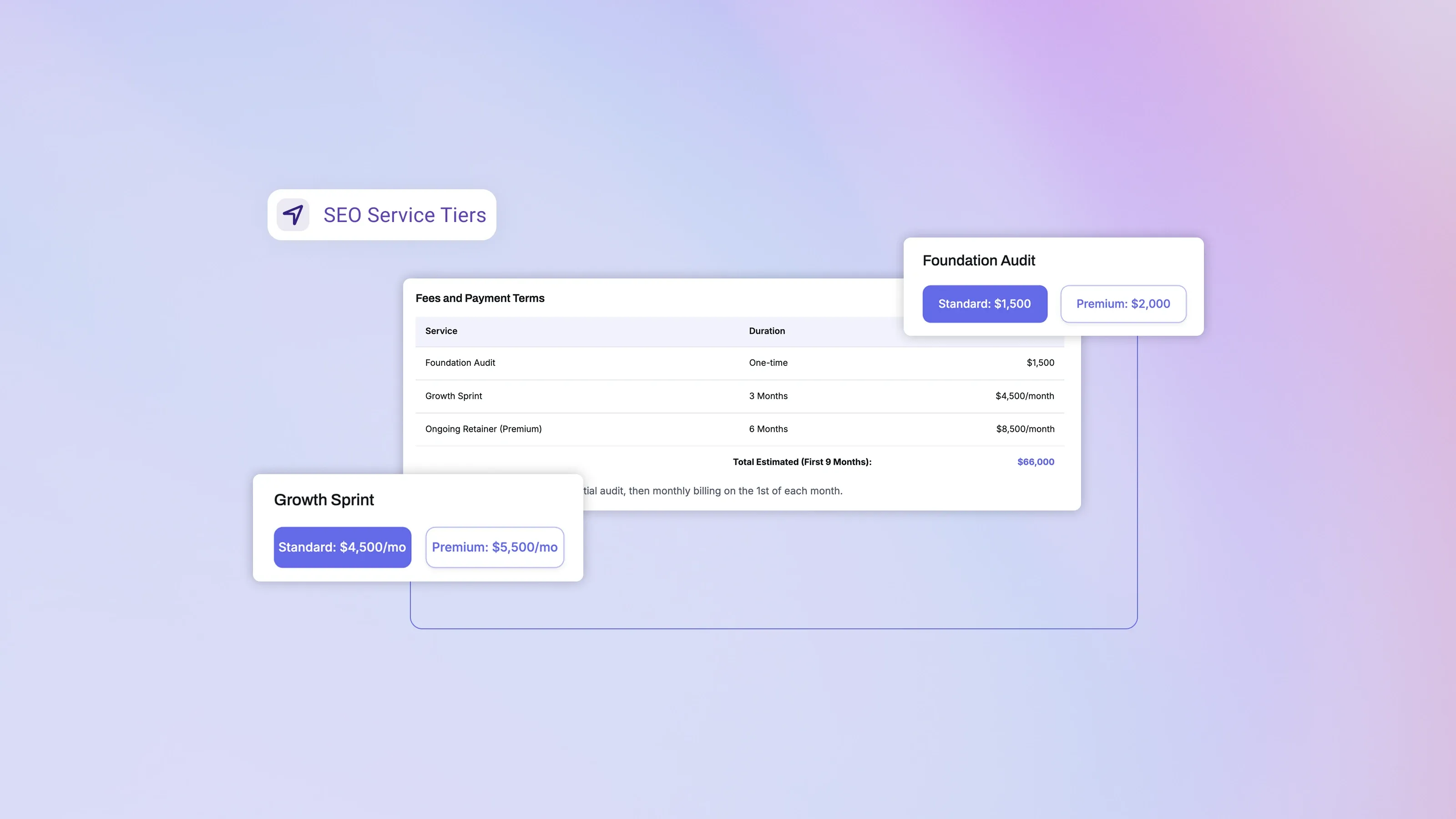
Then suggest one of three service tiers:
-
Foundation Audit (one-time): technical review, keyword gap analysis, and 30-day action plan
-
Growth Sprint (3 months): audit plus on-page fixes, four new articles, and link outreach
-
Ongoing Retainer (6-12 months): continuous content production, link building, and monthly reporting
End each proposal with two pricing options so the client feels in control. This small psychological nudge can lift acceptance rates by 15–20 %. If you want frameworks and tool suggestions made for freelancers (not agencies) visit Freelancer’s Guide to SEO Optimization: How to Compete with Agencies.
Writing winning proposals
Winning proposals prioritize clarity over cleverness. Start by restating the client’s problem in their own words, then clearly define scope, timeline, and success metrics tied to real outcomes like organic leads. Reinforce trust with a short example of past results, outline fees and payment terms, and finish with clear next steps, plus a brief thank-you. Courtesy still matters in a crowded inbox.
Pricing your freelance SEO services
Nearly every new freelancer underprices. Yet industry research shows independent SEOs bill a median $75 per hour, and freelance digital marketers report annual earnings of $80 000–$104 000.
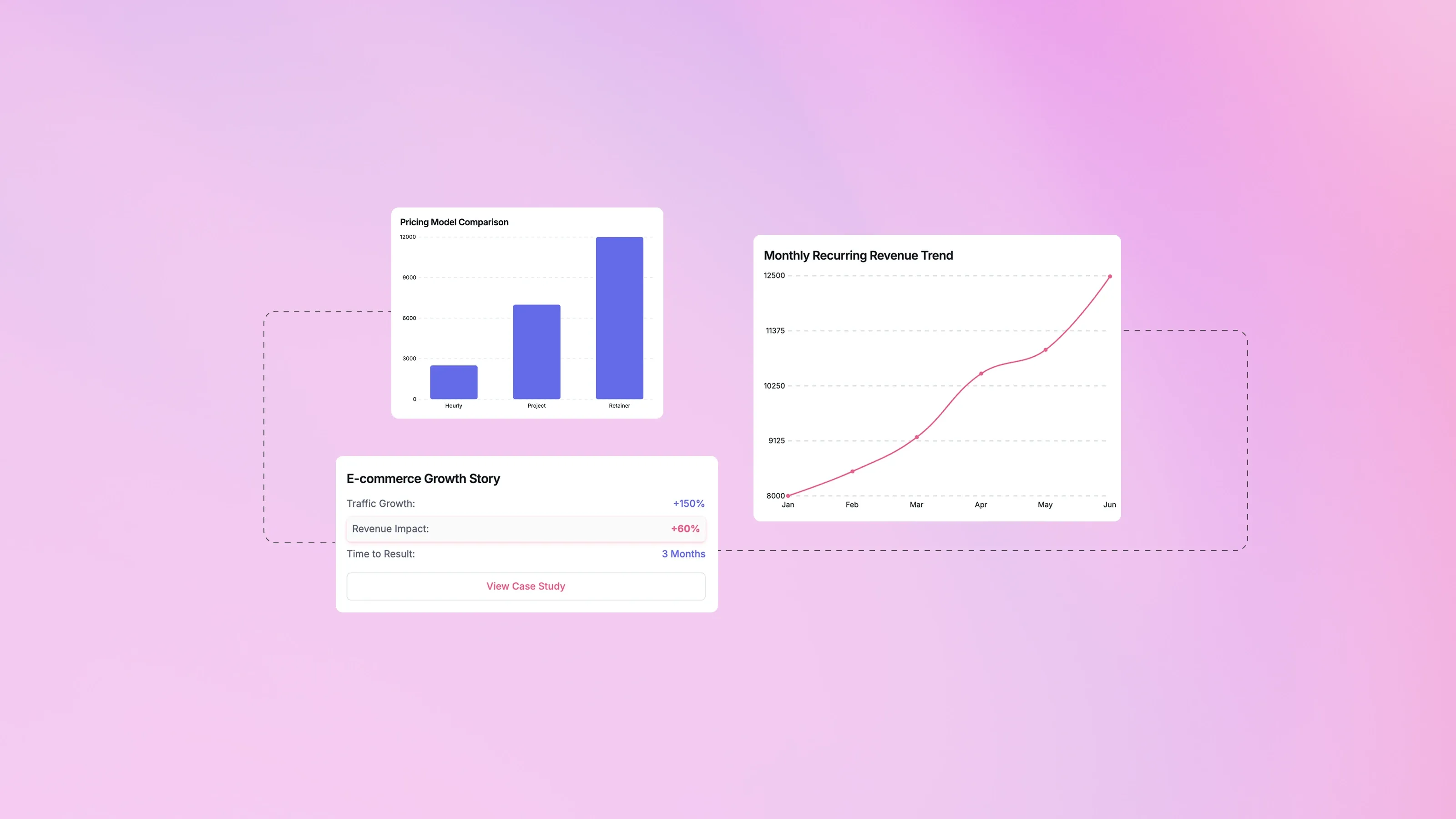
Common pricing models
There’s no single “right” way to price SEO or content work; the best model depends on the type of engagement, the client’s expectations, and how predictable the workload is. Understanding the trade-offs of each approach helps you choose a structure that’s fair, sustainable, and easy to explain.
-
Hourly: flexible for small tasks, but cap hours to avoid scope creep
-
Project: fixed fee for audits or redesigns, ideal for clear deliverables
-
Monthly retainer: recurring revenue, the holy grail for freelancers
For more practical guidance on moving beyond hourly billing, value-based pricing, and real-world rate examples, read Freelancer’s Guide to SEO Optimization: How to Compete with Agencies.
Building your rate
Your rate shouldn’t be a guess; it should be grounded in what you need to earn and what the market will support. Start with the numbers, then adjust for real-world costs and client psychology so your pricing feels confident, not defensive.
You can:
-
Calculate your minimum viable rate: desired annual income ÷ billable hours per year
-
Add 30 % for taxes, software, and downtime
-
Research local market rates on LinkedIn and Upwork
-
Anchor proposals with a higher “Premium” option so the “Standard” feels reasonable
Regularly revisit rates every six months. Your skills and social proof will grow; your fees should follow.
Tools and SEO platforms that save time
Manual work kills profit margins. Repeating the same audits, reports, and checks by hand slows teams down and makes it harder to scale.
These SEO platforms handle the heavy lifting:
-
Screaming Frog or Sitebulb: quick technical audits
-
Ahrefs or Semrush: keyword research and backlink tracking
-
Surfer SEO or Clearscope: content briefs and on-page scoring
-
Looker Studio: customizable, automated reports
-
Snoika: AI Search Optimization so brands appear in ChatGPT and Gemini answers, a fast-growing need clients now ask about
For practical SEO platforms that combine audits, reporting, and AI optimization tailored for freelancers, explore Search Optimization Freelancers Trust to Get Clients—Not Just Clicks.
Freelancers who grew with SEO
Real stories inspire confidence and show what’s possible; without pretending there’s only one right way to grow.
Path 1: Part-time blogger to full-time income
Sara started as a fitness blogger and noticed that many local gyms had decent content but poor search visibility. She began offering straightforward SEO audits tailored specifically to gyms, pricing them at $800 each. After completing five audits, two of those gym owners asked her to stay on and help with ongoing content, which turned a one-off service into recurring work and pushed her annual income past $60,000.
Path 2: Agency escape artist
Luis left a large agency to freelance. He priced retainers at $2 500 per month, slightly under agency rates, targeting B2B SaaS firms. Leveraging Snoika’s AI visibility analytics, he demonstrated how clients appeared in AI search results, a unique angle that closed three contracts in 90 days.
Path 3: The technical fixer
Priya focused on Core Web Vitals for e-commerce shops. One site jumped from 3 to 1.2 seconds load time, lifting organic revenue 28 %. That win led to referrals worth $50 000 in the next year.
Looking for competitive advantage? See how Snoika supports SaaS and marketing teams with AI SEO workflows.
Studying these paths shows there is no single blueprint. Play to your strengths, document wins, and let results market your services.
Conclusion
Mastering website SEO as a freelancer is less about secret hacks and more about solid fundamentals: strong technical skills, clear service packaging, fair pricing, and the right tools to support your workflow. When you combine that technical know-how with clear, client-friendly communication, you position yourself as a long-term strategic partner rather than just another contractor.
Focus on building repeatable systems, refining your offers over time, and tracking results you can point to with confidence. Study the skills, improve your processes, and let measurable wins speak for themselves.