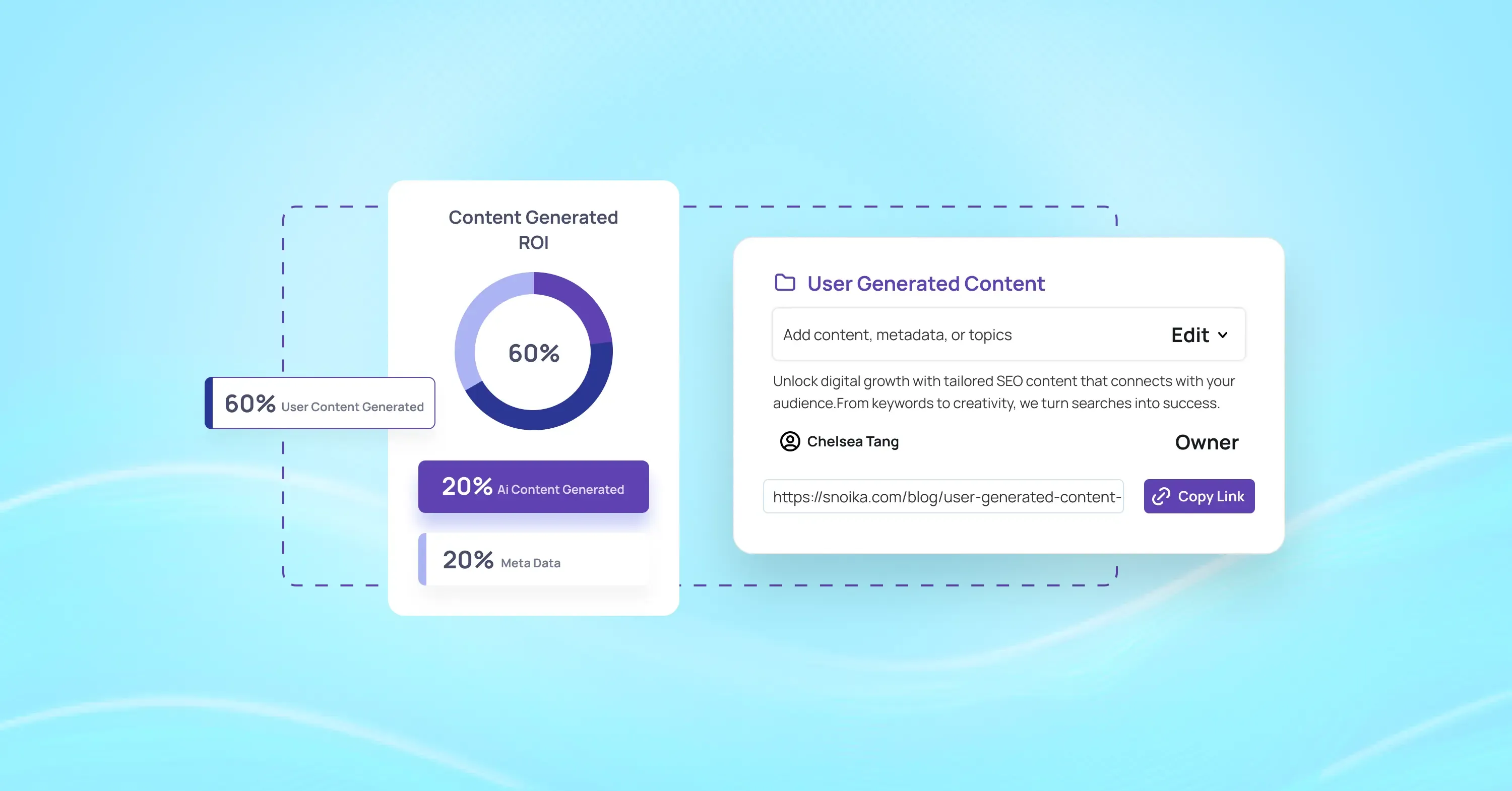
User-generated content vs AI-generated content ROI chart showing 60% ROI from UGC, 20% from AI content, and 20% from metadata with Snoika SEO dashboard example.

The Rise of User-Generated Content: How to Leverage It for Your Brand

User-generated content (UGC) builds trust and drives engagement like no ad can. By featuring real customer stories, photos, and reviews, you boost credibility, spark conversations, and inspire lasting brand growth.

By Jevgenia Pogadajeva, MBA, MScAugust 14, 20251 min read

The Power of User-Generated Content: How to Turn Customers into Your Best Marketers

If you’ve wondered why so many brands feature customer photos, videos, and reviews in their marketing, you’re about to learn how this strategy can benefit you. UGC campaigns are growing fast and provide validation no traditional ad can match. Below, we’ll explore why they work, how to encourage participation, and real examples that prove their impact.

Why User-Generated Content Works

User-generated content (UGC) is any piece of media created by people rather than the brand itself. Whether it’s an Instagram photo, a TikTok video, or a review, it often resonates with new customers because it feels authentic. In fact, 79% of people say user-generated content strongly influences their buying decisions 2025 survey shows.

But why exactly does UGC work so well?

  • It builds trust. More than 84% of consumers trust online reviews as much as personal recommendations 2025 poll suggests.
  • It triggers higher engagement. UGC-based ads see approximately 4x higher click-through rates than traditional ads 2024 analysis found.
  • It boosts credibility. 93% of marketers using UGC say their content performs better than brand-created materials 2025 data notes.

When loyal customers share about your brand, it feels authentic, not like hype. This social proof boosts engagement and keeps your campaigns fresh. Building a strong content brand ensures UGC and other content consistently lift your business.

Authentic Voices Drive Brand Engagement

People connect with experiences that reflect their own. A happy customer story builds trust, sparks conversations, and encourages others to share their voices. This cycle of real feedback creates a community of advocates and keeps your brand relevant. Using AI-powered content marketing tools ensures your UGC stays authentic and impactful.

How to Encourage User-Generated Content

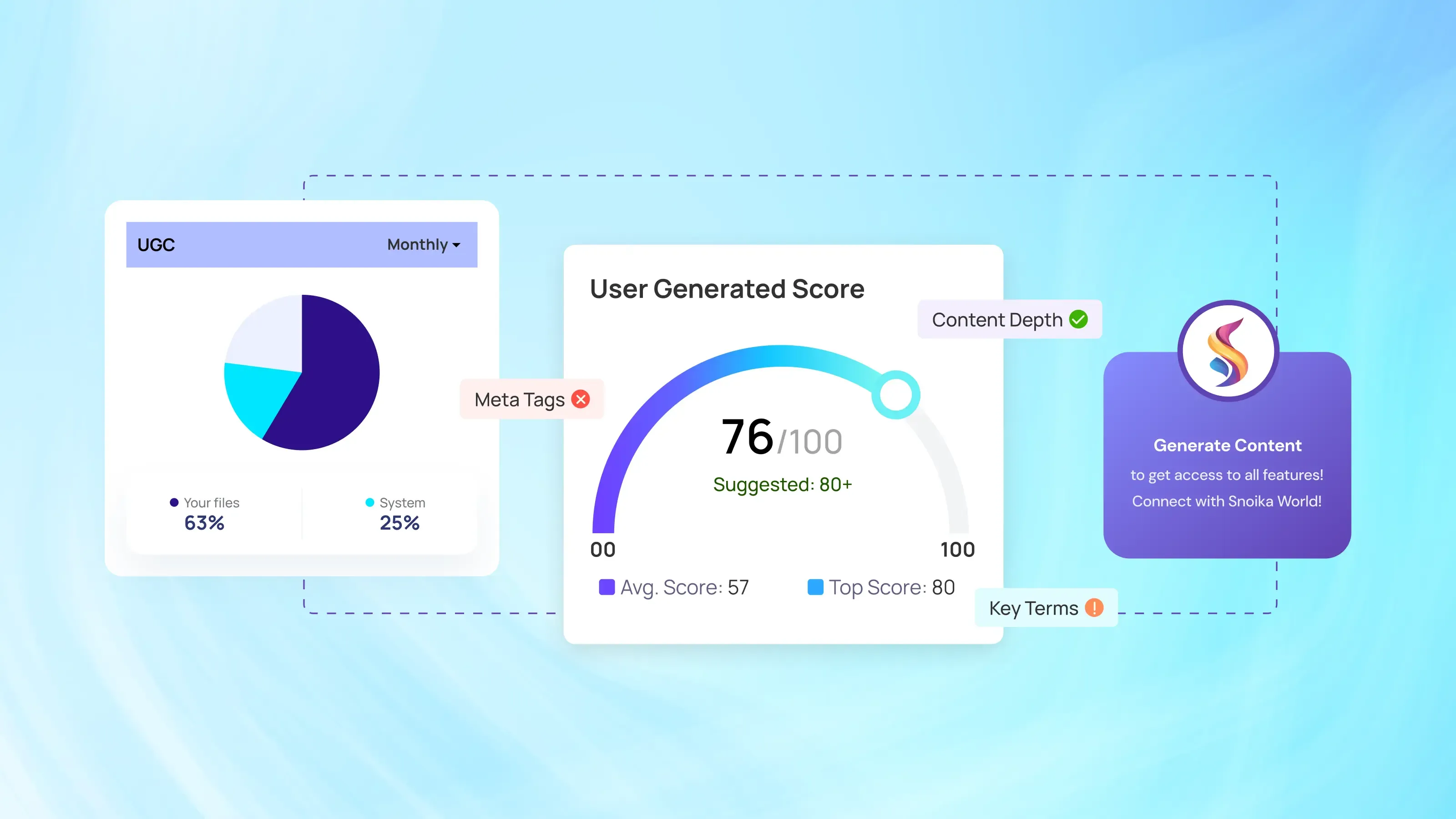
User-generated content performance dashboard showing UGC share of 63%, system 25%, and a user-generated score of 76/100 with insights on content depth, meta tags, and key terms from Snoika.

Now that you understand the power of UGC, the next step is motivating your audience to join in. People are far more likely to contribute when they feel welcomed and know their efforts will be recognized. With the right approach, you can spark consistent, high-quality engagement.

1. Make It Easy to Participate

  • Use clear calls-to-action asking for photos, stories, or short videos.

  • Create a branded hashtag or simple submission form to collect entries.

  • Thank participants personally with a quick message or public mention.

2. Launch Fun Challenges

  • Run lighthearted contests on social media tied to your brand.

  • Encourage fans to share how they use your product in everyday life.

  • Spotlight the best submissions weekly or monthly to keep momentum high.

3. Show Gratitude

  • Publicly acknowledge contributors and highlight their creativity.

  • Feature standout participants in shout-outs or profile spotlights.

  • Reward engagement with small perks, discounts, or early product access.

4. Create Space for Honest Feedback

  • Allow customers to leave unbiased reviews on your website or store.

  • Respond quickly to questions, suggestions, or concerns.

  • Show your community that you’re listening - this builds loyalty and trust.

Looking for fresh ways to spark participation? Try using an AI-powered topic generator to uncover trending ideasand themes your audience will love to create content around.

Nurture UGC Through Ongoing Communication

UGC works best when it’s nurtured, not treated as a one-time stunt. Keep the dialogue open with questions, polls, and regular features of user content. Encourage fresh perspectives, collect quick feedback, and stay close to your audience so they feel comfortable contributing. The most effective approach blends branding with performance - read more in Brand Marketing vs. Performance Marketing: Which One is Right for You?

Examples of Successful Campaigns

  • Mountain House - Instagram UGC increased conversion by 13% Mountain House displayed follower photos from a UGC contest on its category pages. That simple addition lifted the conversion rate by 13 %.
  • Starbucks - #RedCup Contest (Holiday Photo Challenge) Starbucks asked fans to share creative images using their holiday red cups with a branded hashtag; this contest pulled in high social engagement and widespread UGC.
  • Apple – #ShotoniPhone Campaign Apple encourages users to post their photo-shots labeled #ShotoniPhone, then features standout images in advertising, billboards, etc. It’s become a long-running UGC staple.
  • Dr. Dennis Gross – Shoppable Video Content They embedded UGC videos and mixed content on 100+ product pages. As a result, video-engaged traffic produced over US $1 million in orders in 2023.

What Is User-Generated Content?

User-generated content is any piece of content - reviews, photos, videos, or social media posts -created by real people instead of the business itself. It often feels more trustworthy because it reflects genuine experiences, helping brands connect with potential customers on a personal level.

The Benefits of UGC for Brands

UGC does more than spark engagement - it delivers measurable business impact. Brands that actively integrate user content into their marketing see higher trust, stronger visibility, and better conversions.

Research shows that:

  • Visitors who engage with UGC are twice as likely to convert compared to those who don’t.

  • UGC enhances SEO by providing authentic, keyword-rich content that keeps pages fresh.

  • Sharing customer voices builds loyalty and transforms buyers into long-term advocates.

By treating UGC as a growth lever rather than just a creative boost, brands unlock both performance and branding benefits.

Conclusion

User-generated content is an engaging force that showcases real stories, fosters trust, and fuels excitement around your offerings. By inviting your community to participate rather than simply watch, you create a cycle of brand engagement that keeps giving back. Whether you’re a new startup or a long-standing brand, UGC campaigns can provide a refreshing spark that sets you apart. By taking the right steps now, you’ll see a lasting impact on both loyal fans and curious newcomers alike.

User-generated content can include testimonials, but it also covers photos, videos, and social posts that real users create. Testimonials are generally more formal, while UGC can be more casual and diverse.

Share calls for contributions on social platforms, offer fun contests or giveaways, and acknowledge contributors. Consistent engagement with your fans encourages them to post more about your brand.

Absolutely. A small business can grow brand awareness quickly by highlighting genuine stories from its customers. Even a handful of real endorsements can make a big difference in trust and sales.

It can be an opportunity to show genuine concern. Address the feedback, resolve issues, and demonstrate transparency. This approach can boost customer faith in your business. If you want tools for messaging, reputation, or consistency, check out Brand Building: Smart & Simple for foundational strategies.

Set ground rules, moderate submissions, and remove offensive material. Clear guidelines help maintain a respectful environment.

Schedule a Meeting

Book a time that works best for you

You Might Also Like

Discover more insights and articles

Freelance SEO dashboard showing pricing model comparison, monthly recurring revenue growth, and an e-commerce case study with traffic and revenue impact

How Freelancers Can Master Website SEO Optimization

Freelancers who learn website optimization earn more predictable income, win longer retainers, and stay competitive as algorithms shift every few months. Yet, knowing where to start, what to offer, and how to charge can feel confusing.

This guide removes the guesswork. You will learn the core skills freelance SEO pros need, how to package services clients actually want, fair pricing models, and the SEO platforms that save you hours each week. Real case studies show how solo consultants moved from side-gig to six-figure businesses.

Marketing analytics dashboard showing video performance metrics, AI optimization impact, and a comparison of Google Ads versus Facebook Ads for real estate campaigns.

Real Estate Advertising Strategies That Work in 2025

Homebuyers now search with ChatGPT, browse listings on Instagram Reels, and expect instant answers. Agents who still rely on yard signs feel invisible. The core question: which channels, tactics, and tools actually generate showings and signed contracts in 2025?

In this guide you will learn which digital platforms deliver the lowest cost per lead, how Google Ads stack up against Facebook Ads, and why video plus real estate AI advertising have become non-negotiable. Real-world numbers, short lists, and agent case studies make every section quick to apply.

AI marketing dashboard showing keyword signal optimization, search traffic growth, and competitive benchmarking for brand visibility

How to Choose the Perfect Business Name for Your Real Estate Brand

AI search is changing how buyers, sellers, and investors discover companies. If your name is bland or confusing, those algorithms will rank you lower and prospects will skip right past you. Ready to give your real estate venture a name that pops both with humans and machine learning models? Let’s get started.

Short on time? Here’s the high-level plan: understand why naming matters, brainstorm fresh ideas, then test every finalist for legal, linguistic, and AI visibility issues. Each step below walks you through the process in plain English.

Featured snippet:A strong real estate business name is short, memorable, easy to spell, legally available, SEO-friendly, and instantly signals the type of properties or services you provide.

How to Pick and Use Keyword Analysis Tools for Sky-High SEO Rankings

Struggling to find the right words that bring buyers, not just browsers? Choosing the correct keyword analysis tools often draws the line between page-one glory and digital obscurity.